


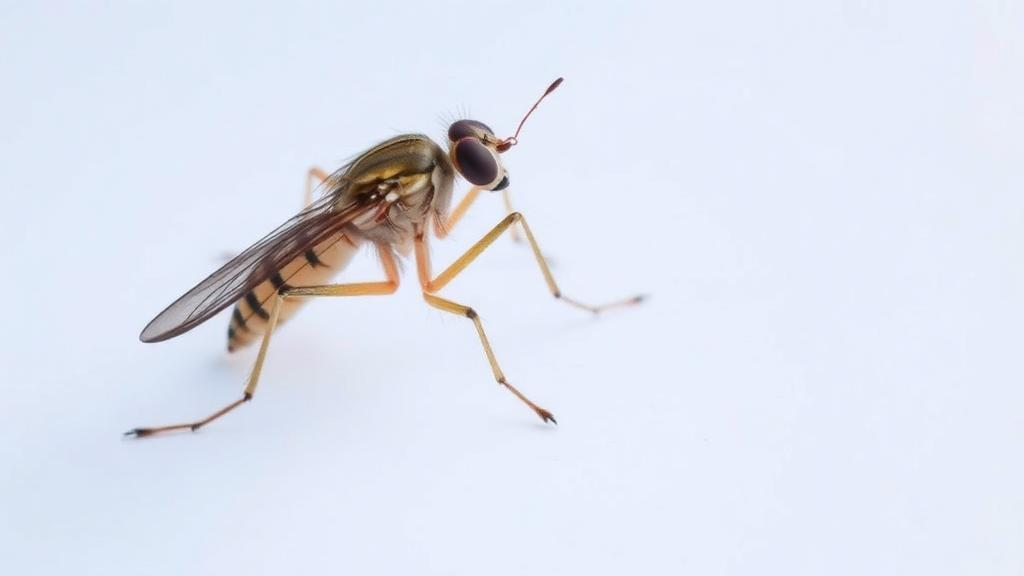
A long-standing suspicion in the epidemiology of leishmaniasis in the eastern Mediterranean has finally been put to a molecular test, and the results are reshaping how scientists think about the transmission of one of the world’s most important vector-borne diseases. Researchers in Israel have reported the first species-resolved detection of Leishmania infantum DNA in the sand fly Phlebotomus (Larroussius) syriacus, a common and widespread species that had long been suspected of carrying the parasite but had never been molecularly confirmed as a carrier anywhere in the world. The finding, published in the journal Parasites & Vectors, carries significant implications for how visceral and cutaneous leishmaniasis are monitored and controlled in Israel and potentially across the wider region.
Leishmania parasites are transmitted to humans and other mammals through the bites of phlebotomine sand flies, tiny insects belonging to the order Diptera and the family Psychodidae. Among the various Leishmania species, L. infantum is particularly consequential: it is the causative agent of both visceral leishmaniasis, the potentially fatal form of the disease that attacks internal organs, and cutaneous leishmaniasis, which produces disfiguring skin lesions. In the eastern Mediterranean basin, several sand fly species are known or suspected to transmit L. infantum, including Phlebotomus perfiliewi, Phlebotomus tobbi, and Phlebotomus neglectus. Yet the identity and relative importance of vector species vary considerably from one geographic area to another, and in many places the picture remains incomplete.
Israel presents a particularly complex epidemiological landscape. Multiple Leishmania species are endemic in the country, and L. infantum causes both visceral and cutaneous disease in humans, with dogs serving as the main reservoir of the parasite. Despite decades of surveillance, the precise sand fly vectors responsible for transmitting L. infantum in different regions of Israel have remained uncertain. Phlebotomus syriacus, a member of the subgenus Larroussius, has been a common species in the country and a long-standing suspect, but without molecular confirmation its actual role in the transmission cycle could only be speculated upon. Closing that gap was the central aim of the new study.
The research team, led by Liora Studentsky of the Hebrew University of Jerusalem and the Public Health Laboratories Jerusalem of the Israeli Ministry of Health, together with colleagues including corresponding author Oscar David Kirstein, conducted an intensive three-year field campaign between 2021 and 2023. Sand flies were collected using CDC miniature light traps at two villages where leishmaniasis is endemic: Aderet in central Israel and Kahal in the north. The choice of two ecologically distinct sites allowed the researchers to compare vector communities and infection patterns across different parts of the country, providing a more nuanced picture of the transmission system than a single-site study could offer.
The scale of the collection effort was substantial. In total, 20,634 sand flies were captured, of which 13,676, or 66.3 percent, were females, the sex responsible for blood feeding and therefore for parasite transmission. From this pool, the researchers analyzed 4,635 samples representing 5,050 individual female sand flies. Male specimens were identified by morphological examination, while females, which are harder to distinguish by morphology alone, were identified using molecular methods. In all, fourteen sand fly species were identified across the two sites, with species of the subgenus Larroussius dominating the catches at both locations.
The species composition differed markedly between the two villages, underscoring the heterogeneity of the transmission system. In Aderet, in central Israel, Phlebotomus syriacus was the prevalent species, accounting for 27.5 percent of the catch. In Kahal, in northern Israel, the community was structured differently: Phlebotomus galilaeus predominated at 54.1 percent, followed by Phlebotomus tobbi at 24.9 percent. This geographic variation in vector communities is epidemiologically significant because it means that different sand fly species may be responsible for maintaining transmission in different parts of the country, complicating any one-size-fits-all approach to vector control.
To detect the parasite, the researchers screened both unfed and blood-fed female sand flies using a technique known as real-time PCR with high-resolution melting analysis, or PCR-HRM, targeting the internal transcribed spacer 1 (ITS1) region of the parasite’s genome. This approach not only detects Leishmania DNA but also allows differentiation between Leishmania species based on the melting profiles of the amplified DNA. Three samples tested positive for L. infantum DNA: two individual unfed female Phlebotomus syriacus specimens collected in Aderet, and one pooled sample from Kahal. The detection in unfed females is particularly meaningful, since it reduces the likelihood that the DNA merely represented a recent, undigested blood meal from an infected host rather than a genuine infection of the fly itself.
These detections represent the first species-resolved identification of L. infantum DNA in Phlebotomus syriacus both in Israel and worldwide. While the finding stops short of proving that the species is a fully competent vector, since demonstrating vectorial capacity requires additional evidence such as the presence of infective parasite stages in the fly and experimental or epidemiological confirmation of transmission, it provides the first molecular evidence supporting Phlebotomus syriacus as a putative vector of L. infantum in central Israel. For a species that has been on the suspect list for years, this is a crucial step toward formal recognition of its role in the transmission cycle.
Blood-meal analysis added another important layer to the epidemiological picture. By sequencing the blood meals of engorged female sand flies, the researchers identified vertebrate hosts in 74.2 percent of the fed females examined. The results showed a strong dominance of cattle, which accounted for 84.8 percent of identified blood meals, followed by canids at 5.8 percent, with other mammals making up the remainder. The canid finding is especially relevant because dogs and other canids are the main reservoir hosts of L. infantum. Notably, Phlebotomus syriacus females were found to feed on canids in 16.7 percent of cases, a proportion that supports the species’ potential epidemiological relevance as a bridge between the animal reservoir and humans.
The combined findings paint a picture of a heterogeneous transmission system in which multiple sand fly species, different blood-feeding preferences, and geographically varying vector communities all interact to sustain L. infantum circulation. The authors conclude that these results have important implications for targeted surveillance and vector-focused control strategies. Rather than assuming a single vector species across the country, public health authorities may need to tailor monitoring and intervention efforts to the specific vector communities and reservoir dynamics of each region. The identification of cattle as the dominant blood-meal source also raises questions about the role of livestock in the ecology of the transmission system, whether as dead-end hosts that divert flies from reservoir animals or as contributors to sustaining large sand fly populations.
The study was supported by the public health laboratories of the Israeli Ministry of Health in Jerusalem, with fieldwork assistance from inspectors of the Israeli Ministry of Environmental Protection. The research was co-funded by the European Commission under grant 101057690 and by UKRI grants 10038150 and 10039289, as part of the CLIMOS project, one of six Horizon Europe initiatives forming the Climate Change and Health Cluster alongside BlueAdapt, CATALYSE, HIGH Horizons, IDAlert, and TRIGGER. This funding context reflects a growing recognition in Europe and beyond that climate change is altering the distribution and dynamics of vector-borne diseases, making detailed knowledge of local transmission systems increasingly urgent.
For Israel, the confirmation of L. infantum DNA in Phlebotomus syriacus fills a long-standing gap in the map of leishmaniasis transmission. For the broader eastern Mediterranean region, where Phlebotomus syriacus is also present, the finding suggests that this species may deserve closer attention in surveillance programs elsewhere as well. As the authors emphasize, understanding which sand fly species carry which Leishmania parasites, and under what ecological conditions, is fundamental to designing effective interventions, whether through insecticide spraying, reservoir dog management, or environmental modification. The first molecular evidence implicating Phlebotomus syriacus in L. infantum transmission marks a meaningful advance toward that goal, and it signals that the full complexity of leishmaniasis transmission in the region is only now beginning to come into focus.
Subject of Research: First molecular detection of Leishmania infantum DNA in the sand fly Phlebotomus syriacus and its implications for leishmaniasis transmission in Israel
Article Title: First detection of Leishmania infantum DNA in Phlebotomus (Larroussius) syriacus and its epidemiological implications in Israel
Article References: Studentsky, L., Kirstein, O. D., Diaz, D., Elbaz, S. L., Ben Avi, I., Shalan, R., Okla, H., Shilo, S., Kalmus, S., Davidovich-Cohen, M., Orshan, L., & Baneth, G. (2026). First detection of Leishmania infantum DNA in Phlebotomus (Larroussius) syriacus and its epidemiological implications in Israel. Parasites & Vectors. https://doi.org/10.1186/s13071-026-07623-7
Image Credits: AI Generated
DOI: 10.1186/s13071-026-07623-7
Keywords: Leishmania infantum, Phlebotomus syriacus, sand flies, leishmaniasis, vector-borne disease, PCR-HRM, blood meal analysis, Israel, visceral leishmaniasis, cutaneous leishmaniasis, Parasites & Vectors, vector surveillance
Cite Scienmag News
Drew Townsend. (October 2, 2026). Sand Fly Species Linked to Visceral Leishmaniasis Parasite in Israel for the First Time. Scienmag. https://scienmag.com/sand-fly-species-linked-to-visceral-leishmaniasis-parasite-in-israel-for-the-first-time/
Drew Townsend. "Sand Fly Species Linked to Visceral Leishmaniasis Parasite in Israel for the First Time." Scienmag, 2 October 2026, https://scienmag.com/sand-fly-species-linked-to-visceral-leishmaniasis-parasite-in-israel-for-the-first-time/. Accessed 4 October 2026.
Drew Townsend. "Sand Fly Species Linked to Visceral Leishmaniasis Parasite in Israel for the First Time." Scienmag. October 2, 2026. https://scienmag.com/sand-fly-species-linked-to-visceral-leishmaniasis-parasite-in-israel-for-the-first-time/


