


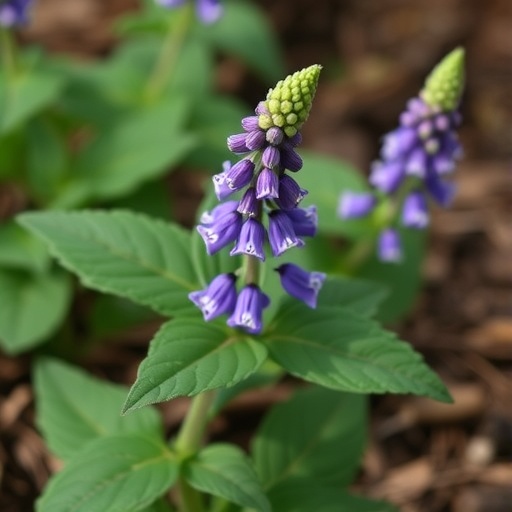
In a significant advancement for dental microbiology, researchers have scrutinized the antimicrobial efficacy of Salvia spinosa, a plant prominent in traditional medicine, particularly in relation to its effects against Enterococcus faecalis. This bacterium is notorious for its role in endodontic infections, which often lead to severe complications and necessitate complex treatment regimens. The focus of this comprehensive study hinges on a multi-faceted approach combining in-vitro, ex-vivo, and in-silico methodologies, thereby enabling a thorough exploration of Salvia spinosa’s potential as an antimicrobial agent.
The backdrop to this research lies in the rising concern over antibiotic resistance, which has rendered many conventional treatments less effective. Enterococcus faecalis has emerged as a formidable adversary in dental infections, showcasing resistance to various antibacterial agents. This poses a dire need for alternative treatment strategies, and herbal medicines, like those derived from Salvia spinosa, present a compelling avenue. Historically, Salvia spinosa has been used in various cultures for its health benefits, but its specific antimicrobial properties have received limited scientific validation until now.
In this study, researchers employed a robust in-vitro methodology, which involved the extraction of bioactive compounds from Salvia spinosa. These compounds were then tested against Enterococcus faecalis under controlled laboratory conditions. The rigorous protocols ensured that the measured antimicrobial activity could be attributed directly to the extracts, paving the way for further investigations into specific compounds contributing to this activity.
The findings revealed that certain extracts of Salvia spinosa displayed notable inhibitory effects against Enterococcus faecalis. This discovery is pivotal, as it not only underscores the potential of natural remedies but also aligns with a growing trend in the scientific community that favors phytotherapy. The challenge now lies in isolating the specific components responsible for the antimicrobial activity observed, with the hope of developing targeted treatments that harness these natural properties efficiently.
To complement the in-vitro findings, the researchers extended their study to ex-vivo assessments, examining how Salvia spinosa extracts interact with biological tissues. This phase was crucial in determining the practicality and safety of using such extracts in clinical settings. Initial results were promising, indicating that the extracts could mitigate the harmful effects of Enterococcus faecalis without adversely impacting surrounding tissues, a key consideration in any potential therapeutic application.
Moreover, the in-silico component of the study utilized advanced computational techniques to model interactions between the active constituents of Salvia spinosa and the bacterial target. This cutting-edge approach not only enhances the understanding of molecular interactions but also accelerates the drug discovery process. By simulating these interactions, researchers can predict the efficacy of various compounds, thereby efficiently narrowing down candidates for further experimental validation.
One of the standout outcomes of this research is its alignment with global health initiatives aimed at reducing reliance on synthetic antibiotics. As antibiotic resistance continues to pose significant public health challenges, exploring and validating the antimicrobial properties of naturally occurring substances could lead to groundbreaking advancements in treatment protocols for bacterial infections. Salvia spinosa could emerge as a frontline defender against resistant strains, especially in dental applications, where rapid treatment is often critical.
Interestingly, while the results are highly encouraging, researchers acknowledge that further studies are essential to fully elucidate the mechanisms behind the antimicrobial activity. Understanding how these extracts function at a cellular and molecular level will not only aid in the development of new treatments but also inform on the potential for using Salvia spinosa as a preventive measure against endodontic infections.
Furthermore, this research contributes to a broader narrative within the scientific community regarding the resurgence of interest in herbal medicine. As modern science continues to unearth the potential of numerous plants long revered in traditional practices, the integration of these findings into contemporary medicine holds great promise. Educational outreach efforts will be crucial in ensuring that both dental professionals and patients are informed about these potential alternatives, fostering a culture of acceptance towards herbal treatments.
The collaborative nature of this study, encompassing various expertise from medicinal chemistry to microbiology, highlights the importance of interdisciplinary approaches in tackling complex health issues. The convergence of different scientific fields often yields innovative solutions that might have otherwise remained unconsidered. As this research gains visibility, it invites others to explore similar avenues, potentially leading to a renaissance in holistic approaches to healthcare.
As Salvia spinosa continues to capture the attention of researchers and practitioners alike, the implications of this study may extend well beyond dental applications. The exploration of its broader health benefits could yield insights applicable in various medical fields, including oncology and infectious disease management. Thus, the academic and practical implications of this work are vast, underscoring the enduring value of plants in modern pharmacotherapy.
Looking ahead, researchers plan to initiate clinical trials to further validate the efficacy and safety of Salvia spinosa extracts in human populations. These trials will be instrumental in transitioning from laboratory findings to real-world applications. Stakeholder engagement, including collaboration with dental professionals and policymakers, will ensure that any new therapeutic options align with current clinical practices and patient needs.
In conclusion, the promising results of Salvia spinosa’s antimicrobial activity against Enterococcus faecalis signify a potential shift in how we approach the treatment of dental infections. As the scientific narrative unfolds, the marriage of traditional herbal knowledge with modern scientific inquiry may very well illuminate new pathways for effective, sustainable healthcare solutions.
Nageeb, W.M., Adam, S.H., Ali, N. et al. Correction: Antimicrobial activity of Salvia spinosa against Enterococcus faecalis causing endodontic infections: an in-vitro, ex-vivo, and in-silico study.
BMC Complement Med Ther 25, 328 (2025). https://doi.org/10.1186/s12906-025-05069-5
Cite Scienmag News
Ophelia Keating. (September 12, 2025). Salvia Spinosa’s Antimicrobial Effect on Enterococcus faecalis. Scienmag. https://scienmag.com/salvia-spinosas-antimicrobial-effect-on-enterococcus-faecalis/
Ophelia Keating. "Salvia Spinosa’s Antimicrobial Effect on Enterococcus faecalis." Scienmag, 12 September 2025, https://scienmag.com/salvia-spinosas-antimicrobial-effect-on-enterococcus-faecalis/. Accessed 3 September 2026.
Ophelia Keating. "Salvia Spinosa’s Antimicrobial Effect on Enterococcus faecalis." Scienmag. September 12, 2025. https://scienmag.com/salvia-spinosas-antimicrobial-effect-on-enterococcus-faecalis/


