


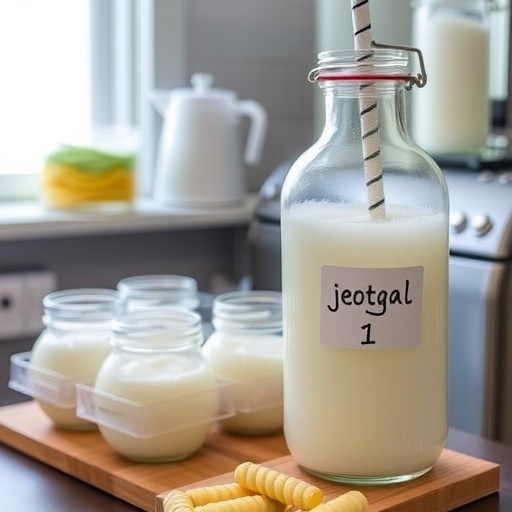
Scientists in South Korea have taken a major step toward transforming one of the country’s oldest culinary traditions into a safer, more consistent, and more functional food product. A research team led by Gyoung Min Baek, Yu Jeong Lee, and corresponding author Byung Hee Chun of Pukyong National University, together with Tae-Rim Im and Yong Joo Park of Kyungsung University, has isolated and characterized salt-tolerant bacteria from jeotgal—a traditional Korean fermented seafood—and demonstrated that five of these native strains possess the enzymatic power, safety profile, antioxidant capacity, and antimicrobial activity needed to serve as the foundation of a standardized starter culture system. The work, published in Food Science and Biotechnology, addresses one of the most persistent problems in fermented food production: the unpredictability of spontaneous fermentation.
Jeotgal occupies a revered place in Korean gastronomy. Made by fermenting raw seafood—anchovies, shrimp, squid, oysters, and other marine products—in high concentrations of salt, these pungent, umami-rich condiments have graced Korean tables for centuries and serve as essential seasoning components in dishes such as kimchi. The high salinity of jeotgal, often exceeding levels that would kill most microorganisms, is what makes the product possible: salt suppresses putrefactive and pathogenic bacteria while permitting a specialized community of halophilic and halotolerant microbes to thrive and slowly transform the raw seafood through proteolysis and other biochemical activities. But this reliance on whatever microorganisms happen to be present in the raw materials and the fermentation environment is also jeotgal’s greatest vulnerability. Spontaneous fermentation, as the researchers note, results in inconsistent quality and safety from batch to batch, and spontaneous food fermentations more broadly carry well-documented risks, including the accumulation of biogenic amines and the survival or growth of foodborne pathogens.
To bring scientific control to this ancient process, the team embarked on a systematic hunt for indigenous bacteria that could be harnessed as deliberate inoculants. From fifteen jeotgal samples collected for the study, they obtained 300 bacterial isolates, each of which was screened for hydrolytic enzyme activities—the capacity to break down proteins, starches, and other macromolecules that generate the free amino acids and flavor compounds responsible for jeotgal’s characteristic taste and aroma. From this large pool, five strains emerged as standouts: KGMA1, KGMA2, JAMA1, JAMA4, and JAMA11. Molecular identification based on 16S rRNA gene sequencing placed these strains within two genera renowned for their salt tolerance and fermentative prowess: Halobacillus and Bacillus. The finding aligns with a growing body of research showing that halophilic and halotolerant Bacillaceae are key players in high-salt fermented seafood across Asia, where their extracellular hydrolases function effectively in briny environments that would disable enzymes from ordinary bacteria.
Safety came first in the team’s evaluation, and this is where the study carries particular weight for food industry applications. Any microorganism deliberately added to food must clear stringent safety hurdles, and Bacillus species in particular include close relatives, such as Bacillus cereus, that produce dangerous toxins. The researchers therefore tested all five strains for hemolytic activity—the ability to lyse red blood cells, a hallmark of many pathogenic bacteria—and for gelatinase activity, an extracellular enzyme associated with virulence in some microbes. All five strains came back negative for both. Even more critically, none of the strains produced biogenic amines, the compounds such as histamine, tyramine, and cadaverine that form when bacteria decarboxylate amino acids in protein-rich fermented foods. Biogenic amine accumulation is among the most serious safety concerns in fermented fish products worldwide, capable of causing headaches, hypertension, and, in severe cases, histamine poisoning. The absence of amine production in these candidate starters suggests they could actually help suppress the risks associated with spontaneous fermentation rather than add to them.
Beyond safety, the strains displayed functional properties that could elevate jeotgal from a mere condiment to a source of health-promoting compounds. In antioxidant assays, all five strains showed significant activity in the ABTS radical cation decolorization assay, a widely used spectrophotometric method in which antioxidants reduce the blue-green ABTS radical to its colorless form, and in superoxide dismutase-like activity assays, which measure the capacity to neutralize superoxide radicals, one of the most damaging reactive oxygen species in biological systems. Fermentation supernatants from the strains also modulated cytokine expression in THP-1-derived macrophages—human monocyte cells that researchers differentiate into macrophage-like immune cells in the laboratory. Cytokines are the signaling molecules that orchestrate inflammatory responses, and the ability of the bacterial metabolites to influence their expression suggests these strains may possess immunomodulatory properties, hinting at potential benefits that extend beyond flavor and preservation into the realm of functional foods.
The antimicrobial dimension of the study may prove to be its most immediately practical contribution. Among the five strains, the Bacillus isolates—particularly JAMA4—exhibited antimicrobial activity against foodborne pathogens, including Vibrio parahaemolyticus, a halophilic bacterium that thrives in marine environments and is a leading cause of seafood-associated gastroenteritis worldwide. The irony is elegant: bacteria adapted to the same salty niches that favor Vibrio have evolved competitive strategies, likely including antimicrobial metabolites, that can be turned against their pathogenic neighbors. A starter culture that both drives the desired fermentation and actively suppresses dangerous contaminants would offer a dual layer of protection that no chemical additive can replicate, and JAMA4’s combination of this antimicrobial punch with enhanced acid tolerance makes it an especially promising candidate for industrial deployment.
The physiological characterization revealed complementary specializations among the five strains that point toward a multi-strain strategy rather than reliance on a single organism. KGMA2 demonstrated superior halotolerance, maintaining robust growth at salt concentrations that challenge most bacteria—a trait of obvious value in a product whose salinity defines it. JAMA4, by contrast, showed enhanced acid tolerance alongside its antimicrobial properties, an advantage as fermentations progress and pH drops, conditions that can stall less resilient microbes. This division of labor reflects a principle increasingly recognized in fermentation science: complex, traditional fermentations involve successive waves of microorganisms, and a well-designed starter consortium that mirrors the complementary metabolic capabilities of the natural community is more likely to deliver consistent, high-quality results than any monoculture. The researchers propose that combining strains with these complementary traits—KGMA2’s salt endurance, JAMA4’s acid resilience and pathogen-fighting capacity, and the strong hydrolytic and antioxidant activities of the group as a whole—could form the basis of a functional multi-strain starter system for standardized jeotgal fermentation.
The implications reach well beyond jeotgal itself. Fermented seafood products are cornerstone commodities in the food cultures of Korea, Japan, Southeast Asia, and increasingly Western markets, where consumer interest in umami-rich, naturally fermented foods continues to grow. Yet the industry faces mounting pressure from food safety regulators and quality-conscious consumers alike. Starter cultures derived from the indigenous microbiota of traditional products—rather than generic laboratory strains—offer a scientifically sound route to standardization that preserves the authentic sensory character of these foods. Because the strains isolated in this study came from jeotgal itself, they are genetically adapted to exactly the conditions they would be asked to control, carrying the enzymatic repertoires and stress-response systems refined over countless generations in high-salt seafood fermentations. This bioprospecting-from-tradition approach has already yielded successes in other fermented foods, including Korean doenjang soybean paste and Thai salted crab, and the current study extends that playbook to one of Korea’s most iconic seafood products.
The research also contributes to a broader scientific appreciation of the genera Halobacillus and Bacillus as reservoirs of industrially useful enzymes and natural products. Halobacillus species, first described as a distinct genus in the 1990s from marine solar salterns and other hypersaline environments, have attracted attention as sources of salt-stable proteases, amylases, and other hydrolases with applications ranging from food processing to bioremediation. The demonstration that jeotgal-derived Halobacillus strains combine hydrolytic activity with clean safety profiles adds a food-fermentation application to their expanding résumé. Meanwhile, the performance of the Bacillus strains echoes growing interest in Bacillus-based probiotics and protective cultures, a field energized by genomic studies of strains isolated from kimchi and other traditional Korean fermented foods.
The study, supported by a 2024 research grant from Pukyong National University, represents the essential early phase of starter culture development: the careful, methodical screening and safety characterization that must precede any commercial application. The path from laboratory characterization to industrial starter involves further work, including fermentation trials in real food matrices, sensory evaluation, genomic safety analysis, and regulatory review. But the foundation now exists. With 300 isolates cataloged, five elite strains identified, and their complementary physiological talents mapped, Korean fermented seafood stands on the threshold of a transformation in which the microorganisms that have always made jeotgal possible—working unseen in earthenware jars and barrels for centuries—can finally be enlisted deliberately, reproducibly, and safely, ensuring that the next generation of this ancient food delivers the same beloved flavors with a consistency and safety profile fit for the modern food supply.
Cite Scienmag News
Drew Townsend. (September 9, 2026). Salt-tolerant jeotgal bacteria evaluated as safe, functional fermentation starters. Scienmag. https://scienmag.com/salt-tolerant-jeotgal-bacteria-evaluated-as-safe-functional-fermentation-starters/
Drew Townsend. "Salt-tolerant jeotgal bacteria evaluated as safe, functional fermentation starters." Scienmag, 9 September 2026, https://scienmag.com/salt-tolerant-jeotgal-bacteria-evaluated-as-safe-functional-fermentation-starters/. Accessed 9 September 2026.
Drew Townsend. "Salt-tolerant jeotgal bacteria evaluated as safe, functional fermentation starters." Scienmag. September 9, 2026. https://scienmag.com/salt-tolerant-jeotgal-bacteria-evaluated-as-safe-functional-fermentation-starters/


