


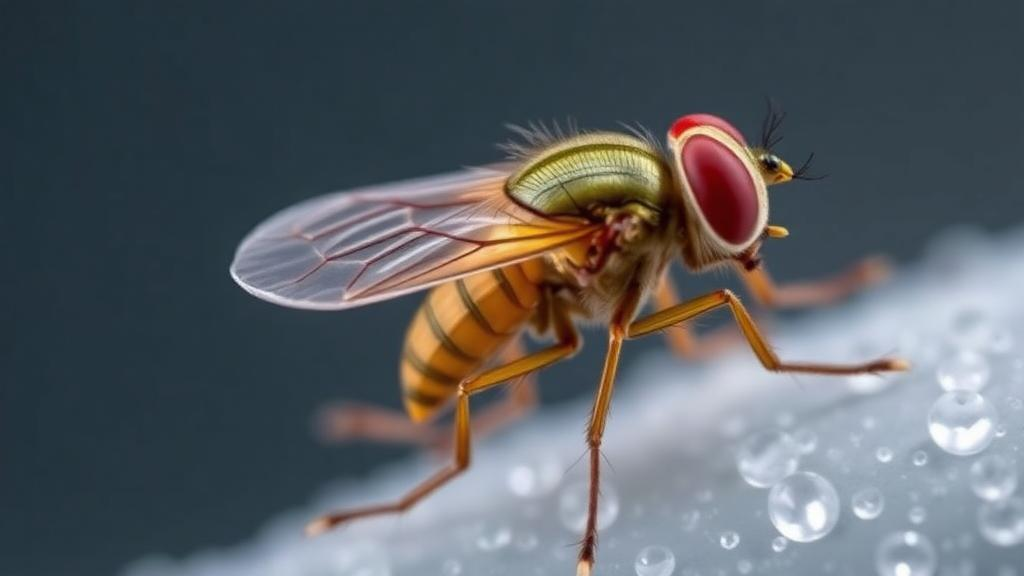
Heart rate is one of the most familiar numbers in medicine, yet it remains one of the least understood from a genetic point of view. A new study published in PLOS Genetics by Gulnur Ipek Erdemli, Murat Yilmaz, Alp Mete Ummet, Fatih Akdemir and Ergi Deniz Ozsoy takes a systematic look at how genes and environment jointly determine the tempo of the heart, using the fruit fly Drosophila melanogaster as the experimental platform. By combining the natural genetic diversity of the Drosophila Genetic Reference Panel with dietary salt stress and targeted gene silencing, the team has produced one of the most detailed maps to date of how a complex cardiac trait is built from many small genetic effects that only reveal themselves under the right conditions.
The motivation is far from abstract. Cardiovascular diseases accounted for roughly 32 percent of all deaths worldwide in 2019 according to the World Health Organization, and resting heart rate sits at the center of that risk landscape. Meta-analyses cited by the authors indicate that a 10 beats-per-minute increase in resting heart rate is associated with a 15 to 20 percent rise in the risk of cardiovascular disease and all-cause mortality. Elevated resting heart rate increases myocardial oxygen demand while shortening the time the heart has to fill with blood, which promotes ischemia and destabilizes atherosclerotic plaques. Yet the clinical picture is context-dependent: a high heart rate can be a risk factor in dilated cardiomyopathy while potentially exerting protective effects in atrial fibrillation or recurrent ischemic stroke. Understanding the genetic architecture behind this variable trait is therefore a pressing problem.
The Drosophila heart, despite being a single-chambered tube in an open circulatory system, is built from evolutionarily conserved molecular machinery. Genes governing heart development, cardiomyocyte differentiation and ion channel function in the fly have direct structural and functional counterparts in humans, and roughly 75 percent of human disease-related genes have fly orthologs. The researchers focused on third instar larvae, a stage at which the heart beats in a predominantly myogenic fashion, resembling the intrinsic pacemaker-like regulation of vertebrate hearts and avoiding the extensive remodeling that occurs during metamorphosis. Heart rate was quantified from video recordings by counting contractions over a fixed 20-second window, with 20 larvae measured for each combination of genetic line, treatment and sex.
The scale of natural variation was striking. Across 154 inbred DGRP lines reared on standard medium, mean heart rates ranged from 51.4 to 143.7 beats per 20 seconds in females and from 50.2 to 140.9 in males, an approximately threefold spread. When the diet was supplemented with 0.1 percent sodium chloride, the range widened further, reaching 185.0 in females and 188.1 in males. Analyses of variance confirmed that the line term was highly significant in every sex and treatment combination, and broad-sense heritability estimates of about 0.45 to 0.47 on standard medium indicated a moderate but substantial genetic contribution. Notably, heritability rose to roughly 0.51 under salt stress, suggesting that environmental challenge makes underlying genotypic differences more, not less, visible.
That observation points to one of the study’s central concepts: genotype-by-environment interaction. A mixed-effects model applied to the combined dataset showed highly significant fixed effects of treatment and sex, a weaker but significant treatment-by-sex interaction, and a highly significant line-by-treatment term accounting for a substantial share of the variance. Cross-environment correlations of line means were moderate, at r = 0.65 for both sexes, far from unity, meaning that genotypes do not respond uniformly to salt. Line-by-line Welch’s t-tests with Benjamini-Hochberg correction made the heterogeneity concrete: salt significantly changed heart rate in 60 female lines, increasing it in 48 and decreasing it in 12, and in 46 male lines, with increases in 37 and decreases in 9. The same diet can speed up one fly genotype and slow down another.
Genome-wide association analyses, run through a linear mixed model framework in FaST-LMM with a genomic relatedness matrix to control for relatedness among lines, mapped candidate variants under each condition. On standard medium the screen identified 44 candidate variants and 35 candidate genes; under salt supplementation, 56 variants and 39 genes; and for the difference between conditions, 34 variants and 30 genes. In total, 134 candidate variants were found, 101 of them uniquely assigned to gene regions, comprising 101 SNPs, 8 deletions, 2 insertions and 1 multiple nucleotide polymorphism. Most variants sat in intronic or downstream regions rather than coding sequence, hinting that regulatory variation, not altered proteins, carries much of the signal. Strikingly, the candidate sets from standard and salt conditions barely overlapped, a pattern the authors interpret as the unmasking of cryptic genetic variation: standing variants that are phenotypically silent under normal conditions but contribute to variance when the organism is stressed.
Gene set enrichment analysis of the candidates pointed toward biologically coherent territory: heart and muscle development, ion transmembrane transport, and signaling pathways regulating cardiac homeostasis, along with nominal links to hypertension, heart failure and QT interval abnormalities. To test whether these statistical associations reflect real physiology, the team silenced selected candidate genes specifically in cardiac tissue using the UAS/GAL4 system with two drivers. Mef2-GAL4 targets cardiomyocytes and the contractile machinery, while Hand-GAL4 is expressed more broadly in cardiac and pericardial cells, allowing a coarse spatial dissection of gene function. RNAi lines came from two independent VDRC libraries, KK and GD, and effects were assessed with both ANOVA-based post-hoc comparisons and Dunnett’s tests against matched background controls.
The validation results were extensive. With the Mef2 driver, 20 of 29 tested genes, about 69 percent, significantly altered heart rate in female larvae on standard medium, with 16 knockdowns raising heart rate and 4 lowering it; comparable numbers emerged under salt and in males, including four genes, CG15144, RluA-1, ringer and MSI, that had no effect on standard medium but significantly increased heart rate under salt. Several genes stood out mechanistically. Knockdown of CG42541, whose human orthologs REM1, REM2 and GEM restrain voltage-gated calcium channels, produced the largest effect in the study, raising heart rate by 52 beats per 20 seconds, consistent with excess intracellular calcium driving hypercontractility. SLO2, the fly counterpart of the human KCNT1 sodium-activated potassium channel linked to QT prolongation and arrhythmia, and nAChRα3, related to CHRNA2 and CHRNA3, both tied heart rate to ion homeostasis and electrical excitability.
A second functional layer involved protein quality control rather than the channels themselves. EMC3, a component of the endoplasmic reticulum membrane complex that inserts transmembrane proteins such as ion channels into membranes, reduced heart rate by roughly 50 beats per 20 seconds when silenced, implicating membrane protein biogenesis in cardiac pacing. CG6656, whose human ortholog ACP2 encodes a lysosomal acid phosphatase, showed opposite effects depending on the driver, increasing heart rate with Mef2 and decreasing it with Hand, a discrepancy the authors attribute to distinct cell populations and developmental timing. Prosalpha6T, a 26S proteasome subunit whose human ortholog PSMA1 is tied to proteostatic heart failure, lowered heart rate when knocked down. Metabolic and stress pathways contributed as well: ktub, related to the human GPCR carrier TULP3, and Adgf-A, an adenosine deaminase whose loss causes adenosine accumulation and systemic stress, both significantly altered heart rate, while Egfr knockdown reduced it, underscoring the conserved role of receptor tyrosine kinase signaling in myocardial integrity. Nine of the 14 core validated genes, including shn, bma and SLO2, have human orthologs previously associated with cardiomyopathies, arrhythmias, congenital heart defects or heart failure.
The authors are candid about the limits of their evidence. A subset of VDRC KK RNAi lines carries a 40D insertion that can ectopically express the neighboring tiptop gene and confound phenotypes, so suspect candidates were retested with the VDRC 60101 control and independent GD RNAi constructs. Most candidates remained statistically significant across these checks, though the direction of effect sometimes flipped, a reminder that RNAi background and driver context shape individual outcomes. The findings also apply specifically to the larval stage, before the cardiac remodeling of metamorphosis. Even so, the study delivers a framework of real translational value: heart rate emerges not as the product of a single gene but as an integrated output of ion handling, proteostasis, metabolism and stress signaling, with the relevant genetic modules switching according to environment and sex. As dietary salt remains one of the most debated cardiovascular risk factors in human medicine, the demonstration that salt stress can expose hidden genetic variation governing cardiac function offers a compelling model for how diet and genome interact, in flies and quite possibly in ourselves.
Subject of Research: Genetic architecture of heart rate and its modulation by dietary salt stress in Drosophila melanogaster
Article Title: Genetic architecture of basal heart rate and its modulation by dietary salt in Drosophila melanogaster
Article References: Erdemli, G. I., Yilmaz, M., Ummet, A. M., Akdemir, F., & Ozsoy, E. D. (2026). Genetic architecture of basal heart rate and its modulation by dietary salt in Drosophila melanogaster. PLOS Genetics, 22(10), e1012313. https://doi.org/10.1371/journal.pgen.1012313
Image Credits: AI Generated
DOI: 10.1371/journal.pgen.1012313
Keywords: heart rate, Drosophila melanogaster, DGRP, genotype-by-environment interaction, cryptic genetic variation, GWAS, salt stress, RNAi, ion homeostasis, cardiac genetics, proteostasis, cardiovascular disease
Cite Scienmag News
Juliet Wilcox. (October 8, 2026). Salt Stress Reveals Hidden Genes That Set the Pace of the Fruit Fly Heart. Scienmag. https://scienmag.com/salt-stress-reveals-hidden-genes-that-set-the-pace-of-the-fruit-fly-heart/
Juliet Wilcox. "Salt Stress Reveals Hidden Genes That Set the Pace of the Fruit Fly Heart." Scienmag, 8 October 2026, https://scienmag.com/salt-stress-reveals-hidden-genes-that-set-the-pace-of-the-fruit-fly-heart/. Accessed 8 October 2026.
Juliet Wilcox. "Salt Stress Reveals Hidden Genes That Set the Pace of the Fruit Fly Heart." Scienmag. October 8, 2026. https://scienmag.com/salt-stress-reveals-hidden-genes-that-set-the-pace-of-the-fruit-fly-heart/


