


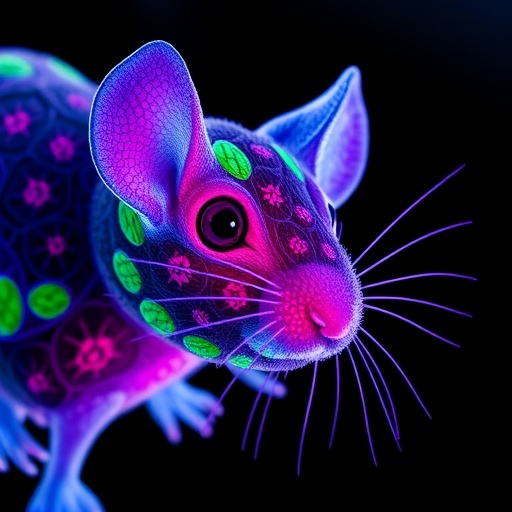
In a groundbreaking study poised to transform our understanding of lung biology, researchers have unveiled the pivotal role of the protein S100B in orchestrating airway regeneration through neuroendocrine macrophage networks in mice. This discovery, detailed by Sun, Dai, Zhao and colleagues in the prestigious journal Nature Communications, sheds light on previously uncharted communication pathways within the lung’s immune microenvironment and opens promising avenues for regenerative medicine and respiratory disease treatment.
The lungs, vital for oxygen exchange, are continually exposed to environmental insults, ranging from pathogens to pollutants, necessitating efficient repair mechanisms. Although the regenerative capacity of airway epithelial cells has been documented, the complex interplay between immune cells and tissue repair processes remains enigmatic. This study breaks new ground by identifying S100B—a calcium-binding protein known for its involvement in nervous system functions—as a master regulator of neuroendocrine macrophage activity that drives airway tissue restoration.
Macrophages have long been recognized as versatile cells contributing to host defense and tissue maintenance. However, the identification of a neuroendocrine subset within the pulmonary milieu introduces a fresh perspective on their functional diversity. These specialized macrophages interact with airway neuroendocrine cells, and the researchers discovered that S100B acts as a critical signaling molecule within this unique cellular niche. Through meticulous experimental approaches, including in vivo imaging and molecular pathway dissection, they demonstrated that S100B instigates a cascade of events promoting macrophage network formation and functional cooperation.
Key to the study’s innovation is the elucidation of how S100B modulates intracellular signaling within neuroendocrine macrophages. The research team showed that S100B binds specific receptors on macrophage surfaces, triggering downstream pathways involving calcium influx and NF-κB activation—two crucial mechanisms known to regulate inflammation and cell survival. This signaling not only enhances macrophage motility and clustering but also stimulates the secretion of regenerative factors that support epithelial cell proliferation and differentiation.
The in vivo experiments conducted on murine models subjected to airway injury illustrate the therapeutic potential of targeting the S100B axis. Mice with genetically enhanced S100B expression exhibited accelerated airway repair and reduced fibrotic remodeling compared to controls. Conversely, blocking S100B signaling resulted in impaired macrophage networking and delayed tissue regeneration. These findings underscore S100B’s dual role as both a signaling ligand and a facilitator of cellular crosstalk essential for maintaining pulmonary homeostasis.
Furthermore, the study delves into the neuroendocrine dimension of macrophage functionality, revealing that these immune cells respond not only to traditional immune stimuli but also to neuropeptides secreted by airway neuroendocrine cells. S100B emerged as a critical component in this bidirectional communication, acting as a molecular bridge that integrates neuroendocrine inputs with immune responses. This crosstalk appears to fine-tune the regenerative milieu, optimizing conditions for tissue repair.
The implications of this research extend far beyond fundamental biology. Chronic respiratory diseases such as chronic obstructive pulmonary disease (COPD), asthma, and idiopathic pulmonary fibrosis (IPF) are characterized by progressive airway damage and insufficient repair. Current therapies primarily manage symptoms without addressing the underlying regenerative deficits. By harnessing the S100B-neuroendocrine macrophage network, future interventions could potentially restore lung architecture and function, offering radical improvements in patient outcomes.
Another profound aspect lies in the possibility of manipulating S100B signaling pathways pharmacologically. The study identifies key molecular intermediates that could serve as drug targets. Small molecules or biologics designed to enhance S100B activity might stimulate endogenous repair mechanisms, whereas strategies that temper excessive activation could prevent pathological remodeling and inflammation, striking a balance critical in diseases with immune dysregulation.
From a broader perspective, this discovery challenges conventional views that separate the nervous system from immune functions in organ regeneration. Instead, it reveals an intricate neuroimmune dialogue crucial for maintaining tissue integrity. Such insights may catalyze research in other organ systems, where similar neuroendocrine-immune interactions could govern regeneration and disease, thereby unlocking new therapeutic paradigms across medicine.
The technical rigor of the study, combining state-of-the-art gene editing, live-cell imaging, and proteomic analyses, lends robustness to the conclusions. The multidisciplinary approach exemplifies modern biomedical research’s trajectory toward unraveling complex biological networks by integrating molecular biology, immunology, and neurobiology.
Moreover, the identification of S100B as a linchpin molecule invites further investigations into its modulation under physiological and pathological conditions. Questions arise about how environmental factors, aging, or genetic predispositions influence S100B expression and function, potentially affecting airway resilience and repair capacity. Understanding these dynamics could provide insights into individual variability in disease susceptibility and recovery.
The study also highlights the spatial and temporal orchestration of cellular actors during regeneration. Neuroendocrine macrophage clusters form transient yet highly coordinated networks that dissolve once repair concludes, ensuring that immune activation is tightly regulated. This transient nature minimizes the risk of chronic inflammation and tissue scarring, phenomena commonly observed in diseased lungs.
Importantly, the researchers caution that translating these findings to human therapeutics necessitates detailed studies to confirm the conservation of S100B-mediated mechanisms across species. Human lung tissues exhibit similar neuroendocrine and immune cell populations, suggesting potential relevance, but clinical validation is essential.
In conclusion, the work by Sun, Dai, Zhao et al. stands as a landmark contribution elucidating the fundamental biology of airway regeneration. By uncovering the S100B-triggered neuroendocrine macrophage networks, it not only advances our molecular understanding but also propels the field toward innovative strategies to combat debilitating lung diseases. This research represents a promising step toward harnessing the body’s intrinsic capacity to heal itself, potentially transforming therapeutic approaches and improving respiratory health worldwide.
Cite Scienmag News
Ophelia Keating. (December 17, 2025). S100B Activates Macrophages to Regenerate Mouse Airways. Scienmag. https://scienmag.com/s100b-activates-macrophages-to-regenerate-mouse-airways/
Ophelia Keating. "S100B Activates Macrophages to Regenerate Mouse Airways." Scienmag, 17 December 2025, https://scienmag.com/s100b-activates-macrophages-to-regenerate-mouse-airways/. Accessed 4 September 2026.
Ophelia Keating. "S100B Activates Macrophages to Regenerate Mouse Airways." Scienmag. December 17, 2025. https://scienmag.com/s100b-activates-macrophages-to-regenerate-mouse-airways/


