


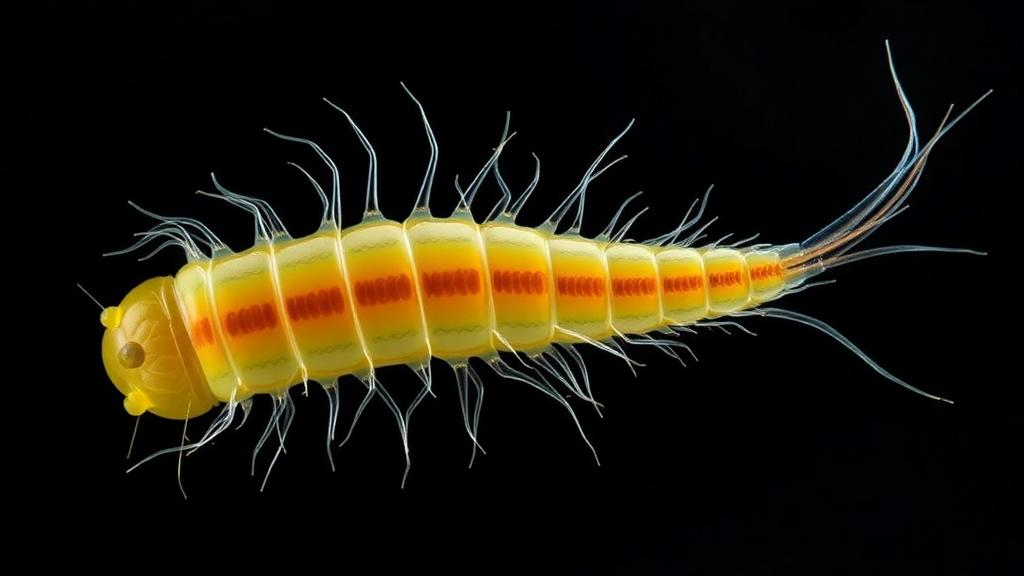
A tiny parasite that has been quietly spreading through European livestock herds has now given up some of its molecular secrets. The rumen fluke Calicophoron daubneyi, an emerging trematode that inhabits the stomach chamber of cattle and other ruminants, spends much of its life outside the host animal, drifting through pastures as an egg, multiplying inside a snail, and finally swimming free as a larva in search of its next target. A research team led by Leah R. Knoepfle and Markus Meissner at Ludwig-Maximilians-Universitaet Muenchen has now mapped the gene activity of these free-living and intermediate stages in unprecedented detail, publishing the results in BMC Genomics. Their analysis provides the first transcriptomic window into the biology of this parasite beyond the definitive host, and it reveals that each life stage runs on its own distinct genetic program.
The study focused on three phases of the parasite’s development that take place in the environment: eggs at three different points of maturation, the rediae that proliferate inside the snail intermediate host, and the cercariae that eventually emerge to infect new animals. Eggs were sampled freshly excreted, at an early developmental stage, and at the eye-spot stage, when the embryo is fully formed and the ciliated miracidium larva is ready to hatch. By sequencing the RNA of fifteen samples spanning these five life stages, the researchers assembled high-quality datasets that allowed them to compare gene expression patterns across the entire developmental sequence leading up to infection of the mammalian host.
The technical approach relied on RNA sequencing, in which the messenger RNA molecules present in each sample are captured and read out to quantify how actively each gene is being transcribed. The team mapped their reads against the current C. daubneyi genome annotation, normalized expression levels as transcripts per million, and applied statistical tests to identify genes that were significantly upregulated or downregulated between stages, controlling the false discovery rate at five percent. Clustering algorithms then grouped genes with similar expression profiles into subclusters, each representing a set of genes that behave coherently across development. Gene Ontology enrichment analysis was used to ask which biological functions were overrepresented within each cluster, turning raw expression tables into biological narratives.
One of the most striking findings concerned the fully embryonated eggs at the eye-spot stage. These eggs, the analysis showed, strongly upregulated genes involved in cilium assembly, cilium movement, and motility. This makes elegant biological sense: the miracidium that hatches from such an egg is a ciliated larva that must actively swim through water films on pasture to locate and penetrate a suitable snail host. The enrichment of cilium-related gene categories, with a false discovery rate as low as 1.76 times ten to the minus nine for the cilium movement term, indicates that the embryo is essentially pre-building its locomotion machinery while still encased in the egg shell, preparing for the moment of hatching and the host-seeking behavior that follows.
The rediae told a completely different molecular story. These worm-like stages live within the snail and are responsible for the parasite’s dramatic asexual multiplication, producing generation after generation of daughter organisms that will eventually become cercariae. Consistent with this role, the rediae showed enhanced transcription of genes involved in a broad range of metabolic and biosynthetic processes. The transcriptomic signature of this stage is one of a factory running at full capacity: DNA replication, protein synthesis, and energy generation all appear dialed up to support rapid proliferation inside the intermediate host. This metabolic versatility likely allows the rediae to exploit the resources of the snail while sustaining their extraordinary reproductive output.
Cercariae, the final larval stage produced in the snail, displayed yet a third pattern. Their transcriptomes were dominated by genes associated with signal transduction and energy metabolism, particularly pathways involving small GTPases, Ras and Rho protein signaling. The researchers interpret this as an adaptation to the cercaria’s precarious existence: after emerging from the snail, the larva must respond to changing environmental cues, encyst on vegetation, and await ingestion by a grazing ruminant. A nervous system and signaling apparatus tuned to external stimuli, combined with robust energy metabolism, would equip the cercaria to survive this transition and to execute the encystment process that bridges the free-living and parasitic phases of the life cycle.
Beyond these stage-specific programs, the analysis also uncovered shared transcriptional features, and the clustering of expression profiles into sixteen subclusters allowed the team to distinguish genes that are common to all stages from those that define particular developmental transitions. An UpSet analysis of expressed genes across the five stages quantified how many transcripts are shared or unique, providing a genome-wide atlas of the parasite’s development outside the definitive host. The datasets, including normalized read counts and complete enrichment results, have been made available as supplementary material, giving other researchers a resource for mining stage-specific genes.
The practical implications of the work are considerable. Rumen flukes have been increasingly recognized as parasites of livestock in Europe, and control options remain limited, with treatment strategies largely borrowed from those used against the related liver fluke Fasciola hepatica. Because the stages studied here, the eggs, rediae and cercariae, exist outside the treated animal, they have historically been inaccessible to both research and intervention. The stage-specific genes identified in this study, from cilium components essential for miracidial motility to signaling molecules required for cercarial encystment, represent potential molecular targets for new drugs, vaccines, or environmental control strategies aimed at breaking the transmission chain before the parasite ever reaches the ruminant host.
The study also fills a broader gap in trematode biology. While the liver fluke and the blood flukes Schistosoma species have been extensively characterized at the transcriptomic level across their life cycles, the rumen fluke has remained comparatively obscure, with most genomic resources focused on the adult stages recovered from the rumen. By extending transcriptomic coverage to the environmental and intermediate host stages, the Munich team has opened a comparative avenue: researchers can now ask how conserved the developmental gene programs are across fluke species, and whether the molecular strategies used by C. daubneyi to navigate its snail host and its aquatic environment resemble those of its better-studied relatives.
For a parasite that spends most of its life unseen, in mud, water and snail tissue, Calicophoron daubneyi has now become considerably more visible, at least at the level of its genes. The transcriptomic atlas assembled by Knoepfle, Cosentino, Schmidt and colleagues demonstrates that development in this fluke is not a smooth continuum but a sequence of sharply defined molecular states, each tuned to a distinct ecological challenge: surviving the pasture as an egg, swimming as a miracidium, proliferating in a snail, and enduring the open environment as a cercaria. As rumen fluke infections continue to rise across European herds, the stage-specific genes catalogued here may prove to be the weak points in the parasite’s armor, the molecular hinges on which its life cycle turns, and the starting points for the next generation of control measures.
Subject of Research: Stage-specific transcriptomics of the rumen fluke Calicophoron daubneyi across its environmental and intermediate host life stages
Article Title: Transcriptomic analysis of eggs, rediae and cercariae reveal stage-specific adaptations in the rumen fluke Calicophoron daubneyi
Article References: Knöpfle, L. R., Cosentino, R. O., Schmidt, M. R., Elbert, V. K., Haug, S., Weber, F., Perera, A. V., Siegel, T. N., & Meissner, M. (2026). Transcriptomic analysis of eggs, rediae and cercariae reveal stage-specific adaptations in the rumen fluke Calicophoron daubneyi. BMC Genomics, 27(1), Article 726. https://doi.org/10.1186/s12864-026-13271-z
Image Credits: AI Generated
DOI: 10.1186/s12864-026-13271-z
Keywords: Calicophoron daubneyi, rumen fluke, transcriptomics, RNA sequencing, trematode, gene expression, miracidium, cercariae, rediae, livestock parasites, Gene Ontology, parasite life cycle
Cite Scienmag News
Juliet Wilcox. (October 4, 2026). Rumen Fluke Parasite Reveals Its Molecular Playbook Across Life Stages. Scienmag. https://scienmag.com/rumen-fluke-parasite-reveals-its-molecular-playbook-across-life-stages/
Juliet Wilcox. "Rumen Fluke Parasite Reveals Its Molecular Playbook Across Life Stages." Scienmag, 4 October 2026, https://scienmag.com/rumen-fluke-parasite-reveals-its-molecular-playbook-across-life-stages/. Accessed 4 October 2026.
Juliet Wilcox. "Rumen Fluke Parasite Reveals Its Molecular Playbook Across Life Stages." Scienmag. October 4, 2026. https://scienmag.com/rumen-fluke-parasite-reveals-its-molecular-playbook-across-life-stages/


