


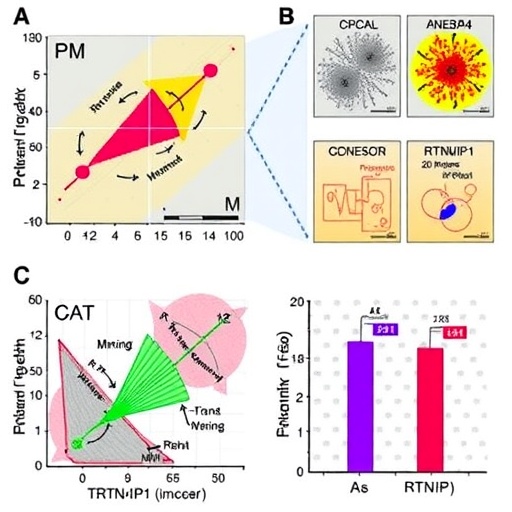
Triple-negative breast cancer (TNBC), one of the most aggressive forms of breast cancer, may be driven by a previously underappreciated mitochondrial protein that helps tumor cells survive and expand after reaching distant organs. In a study published in the Chinese Medical Journal, researchers from Shandong University and collaborating institutions identified RTN4IP1 as a metabolic regulator linked to tumor progression, lung metastasis, and poor clinical outcomes. Their findings suggest that blocking the RTN4IP1–AK4 pathway could eventually open a new therapeutic route for patients whose cancers lack the molecular targets used by many existing breast cancer treatments.
TNBC represents approximately 15% of breast cancer diagnoses and is defined by the absence of three major therapeutic markers: the estrogen receptor, the progesterone receptor, and human epidermal growth factor receptor 2, commonly known as HER2. Because these tumors do not depend on the signaling pathways targeted by endocrine therapies or HER2-directed drugs, treatment generally relies on combinations of chemotherapy, immunotherapy, surgery, and radiation. Even with these approaches, TNBC is frequently associated with rapid progression, early relapse, and metastasis to organs including the lungs, liver, brain, and bones. The biological diversity of TNBC has made it particularly difficult to identify vulnerabilities that can be exploited with precision therapies.
To search for such vulnerabilities, the research team integrated information from several publicly available genomic and clinical databases. Across tumor datasets and cell-line analyses, RTN4IP1 was found to be expressed at higher levels in TNBC than in nonmalignant breast tissue and several other breast cancer subtypes. The gene’s elevated expression was also associated with shorter overall survival and a greater likelihood of distant metastatic disease. These observations did not, by themselves, prove that RTN4IP1 drives cancer progression, but they provided a strong rationale for functional experiments designed to determine whether the protein plays an active role in the aggressive behavior of TNBC cells.
The investigators used gene knockdown approaches to reduce RTN4IP1 production in TNBC cell models. The loss of the protein substantially weakened the ability of cancer cells to proliferate, migrate, and invade surrounding tissue in laboratory assays. These behaviors are central to the metastatic process: tumor cells must multiply, detach from the primary tumor, move through surrounding structures, enter the circulation, and eventually establish themselves in distant organs. The results indicated that RTN4IP1 is not merely a passive marker of aggressive disease. Instead, it appears to support several cellular properties that enable TNBC cells to grow and disseminate.
The researchers then examined the protein’s role in living animals using a tail-vein injection model of lung metastasis. This experimental system introduces tumor cells directly into the bloodstream, allowing scientists to study their ability to survive in circulation, lodge in the lungs, and grow into metastatic lesions. Surprisingly, reducing RTN4IP1 did not significantly change the number of microscopic metastatic deposits initially detected in the lungs. However, it markedly restricted the later enlargement of those lesions. This distinction is important because metastasis is not a single event. It involves an early colonization phase followed by a prolonged period in which disseminated cells adapt to a new tissue environment and expand into clinically significant tumors.
The animal data therefore suggest that RTN4IP1 may be especially important after cancer cells have reached the lung. Rather than primarily controlling the initial seeding of tumor cells, the protein appears to help newly established metastatic cells meet the energetic and biosynthetic demands of continued growth. This finding could have implications for the design of anti-metastatic therapies. A drug targeting RTN4IP1 might not necessarily prevent every tumor cell from arriving at a distant organ, but it could interfere with the ability of those cells to convert microscopic deposits into expanding secondary tumors. Such an approach could be particularly valuable in combination with treatments that target tumor-cell dissemination or immune surveillance.
At the mechanistic level, the study places RTN4IP1 at the intersection of mitochondrial function and cancer metabolism. RTN4IP1 is a mitochondrial matrix protein, meaning that it resides within the innermost compartment of mitochondria, the organelles responsible for producing much of a cell’s usable energy. When RTN4IP1 was depleted, intracellular levels of nicotinamide adenine dinucleotide, or NAD⁺, fell significantly. NAD⁺ is a central metabolic coenzyme that shuttles electrons during biochemical reactions and supports both glycolysis and mitochondrial oxidative phosphorylation. It also contributes to DNA repair, redox balance, cellular signaling, and the activity of enzymes involved in gene regulation.
A reduction in NAD⁺ can have wide-ranging consequences for a rapidly dividing cancer cell. Glycolysis, which converts glucose into energy and metabolic intermediates in the cytoplasm, depends on the continuous regeneration of NAD⁺. Mitochondrial oxidative phosphorylation also requires redox cofactors to transfer electrons through the respiratory chain and generate ATP. When NAD⁺ becomes insufficient, both energy production and the synthesis of cellular building blocks can be impaired. In the RTN4IP1-deficient TNBC models, this metabolic disruption was associated with a broad decline in the capacity of cancer cells to sustain growth and metastatic expansion. The findings point to a form of metabolic reprogramming in which RTN4IP1 helps tumor cells preserve the biochemical resources needed to thrive under the stressful conditions of a distant organ.
Further experiments identified mitochondrial adenylate kinase 4, or AK4, as a critical molecular partner of RTN4IP1. Using co-immunoprecipitation, a technique that detects proteins physically associated within cells, the researchers confirmed that the two proteins interact directly. AK4 participates in the regulation of adenine nucleotide balance, helping maintain the supply and distribution of energy-related molecules such as ATP and ADP inside mitochondria. The study found that AK4 was necessary for the pro-metastatic effects linked to RTN4IP1, supporting a model in which RTN4IP1 collaborates with AK4 to preserve mitochondrial energy management and NAD⁺-dependent metabolism.
The proposed pathway can therefore be summarized as an RTN4IP1–AK4 axis that protects the metabolic fitness of TNBC cells. Increased RTN4IP1 may allow tumor cells to maintain NAD⁺ availability, sustain glycolysis and oxidative phosphorylation, and generate the energy and biosynthetic intermediates required for metastatic growth. Removing RTN4IP1 disrupts this system, reduces NAD⁺ levels, weakens cellular metabolism, and limits the expansion of cancer colonies in the lung. The study also raises the possibility that RTN4IP1 contains a potentially druggable NAD(P)-binding pocket. Designing small molecules that occupy this predicted site, or developing compounds that prevent RTN4IP1 from interacting with AK4, could provide two possible strategies for disrupting the pathway.
The findings are promising, but they remain at a preclinical stage. The experiments were conducted in cell systems and animal models, and the behavior of RTN4IP1-targeting drugs in human patients is unknown. Before clinical testing, researchers will need to establish whether the protein can be inhibited safely, determine how selectively it is expressed in cancer compared with healthy tissues, and assess whether tumors can bypass the pathway through alternative metabolic mechanisms. It will also be important to evaluate how RTN4IP1 inhibition might interact with chemotherapy, immunotherapy, or existing metabolic drugs. Nevertheless, by linking a mitochondrial protein to NAD⁺ regulation, AK4 activity, and the post-colonization growth of metastases, the study offers a detailed new framework for understanding why some TNBC cells remain capable of expanding after they reach distant organs.
News Publication Date: 14-Apr-2026
Web References: https://doi.org/10.1097/CM9.0000000000004074
References: DOI: 10.1097/CM9.0000000000004074
Cite Scienmag News
Nathaniel Bowman. (August 13, 2026). RTN4IP1 Drives Triple-Negative Breast Cancer Progression and Metastasis Through Metabolic Reprogramming. Scienmag. https://scienmag.com/rtn4ip1-drives-triple-negative-breast-cancer-progression-and-metastasis-through-metabolic-reprogramming/
Nathaniel Bowman. "RTN4IP1 Drives Triple-Negative Breast Cancer Progression and Metastasis Through Metabolic Reprogramming." Scienmag, 13 August 2026, https://scienmag.com/rtn4ip1-drives-triple-negative-breast-cancer-progression-and-metastasis-through-metabolic-reprogramming/. Accessed 4 September 2026.
Nathaniel Bowman. "RTN4IP1 Drives Triple-Negative Breast Cancer Progression and Metastasis Through Metabolic Reprogramming." Scienmag. August 13, 2026. https://scienmag.com/rtn4ip1-drives-triple-negative-breast-cancer-progression-and-metastasis-through-metabolic-reprogramming/


