


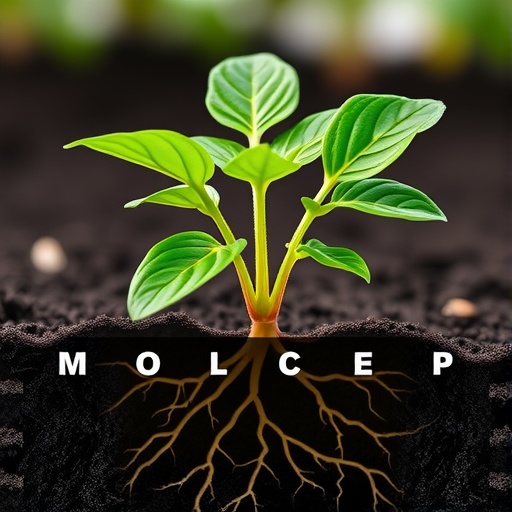
In a groundbreaking study published in npj Sustainable Agriculture, researchers have unveiled a sophisticated method for analyzing root exudates—organic compounds secreted by plant roots—to understand how different plant genotypes utilize phosphorus from both conventional and recycled sources. This innovative non-targeted root exudome profiling presents a fresh lens through which scientists can decipher plant nutrient strategies, potentially revolutionizing agronomic practices in the face of global nutrient challenges.
Phosphorus, a critical nutrient for plant growth and development, is notoriously difficult to manage sustainably. Conventional phosphorus fertilizers are derived from finite phosphate rock reserves, which are rapidly depleting, while recycled phosphorus sources often vary widely in bioavailability. The intricacies of how plants access and exploit these disparate phosphorus pools have remained elusive, primarily due to the complexity of root exudates and their dynamic interactions with soil microbes.
The study at hand employs a non-targeted metabolomics approach to characterize the root exudome at an unprecedented resolution, capturing a wide spectrum of metabolites that plants release into the rhizosphere. By analyzing these chemical profiles across various genotypes, the researchers uncovered distinctive exudation patterns that correspond to different phosphorus acquisition strategies. This discovery suggests that plants possess genotype-specific biochemical toolkits tailored to optimize phosphorus uptake based on source availability.
By deploying advanced mass spectrometry techniques alongside sophisticated data analytics, the team generated comprehensive chemical fingerprints of root secretions. These fingerprints revealed key metabolite classes, including organic acids, amino acids, and phenolic compounds, which are implicated in phosphorus solubilization and mobilization. Notably, certain genotypes demonstrated enhanced secretion of specific organic acids known to chelate phosphorus from insoluble sources, highlighting the adaptive mechanisms plants use to access recycled phosphorus.
Beyond the chemical insights, the findings bear significant agronomic implications. Understanding the genotype-dependent exudation profiles can inform breeding programs focused on developing crops with improved phosphorus efficiency. Such crops could thrive on lower fertilizer inputs by better exploiting recycled phosphorus, thereby mitigating the environmental impacts of phosphate mining and excessive fertilizer use, which contribute to eutrophication and soil degradation.
The researchers also emphasized the potential for tailoring fertilizer formulations to complement the exudation traits of specific cultivars. This synergy between plant genetics and nutrient management could usher in a new era of precision agriculture, optimizing resource use efficiency and promoting sustainability at scale.
One of the innovative aspects of this work lies in its non-targeted approach. Traditional studies often focus on known metabolites, potentially overlooking other critical compounds involved in nutrient cycling. By casting a wide net across the metabolite spectrum, the team captured novel compounds that may play previously unrecognized roles in phosphorus mobilization, opening avenues for further functional characterization.
This research complements ongoing efforts to recycle nutrients from agricultural and urban waste streams. As global phosphorus reserves dwindle and demand escalates, the ability to harness recycled phosphorus effectively becomes crucial. The genotype-specific strategies unveiled here enhance our understanding of how plants interact with recycled materials, which are often chemically complex and less bioavailable than conventional fertilizers.
Furthermore, the work highlights the intricate dialogue between plants and soil microorganisms mediated by root exudates. These compounds shape rhizosphere communities, promoting beneficial microbes that can further mobilize phosphorus. By deciphering exudation patterns, researchers can better manipulate these microbe-plant interactions to boost nutrient acquisition naturally.
The study’s integrative methodology sets a precedent for holistic plant nutrient research, combining metabolomics, plant genetics, and soil science. Such interdisciplinary approaches are essential to tackle the multifaceted challenges of sustainable agriculture, where nutrient use efficiency must be balanced against environmental stewardship and crop productivity.
Future investigations building on this foundation could explore how environmental variables, such as soil type and climate, modulate exudate profiles and phosphorus use strategies. Understanding these dynamic interactions will be critical for translating laboratory insights into field-scale applications.
Moreover, the identification of metabolite markers associated with phosphorus use efficiency could enable rapid screening of germplasm collections, accelerating the development of phosphorus-smart cultivars. Such tools are invaluable in breeding pipelines, reducing reliance on laborious and time-consuming nutrient uptake assays.
This work also raises intriguing questions about the evolutionary pressures shaping root exudation patterns. Do plants in phosphorus-poor soils naturally select for genotypes with enhanced exudation capabilities? Exploring these ecological dynamics could deepen our understanding of plant adaptation and resilience.
By shedding light on the subterranean chemical ecology of phosphorus acquisition, the study advances the frontiers of sustainable nutrient management. It underscores the sophistication of plant strategies to cope with nutrient limitations and offers tangible pathways to integrate these insights into agricultural practice.
As the demand for sustainable food production intensifies globally, innovations such as non-targeted root exudome profiling provide critical tools to unlock the biological potential residing beneath our feet. Harnessing this knowledge holds promise for crafting resilient agricultural systems that sustain productivity while conserving precious resources.
This seminal research thus stands at the confluence of plant science, chemistry, and environmental sustainability, charting a visionary course toward more informed and efficient utilization of one of agriculture’s most vital nutrients.
Cite Scienmag News
Alan Morgan. (March 31, 2026). Root Exudomes Reveal Genotype-Specific Phosphorus Strategies. Scienmag. https://scienmag.com/root-exudomes-reveal-genotype-specific-phosphorus-strategies/
Alan Morgan. "Root Exudomes Reveal Genotype-Specific Phosphorus Strategies." Scienmag, 31 March 2026, https://scienmag.com/root-exudomes-reveal-genotype-specific-phosphorus-strategies/. Accessed 4 September 2026.
Alan Morgan. "Root Exudomes Reveal Genotype-Specific Phosphorus Strategies." Scienmag. March 31, 2026. https://scienmag.com/root-exudomes-reveal-genotype-specific-phosphorus-strategies/


