

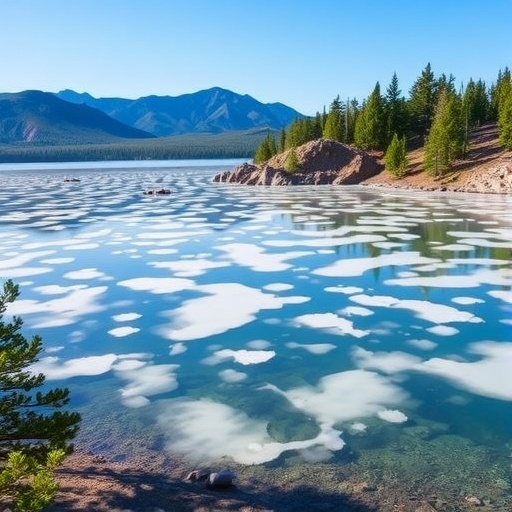
A new and alarming study emerging from Linköping University in Sweden, in collaboration with NASA Ames Research Center, has projected a troubling future for methane emissions originating from lakes and reservoirs worldwide. Their research indicates that these emissions could potentially double by the end of the 21st century, an outcome driven primarily by climate change and with significant implications for global warming trajectories. This discovery suggests that Earth’s surface temperature could climb beyond the intensity currently proposed by the IPCC’s (Intergovernmental Panel on Climate Change) worst-case scenarios, heralding even more profound shifts in our climate system.
Methane, a potent greenhouse gas with a warming potential many times greater than carbon dioxide over short timescales, is abundantly emitted by natural freshwater bodies such as lakes and reservoirs. Microorganisms residing in these oxygen-deprived aquatic sediments break down organic materials, producing methane as a byproduct. Historically, natural methane emissions have balanced with atmospheric methane decomposition, maintaining a relatively stable contribution to the planet’s greenhouse effect. However, as anthropogenic climate change accelerates, this delicate equilibrium is at risk, potentially amplifying feedback loops that make warming worse.
The study’s co-author, Professor David Bastviken of Linköping University, emphasizes the urgency of these findings. He warns that the future trajectory of greenhouse gas emissions and subsequent climate scenarios rest heavily on prompt action to mitigate these changes. The bursts of methane from stagnant water sources, he notes, represent a significant but often underestimated natural feedback mechanism that could exacerbate climate change if left unchecked.
To develop robust predictions, Bastviken teamed up with Matthew S. Johnson of NASA Ames Research Center to construct an intricate computational model. This model integrates empirical data collected from 767 varied locations spanning all climate zones across the globe. It accounts for numerous variables, including temperature fluctuations, alterations in the duration of methane emission seasons, heterogeneity in methane flux pathways, and diverse lake and reservoir morphologies. Additionally, the model factors in changes in the surface area of water bodies and evolving nutrient concentrations, all critical determinants of methane production rates.
Central to the grouping of influences is temperature variation, which the study recognized as having the most pronounced effect on methane emissions. Methanogenesis — the microbial formation of methane — is highly temperature-dependent, accelerating exponentially as water temperatures rise. This reaction intensification means that even small increases in water temperature could lead to disproportionate surges in methane output.
Under the IPCC’s warmest climate models, the study projects that methane emissions from lakes and reservoirs could nearly double by 2100. This increase would translate to approximately a ten percent rise in global methane emissions overall, given that these freshwater systems are a major source. The ramifications of such an increase are huge, as methane is capable of trapping significantly more heat in the atmosphere than carbon dioxide, acting over shorter but highly impactful timescales.
This intensification of methane release risks creating a positive feedback loop, where warming generates higher methane emissions, which in turn elevate global temperatures further. This cycle increases the urgency of addressing human-driven carbon dioxide emissions — the primary cause of global warming — to mitigate such natural amplification effects. Failure to reduce carbon emissions could thus indirectly unleash unchecked increases in natural methane emissions from aquatic ecosystems.
Despite the grim outlook, the study authors offer a silver lining. Actions aimed at reducing anthropogenic greenhouse gas emissions carry a “doubling effect.” Not only do they directly lessen the heat-trapping gases released by human activities, but they also prevent the secondary amplification of methane emissions from lakes and reservoirs. This dual-impact effect underscores the importance of aggressive climate policies and emission reduction targets.
By highlighting the previously underappreciated role of freshwater methane emissions in climate dynamics, the research calls for their integration into climate models and mitigation strategies. Historically, methane flux from lakes and reservoirs has been an overlooked component of carbon cycle models. Incorporating these emissions more accurately will improve future climate projections and policy responses.
The research methodology blends cutting-edge computational simulations with extensive field data, reinforcing the credibility and relevance of the findings. The team’s approach enables them to extrapolate emissions changes over diverse environmental conditions and future scenarios while capturing the complexity of microbial and ecological processes that control methane release.
Publication of these results in the respected journal Nature Water reflects the significance of this research in expanding the scientific community’s understanding of climate feedback mechanisms. It further solidifies the role that interdisciplinary collaborations, like that between European research institutions and NASA, play in tackling global environmental challenges.
As the world grapples with rising global temperatures, discoveries like this illuminate the urgency of addressing natural feedbacks alongside reducing human emissions. Lakes and reservoirs, previously seen merely as passive water bodies, are revealed as dynamic components actively influencing the Earth’s climate system. Managing and monitoring these methane sources will be essential in developing comprehensive climate resilience strategies for the future.
Subject of Research: Not applicable
Article Title: Future methane emissions from lakes and reservoirs
News Publication Date: 4-Nov-2025
Web References: http://dx.doi.org/10.1038/s44221-025-00532-6
References: Published in Nature Water
Image Credits: Charlotte Perhammar
Keywords: methane emissions, lakes, reservoirs, climate change, greenhouse gas, global warming, IPCC scenarios, microbial methane production, climate feedback loops, computational modeling, environmental impact


