


In a groundbreaking advancement within the realm of inorganic chemistry, researchers at Rice University have unveiled a pioneering method to activate dioxygen with f-block metals, specifically neodymium. This achievement signifies a transformative step toward expanding the capabilities of lanthanide chemistry, a field traditionally hindered by the electronic and spatial challenges inherent to f-block elements. The new approach unlocks a pathway for pi interactions between dioxygen—a molecule fundamental to life—and neodymium, fostering reactive lanthanide-oxo species that mimic biological iron-oxo intermediates. This breakthrough could catalyze the development of novel catalysts and synthetic routes inspired by natural enzymatic processes.
Iron-oxo species play indispensable roles in biological systems, notably within hemoglobin where iron binds dioxygen to transport oxygen throughout the body. Beyond oxygen transport, iron-oxo complexes are central to various enzymatic reactions, particularly those in liver enzymes responsible for metabolizing pharmaceuticals. Their high reactivity underpins numerous biochemical transformations, yet their complex behavior renders synthetic replication challenging. Expanding this chemistry to rare earth and actinide elements not only presents an intellectual challenge but also opens new vistas for catalysis and molecular activation, harnessing properties unique to f-block metals.
The f-block metals, which encompass lanthanides and actinides, reside at the base of the periodic table and exhibit markedly different chemistry compared to their d-block counterparts like iron. Their partially filled 4f and 5f orbitals are deeply buried and shielded by outer electrons, rendering direct pi bonding with small molecules such as dioxygen historically elusive. This limitation has constrained the ability of chemists to explore f-block elements in oxygen activation. Neodymium, a lanthanide metal, epitomizes these challenges due to its electronic structure, which disfavours conventional bonding modes critical for biological functionality in iron complexes.
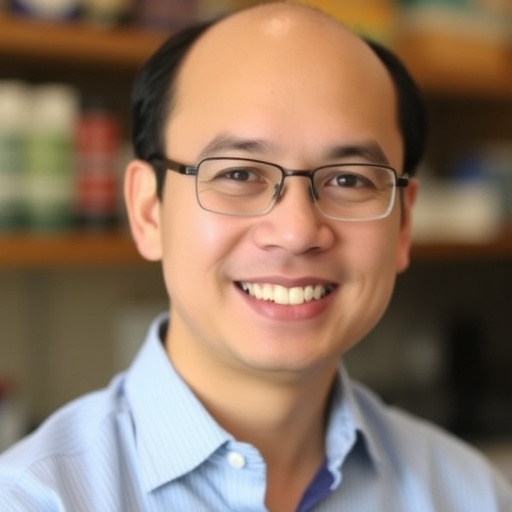
Addressing this scientific impasse, the team led by Assistant Professor Raúl Hernández Sánchez engineered an innovative ligand framework, colloquially referred to as a “basket.” This specially designed ligand environment encapsulates individual lanthanide atoms, orienting them with exquisite precision. Functionally, the basket acts as a scaffold that manipulates metal coordination geometry to foster unconventional interactions. By pairing two such baskets and bridging them with a dioxygen molecule amidst six other strategically positioned atoms, the researchers established an octacoordinate ligand environment around the two neodymium centers.
Creating this eight-coordinate geometry was more than a structural feat; it was the key to enabling a completely new interaction paradigm. The ligand’s spatial configuration encourages the neodymium atoms to engage with dioxygen through pi interactions—electronical interactions involving sideways overlap of orbitals—that were previously unattainable in f-block chemistry. This remarkable finding directly challenges prior assumptions that pi bonding between lanthanides and dioxygen was impossible, thereby opening an entirely new dimension in the activation and functionalization of small molecules by these metals.
Postdoctoral researcher Hong-Lei Xu, the paper’s lead author, described how exploring various reactive conditions led to the serendipitous discovery of these pi interactions. By fine-tuning reaction parameters, the team stabilized a neodymium-dioxygen complex in a way never previously observed. Their findings suggest the neodymium centers not only bind dioxygen but also facilitate electron density rearrangement within the O2 molecule, a prerequisite for bond cleavage and formation of reactive oxo species. These lanthanide-oxo intermediates could potentially mirror or even surpass the reactivity of iron-oxo species in catalytic applications.
This pioneering research does more than merely report a novel bonding interaction; it lays the foundation for synthesizing highly reactive lanthanide oxos that could become versatile synthetic analogs to iron-oxo enzymes. Given the broad spectrum of highly challenging chemical transformations that iron-oxo species mediate—ranging from drug metabolism to environmental detoxification—extending this reactivity to lanthanides could revolutionize catalyst design. The unique electronic structure and distinct reactivity patterns of lanthanides offer prospects for selective and robust catalysis that traditional transition metals might not achieve.
Moreover, the implications of this discovery potentially extend beyond neodymium. Hernández Sánchez’s team hypothesizes that similar octacoordinate ligand frameworks can be tailored to accommodate other lanthanide and possibly actinide metals. Given their chemical similarities, systematic investigation of the broader f-block could reveal a rich landscape of reactive species capable of binding, activating, and cleaving small molecules essential to chemical synthesis and industrial processes. This could effectively inaugurate a new chapter in f-block chemistry, enabling applications ranging from sustainable catalysis to novel material synthesis.
The conceptual leap made by the Rice University researchers hinges on designing ligand architectures that circumvent the typical limitations imposed by the f-block electronic configuration. By physically constraining metal centers within a basket-shaped ligand and controlling their spatial relationship through bridging atoms, they circumvent the electronic barriers to pi bonding. This approach illustrates how sophisticated molecular engineering can reshape fundamental chemical interaction paradigms and inspires a reimagination of the periodic table’s bottom-row chemistry.
This breakthrough also bears significance on the broader quest for sustainable chemistry by offering new catalytic pathways for oxygen activation. The ability to cleave the oxygen-oxygen bond selectively is a coveted goal, central to processes like water splitting and selective oxidation reactions. Lanthanide-oxo complexes, with their novel reactivity profiles, could serve as robust and tunable catalysts, potentially reducing dependence on precious and environmentally taxing transition metal catalysts. Such advances resonate with the goals of green chemistry and renewable energy technologies.
To summarize, the Rice University team’s research marks an inflection point in lanthanide chemistry and bioinspired catalysis, showcasing how unconventional ligand design can unlock previously inaccessible chemical behavior of f-block metals. Through the fabrication of an octacoordinate ligand environment, the team observed unprecedented pi interactions between neodymium and dioxygen, yielding reactive lanthanide-oxo species with immense synthetic promise. This work not only challenges assumptions about the chemical inertness of f-block elements but sets the stage for a new era of molecular activation and functionalization.
As scientists continue to unravel the complexities of lanthanide and actinide chemistry, the innovations arising from this study may serve as blueprints for future research. The controlled activation of small molecules by f-block metals could lead to transformative advances in catalysis, medicine, and material science. While the immediate focus remains on neodymium, the broader application of this concept tantalizes chemists with prospects of engineering complex reactions that harness the latent power of the rarely exploited corner of the periodic table.
Funding for this trailblazing research was provided by Rice University startup funds alongside generous grants from the Robert A. Welch Foundation. The work stands as a testament to how targeted support for fundamental research can yield discoveries poised to redefine entire scientific disciplines.
News Publication Date: 20-Mar-2026
Web References: http://dx.doi.org/10.1021/jacs.5c22234
References: Journal of the American Chemical Society, DOI: 10.1021/jacs.5c22234
Keywords
Metal oxides, Inorganic compounds, Neodymium, Oxygen, Lanthanide chemistry, F-block activation, Dioxygen binding, Pi interactions, Lanthanide-oxo species, Ligand design, Small molecule activation, Catalysis
Cite Scienmag News
Bethany Barker. (April 9, 2026). Rice scientists uncover novel metal-oxygen binding mechanism, opening a ‘new chapter’ in chemistry. Scienmag. https://scienmag.com/rice-scientists-uncover-novel-metal-oxygen-binding-mechanism-opening-a-new-chapter-in-chemistry/
Bethany Barker. "Rice scientists uncover novel metal-oxygen binding mechanism, opening a ‘new chapter’ in chemistry." Scienmag, 9 April 2026, https://scienmag.com/rice-scientists-uncover-novel-metal-oxygen-binding-mechanism-opening-a-new-chapter-in-chemistry/. Accessed 4 September 2026.
Bethany Barker. "Rice scientists uncover novel metal-oxygen binding mechanism, opening a ‘new chapter’ in chemistry." Scienmag. April 9, 2026. https://scienmag.com/rice-scientists-uncover-novel-metal-oxygen-binding-mechanism-opening-a-new-chapter-in-chemistry/


