


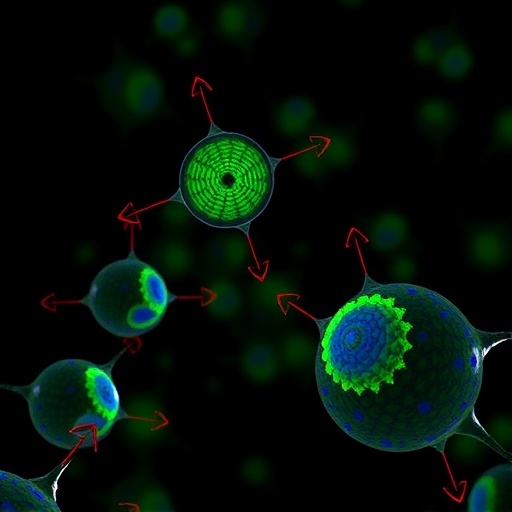
Mitochondria have long been treated as cellular powerhouses, but a new study reframes them as potential vehicles for targeted cancer therapy. Researchers report that mitochondria-derived vesicles can be engineered to seek tumors and, once delivered in the body, act as a platform for local immune priming.
The approach centers on mitochondrial membrane vesicles produced through RHOT1/2 activity. RHOT1 and RHOT2 are small GTPases known to regulate mitochondrial dynamics, and their activation appears to reshape both vesicle biogenesis and the surface cues that determine where these nanoparticles travel. By steering vesicle production with RHOT1/2, the team was able to tune tumor-homing selectivity rather than relying on generic uptake by proliferating tissue.
In preclinical experiments, RHOT1/2-driven vesicles preferentially accumulated in tumor tissue after in vivo administration. The authors connect this targeting behavior to vesicle membrane composition and nanoscale presentation of ligands, which likely interact with tumor-associated microenvironment signals. This selective localization reduced off-target distribution compared with controls lacking RHOT1/2-dependent vesicle features.
Beyond delivery, the vesicles were used as an “in situ vaccination” strategy. Instead of manufacturing a conventional antigen-based vaccine outside the body, the method harnesses the vesicles to help trigger antigen presentation within the tumor setting. Once concentrated in tumors, the vesicles promoted immune activation pathways associated with cross-presentation and priming of tumor-reactive responses.
Mechanistically, the study emphasizes that mitochondrial-derived material can act as immunostimulatory cargo, providing danger signals that recruit and activate innate immune cells. The ensuing inflammatory context supports subsequent adaptive responses, helping the host mount a longer-lasting attack on malignant tissue.
Importantly, the researchers highlight that the system’s effectiveness depends on vesicle traits established during RHOT1/2-driven production. Altering these traits changes both where the vesicles go and how strongly they stimulate immunity, implying that biogenesis is not just a manufacturing detail but a determinant of therapeutic function.
If these findings translate, they could expand mitochondrial nanomedicine into a broader platform for precision oncology. The concept of “manufacturing” immune competence at the tumor site may help circumvent limitations of ex vivo vaccines, including logistical complexity and variable antigen availability.
From a viral-science-news perspective, the work also underscores a broader theme: the immune system is sensitive to subcellular structures, and engineering those structures can reprogram immune trafficking. In that sense, RHOT1/2-driven vesicles represent a rational design of intracellular origin nanoparticles to convert solid tumors into sites of vaccination.
Cite Scienmag News
Nathaniel Bowman. (July 29, 2026). RHOT1/2 Mitochondrial Vesicles Target Tumors and Enable In Situ Vaccination. Scienmag. https://scienmag.com/rhot1-2-mitochondrial-vesicles-target-tumors-and-enable-in-situ-vaccination/
Nathaniel Bowman. "RHOT1/2 Mitochondrial Vesicles Target Tumors and Enable In Situ Vaccination." Scienmag, 29 July 2026, https://scienmag.com/rhot1-2-mitochondrial-vesicles-target-tumors-and-enable-in-situ-vaccination/. Accessed 4 September 2026.
Nathaniel Bowman. "RHOT1/2 Mitochondrial Vesicles Target Tumors and Enable In Situ Vaccination." Scienmag. July 29, 2026. https://scienmag.com/rhot1-2-mitochondrial-vesicles-target-tumors-and-enable-in-situ-vaccination/


