


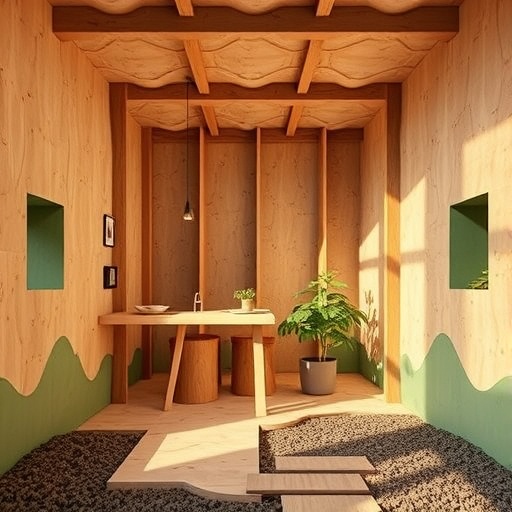
Engineers at RMIT University in Australia have unveiled an innovative building material that promises to reshape the construction industry by significantly reducing its carbon footprint. The new material, dubbed cardboard-confined rammed earth, combines natural elements with creativity, presenting a sustainable alternative to traditional concrete. Remarkably, this breakthrough boasts approximately one quarter of concrete’s carbon emissions, which is crucial in an era where environmental concerns dominate global discussions.
The composition of this new building material is refreshingly simple yet effective: it consists of cardboard, water, and soil. This eco-friendly mixture is entirely reusable and recyclable, addressing the pressing issue of waste in the construction sector. Currently, Australia grapples with the challenge of managing over 2.2 million tons of cardboard and paper sent to landfills each year—a significant environmental concern, especially when considering the broader implications of concrete production, which alone contributes around 8% of annual global emissions.
RMIT’s team drew inspiration from groundbreaking designs that have utilized cardboard in various applications, such as Shigeru Ban’s renowned Cardboard Cathedral in Christchurch, New Zealand. However, this is the first instance where the durability of rammed earth is effectively combined with the versatility of cardboard, resulting in a construction material that is not only structurally sound but also innovative.
Lead author Dr. Jiaming Ma emphasized the importance of this development for a sustainable construction industry. Traditional rammed earth construction methods typically involve compacting soil with cement for added strength—an approach that often leads to excessive cement usage. In contrast, cardboard-confined rammed earth eliminates the need for cement altogether, thereby achieving a remarkable reduction in both the carbon footprint and the overall costs associated with construction.
The techniques involved in creating this pioneering building material allow for walls that are robust enough to support low-rise structures, shunning the reliance on heavy, environmentally taxing materials. Dr. Ma expressed the potential of this innovation to revolutionize building design and construction practices, advocating for the use of locally sourced materials that facilitate easier recycling and sustainability.
The practical advantages of cardboard-confined rammed earth are especially apparent in its construction methodology. Builders can easily craft this novel material on-site by mixing soil and water, which can then be compacted inside cardboard formwork. This approach offers clear logistical benefits, as it significantly reduces the need to transport heavy materials like bricks, steel, or concrete—often a source of increased cost and complexity in construction projects. Emeritus Professor Yi Min ‘Mike’ Xie, a noted authority in structural optimization, emphasized that this development could herald a new era of leaner and greener building practices.
This material is particularly suitable for construction in remote areas, such as parts of regional Australia, where optimal red soils for rammed earth construction are abundant. These areas can benefit significantly from a methodology that reduces dependence on materials transported from farther afield. Moreover, rammed earth buildings are naturally adept at maintaining thermal comfort, making them especially effective in hot climates where temperature regulation is critical.
The strength of the cardboard-confined rammed earth material is informed by the thickness of the cardboard tubes used in its construction. The research team has meticulously established a formula to calculate the strength of this environmentally friendly composite, allowing builders to tailor their designs based on the specific thickness of cardboard being implemented. Dr. Ma revealed that prior research indicates incorporating carbon fiber with rammed earth can yield a strength comparable to high-performance concrete, underscoring the potential for this approach to change building paradigms as we know them.
As the RMIT research team plans to collaborate with various industries to further exploit and refine this sustainable material, the implications for construction are enormous. The potential applications are extensive, and the university encourages partnerships with companies keen to integrate this innovative building solution into their operations. For organizations looking to explore these possibilities, RMIT researchers are ready to facilitate research and collaboration efforts.
The findings of the study, published in the journal Structures, draw attention to the innovative nature of cardboard-confined rammed earth in advancing environmentally conscious construction techniques. As the construction industry looks toward sustainable practices, this groundbreaking material provides a compelling case for bridging the gap between traditional building methods and modern sustainability goals.
With the increasing urgency for eco-friendly building solutions, this new material from RMIT University stands out as a beacon of innovation poised to make a significant impact in construction and environmental sustainability. The future of urban development may find itself redefined by sustainable building practices such as cardboard-confined rammed earth, which not only supports the structural integrity of buildings but also aligns with global efforts to achieve carbon neutrality.
Cardboard-confined rammed earth represents a crucial addition to the toolkit of environmentally aware builders and architects, providing flexible and sustainable options for modern-day construction. It promises not only to alleviate some of the carbon burdens associated with traditional materials but also offers a practical means of repurposing waste products in innovative ways. Overall, this research marks an important step forward in the journey toward a more sustainable and environmentally-friendly construction landscape.
In summary, the advent of cardboard-confined rammed earth signals an encouraging shift toward sustainable building practices. As engineers and researchers continue to innovate and explore the full potential of eco-friendly construction materials, we may well be entering an era defined by sustainable architecture that respects nature while delivering robust, functional designs that meet the demands of contemporary society.
Keywords
Cite Scienmag News
Denise Maddox. (September 21, 2025). Revolutionizing Sustainable Construction: The Role of Cardboard and Earth. Scienmag. https://scienmag.com/revolutionizing-sustainable-construction-the-role-of-cardboard-and-earth/
Denise Maddox. "Revolutionizing Sustainable Construction: The Role of Cardboard and Earth." Scienmag, 21 September 2025, https://scienmag.com/revolutionizing-sustainable-construction-the-role-of-cardboard-and-earth/. Accessed 3 September 2026.
Denise Maddox. "Revolutionizing Sustainable Construction: The Role of Cardboard and Earth." Scienmag. September 21, 2025. https://scienmag.com/revolutionizing-sustainable-construction-the-role-of-cardboard-and-earth/


