


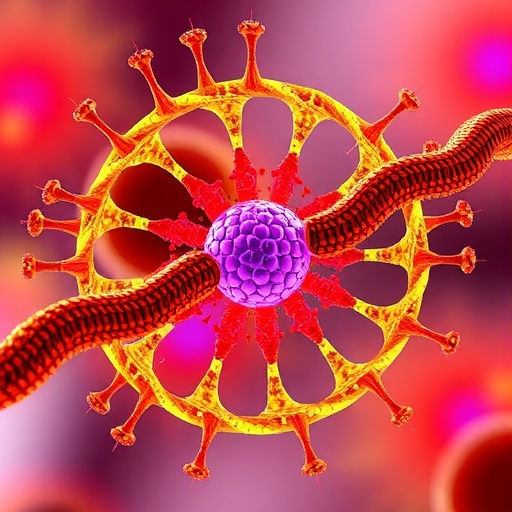
In recent years, the field of nano-bio interfaces has emerged as a pivotal area of research, bridging synthetic materials with biological systems at the nanoscale. This intricate junction is not merely about physical proximity; it represents a dynamic exchange of information and biological processes that could redefine how we understand and interact with living organisms. The advancements in this domain are set to revolutionize medical diagnostics and therapeutic strategies, with applications spanning from the intricate network of neural connections in the brain to the complex operations of cardiac tissues.
Central to the functionality of nano-bio interfaces is their design and fabrication. Researchers focus on the materials used, the topographical characteristics, and the intricate surface chemistry that dictate interactions with biological molecules. These interfaces are engineered minutely, down to the atomic level, allowing scientists to tailor them for specific tasks. Understanding the physics and chemistry behind these materials is crucial; it can determine how efficiently they can transmit signals or interact with cells without eliciting a negative response from the body.
The diverse range of materials used for creating nano-bio interfaces encompasses metals, polymers, and ceramics, each possessing unique properties that can be exploited for different applications. For instance, gold nanoparticles have garnered significant attention due to their biocompatibility and ease of functionalization, making them ideal candidates for drug delivery systems and biosensing applications. Meanwhile, conductive polymers are being investigated for their potential to facilitate electrical signal transduction, proving particularly useful in neural interface applications where monitoring and stimulating neurons is essential.
The topography of nano-bio interfaces plays a critical role in dictating their performance. The nanoscale features created during fabrication influence how cells adhere, spread, and communicate on these surfaces. For instance, surfaces with nanopatterns can mimic the extracellular matrix, offering cues that can direct cellular behavior. Researchers are increasingly using techniques like lithography and 3D printing to achieve precise control over surface characteristics, enhancing the functionality and specificity of these interfaces.
Surface chemistry is another key element influencing nano-bio interactions. The chemical groups present on an interface’s surface can significantly affect how biomolecules bind to it. By modifying surface properties through chemical treatments or coatings, scientists can enhance biocompatibility, improve resistance to biofouling, and promote specific interactions with target biomolecules. These modifications not only help to create a more favorable environment for biological interactions but can also enhance the detection capabilities of devices designed for monitoring electrical and biochemical signals.
One area where nano-bio interfaces are making a significant impact is in the domain of bioelectrical signal detection. For example, researchers are developing nanoscale electrodes capable of detecting electrical signals from heart and brain tissues with unprecedented precision. These devices could lead to breakthroughs in understanding the underlying mechanisms of cardiac arrhythmias or neurological disorders like epilepsy. The ability to closely monitor these signals in real time could also pave the way for more effective treatments, personalizing medicine to the specific needs of patients.
Moreover, biochemical signal transduction is another compelling application of nano-bio interfaces. By facilitating communication between extracellular stimuli and cellular responses, these interfaces serve as a critical tool for understanding how cells interpret their environments. For instance, how a neuron senses neurotransmitter release or how a muscle cell responds to mechanical stretch can provide insights into fundamental biological processes and the complex signaling networks that govern them.
As the field progresses, specific challenges remain to be addressed. One significant barrier lies in the scalability of manufacturing techniques. While current methods may be effective on a small scale or for specific applications, moving towards widespread applicability will require advancements in fabrication technologies. Additionally, ensuring that these interfaces can be integrated into existing biological systems without triggering adverse responses is essential for their successful application in real-world scenarios.
Looking ahead, the future of nano-bio interfaces holds immense potential. Researchers envision devices that not only detect biological signals but also actively respond to them, creating an interactive dialogue between synthetic materials and living systems. This concept, often referred to as “smart biomaterials,” represents a frontier where technology could adapt and respond in real time, resulting in a significant evolution in biomedical applications.
Collaboration across disciplines will also be key to driving these innovations forward. Biologists, chemists, engineers, and medical professionals must work in tandem to create holistic solutions that address the multifaceted challenges associated with nano-bio interfaces. This interdisciplinary approach will facilitate the exchange of ideas, promoting breakthroughs that can lead to more effective medical devices and therapies.
Ultimately, the ambition is to create nano-bio interfaces that are not only functional but also accessible. The healthcare landscape is shifting towards personalized and proactive care, and these interfaces are crucial for achieving that vision. By making these advanced technologies available to a wider audience, we can democratize health solutions, leading to enhanced outcomes for diverse populations.
In conclusion, the development of nano-bio interfaces is a fast-evolving frontier that underscores the potential of nanotechnology in advancing healthcare solutions. By focusing on the rigorous design, innovative materials, and strategic engineering of these interfaces, researchers aim to unlock a deeper understanding of biological processes. As this field continues to mature, it holds promise for addressing some of the most pressing challenges in medicine, paving the way for a future where technology and biology seamlessly integrate for the benefit of humanity.
Yang, X., Tsai, CT., Yang, Y. et al. Nano-bio interfaces for electrical and biochemical signal transduction.
Nat Rev Bioeng (2025). https://doi.org/10.1038/s44222-025-00374-7
Cite Scienmag News
Ophelia Keating. (November 5, 2025). Revolutionizing Signal Transduction with Nano-Bio Interfaces. Scienmag. https://scienmag.com/revolutionizing-signal-transduction-with-nano-bio-interfaces/
Ophelia Keating. "Revolutionizing Signal Transduction with Nano-Bio Interfaces." Scienmag, 5 November 2025, https://scienmag.com/revolutionizing-signal-transduction-with-nano-bio-interfaces/. Accessed 3 September 2026.
Ophelia Keating. "Revolutionizing Signal Transduction with Nano-Bio Interfaces." Scienmag. November 5, 2025. https://scienmag.com/revolutionizing-signal-transduction-with-nano-bio-interfaces/


