


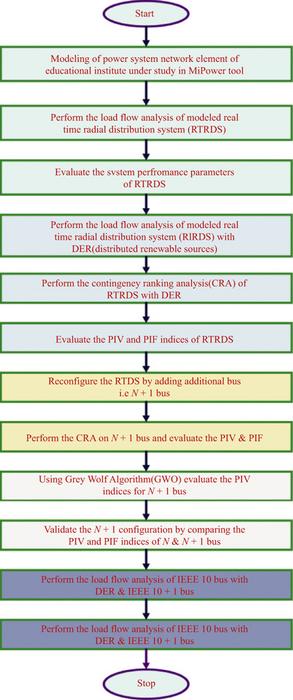
In a pioneering study poised to reshape the future of energy distribution, researchers have introduced a transformative approach to enhance the performance of medium-level voltage (MLV) distribution systems. This innovative research not only aims to bolster the reliability of power networks but also adds a significant reduction in energy losses and carbon emissions. Central to this advancement is the ingenious "N+1 bus configuration,” a modification that proposes the addition of a single extra tie line to existing radial distribution systems. By leveraging distributed renewable energy resources (DER), this strategy promises substantial improvements in system efficiency and sustainability.
The essence of the N+1 bus configuration lies in its simplicity and efficacy. By integrating an additional tie line, the system essentially creates a more interconnected network that can handle disturbances with greater resilience. This means that even when individual components of the system fail—a common scenario in power networks—the overall performance remains robust. The researchers emphasize that such a seemingly minor adjustment leads to dramatic enhancements when coupled with renewable energy inputs, making the overall system more adaptable to the challenges posed by modern energy demands.
Extensive testing was conducted on both real-time radial distribution systems and standardized IEEE test systems, providing a comprehensive evaluation across various performance metrics. Notably, the N+1 configuration exhibited remarkable voltage stability, with voltage levels maintained well above the regulatory standards across all buses. Furthermore, interaction with DER facilitated this stability, enabling the system to optimize power quality while effectively managing energy consumption. The integration of this configuration resulted in the lines operating at less than 75% of their carrying capacity, thereby prolonging the lifespan of infrastructure and reducing the risk of outages.
In addition to voltage stability, the researchers reported a dramatic reduction in total power losses. The N+1 configuration reduced losses to an impressive 0.379% of the total power flow, a significant improvement from traditional systems. This decrease in energy wastage translates directly to economic savings and environmental benefits, a necessity in our current climate-focused discourse. The researchers assert that decreasing power losses not only enhances operational efficiency but also plays a vital role in meeting environmental emission targets.
Another cornerstone of the research is the comprehensive contingency ranking analysis carried out by the research team. This rigorous assessment examined how the specific N+1 configuration performs under failure scenarios, an aspect crucial for institutional power systems where reliability is non-negotiable. The results indicated that the impact of line outages was substantially mitigated in the N+1 bus system. For instance, a failure in the critical line connecting buses 2 and 3 saw a drop in the severity ranking of voltage performance from 3 to 9, underscoring the resilience offered by this configuration.
The environmental implications of adopting the N+1 design are equally noteworthy. The research underscores a significant reduction in carbon emissions, with the N+1 configuration estimated to cut down CO2 emissions by approximately 14.62 metric tons when juxtaposed against conventional setups. The research team highlights that this innovation not only presents a technical advancement but also aligns with global sustainability goals, reflecting a growing recognition of the importance of eco-friendly engineering solutions in contemporary infrastructure.
As cities worldwide continue to evolve into smart urban environments, the research suggests that the benefits of the N+1 configuration could extend beyond traditional residential applications to commercial buildings and other types of distribution systems. With considerations for multiple renewable energy feed points, such systems could offer improved performance metrics under varying conditions. The researchers propose future work could take into account optimizing the placement and sizing of renewable resources, facilitating greater integration with smart grid technologies for dynamic energy management.
The methodology employed in this groundbreaking research includes novel approaches such as MiPower tool modeling and the Grey Wolf Optimization (GWO) algorithm. These advanced analytical tools were essential in verifying the superiority of the N+1 configuration across all evaluations. The researchers were methodical in drafting their conclusions, ensuring a firm foundation based on diverse testing methodologies that consistently pointed to one truth: the N+1 configuration outperforms conventional approaches in every measurable aspect.
With the global shift towards sustainable energy solutions gaining momentum, the potential applications of the N+1 bus configuration are vast and varied. The researchers encourage exploration into how their findings might influence commercial and industrial sectors, examining the synergy of renewable energy incorporating advanced smart grid strategies. As the world increasingly pivots towards energy efficiency, the integration strategies highlighted in this study serve as a formidable blueprint for shaping an environmentally-friendly energy future.
In conclusion, this pioneering research marks a significant stride towards transforming institutional power systems into more reliable, efficient, and eco-friendly configurations through the strategic integration of renewable energy sources. By delivering substantial advancements in performance metrics while concurrently reducing environmental impact, the implications of the N+1 bus configuration could very well redefine the frameworks of energy distribution and management today.
Keywords
Renewable energy, Network modeling, Energy infrastructure, Sustainability
Cite Scienmag News
Faith Mcneil. (April 9, 2025). Revolutionizing Power Distribution: Innovative Strategies for Integrating Renewable Energy. Scienmag. https://scienmag.com/revolutionizing-power-distribution-innovative-strategies-for-integrating-renewable-energy/
Faith Mcneil. "Revolutionizing Power Distribution: Innovative Strategies for Integrating Renewable Energy." Scienmag, 9 April 2025, https://scienmag.com/revolutionizing-power-distribution-innovative-strategies-for-integrating-renewable-energy/. Accessed 4 September 2026.
Faith Mcneil. "Revolutionizing Power Distribution: Innovative Strategies for Integrating Renewable Energy." Scienmag. April 9, 2025. https://scienmag.com/revolutionizing-power-distribution-innovative-strategies-for-integrating-renewable-energy/


