


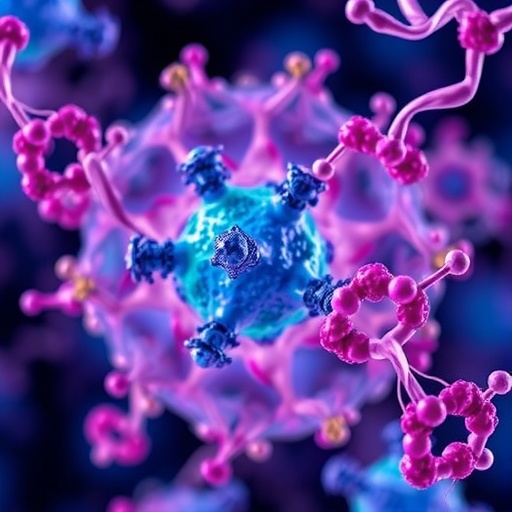
In a groundbreaking achievement, researchers have unveiled a pioneering approach to antibody design leveraging the power of artificial intelligence (AI). This innovative strategy facilitates the rapid transformation of traditional antibody sequences into functional intracellular antibodies, commonly referred to as intrabodies. By integrating sophisticated protein structure prediction with sequence design and live-cell screening, this new pipeline aims to overcome one of the most significant challenges in the field of biomedical research: the effective use of antibodies within living cells.
Typically, antibodies serve as crucial tools in both biology and medicine due to their highly selective nature, enabling them to bind precisely to specific target molecules. However, a substantial limitation of conventional antibodies is their inability to function effectively within the cellular environment. This has hindered the exploration and understanding of vital biological processes that occur inside cells. Intrabodies present a promising solution to this dilemma, as they are designed to operate within living cells. Yet, their development has historically faced challenges, particularly as antibodies frequently misfold or lose their functional capabilities when introduced into cellular settings.
The research team, led by Professor Hiroshi Kimura from the Institute of Integrated Research at the Institute of Science Tokyo, Japan, collaborated with esteemed colleagues from various institutions, including Colorado State University and Kyushu University. Their collaborative efforts culminated in a breakthrough methodology published in the esteemed journal Science Advances. The core of their advancement lies in a unique design strategy that intelligently alters the structural framework of antibodies while preserving the integrity of their antigen-binding regions.
The AI-driven pipeline developed by this research team keeps the critically important target-binding regions intact, while judiciously modifying the surrounding framework. This approach ensures that the resulting intrabodies are not only able to fold correctly but also maintain their stability inside the cellular milieu without sacrificing their binding specificity. The team meticulously tested approximately 26 previously established antibody sequences, with a remarkable success rate: 19 of those were successfully repurposed into functional intrabodies. Significantly, 18 out of the 19 had earlier been ineffective as intrabodies when conventional methods were employed.
This remarkable outcome underscores a pivotal revelation in the realm of protein design; many antibodies that were previously thought to be unfit for intracellular application can be rendered functional through innovative AI-guided redesign strategies. The transformative potential of artificial intelligence in optimizing antibody structures within cellular environments not only enhances their efficacy but also opens avenues for a more nuanced understanding of cellular dynamics as influenced by these intrabodies.
One of the primary focuses of the study was intrabodies specifically targeting modifications in histone proteins—vital components that play indispensable roles in DNA packaging and gene regulation. These histone modifications serve as crucial markers, providing insights into gene activity. However, traditional labeling techniques to study these modifications often fall short, leaving researchers with gaps in their knowledge. The newly designed intrabodies possess the ability to accurately detect and report on these histone modifications, responding dynamically to changes within cellular environments, thereby illuminating the complexities of gene regulation in real-time.
Further validation of the redesigned intrabodies confirmed their remarkable stability and functionality within living cells. The experimental results demonstrated not only their solubility but also their high specificity for target molecules, which is imperative for accurate biological research. The redesigned molecules exhibited consistent and predictable behavior even under varying cellular conditions, showcasing the reliability of this new research tool. Such characteristics are critical for advancing our understanding of myriad biological functions regulated by histone modifications and other intracellular processes.
The implications of this research extend far beyond basic science. By harnessing the capabilities of AI, the researchers aim to streamline the development of intrabodies, making it a faster, cheaper, and more accessible process for researchers worldwide. As the repository of antibody sequence data continues to grow, the potential to convert existing antibodies into functional intracellular probes could revolutionize diagnostics, fluorescence imaging, and therapeutic strategies in various biomedical applications. The implications for clinical research are profound, suggesting that this AI-driven approach could become a cornerstone of future therapeutic research, enabling scientists to tackle complex disease mechanisms with unprecedented precision.
In conclusion, this innovative study demonstrates that merging artificial intelligence with the nuanced understanding of protein engineering yields a powerful combination for biomolecular research. The team has set a new gold standard for intrabody development, showcasing the transformative potential of AI technologies in modern biotechnology. This research not only provides the foundation for future advancements in the field but also emphasizes the critical role of interdisciplinary collaboration in driving scientific progress forward.
The path ahead is laden with opportunities as researchers look to refine and expand upon these AI-assisted strategies, ultimately aiming to elucidate the intricate networks of biological interactions that govern cellular function and disease processes. By continuing to leverage the capabilities offered by AI and machine learning, the scientific community is poised to unlock new dimensions in the realm of protein design and intracellular research, forging ahead toward a future marked by innovation and discovery.
Keywords
Health and medicine, Biomedical engineering, Artificial intelligence, Immunology, Antibodies
Cite Scienmag News
Denise Maddox. (February 13, 2026). Revolutionizing Intracellular Antibody Design with AI-Driven Protein Engineering. Scienmag. https://scienmag.com/revolutionizing-intracellular-antibody-design-with-ai-driven-protein-engineering/
Denise Maddox. "Revolutionizing Intracellular Antibody Design with AI-Driven Protein Engineering." Scienmag, 13 February 2026, https://scienmag.com/revolutionizing-intracellular-antibody-design-with-ai-driven-protein-engineering/. Accessed 3 September 2026.
Denise Maddox. "Revolutionizing Intracellular Antibody Design with AI-Driven Protein Engineering." Scienmag. February 13, 2026. https://scienmag.com/revolutionizing-intracellular-antibody-design-with-ai-driven-protein-engineering/


