


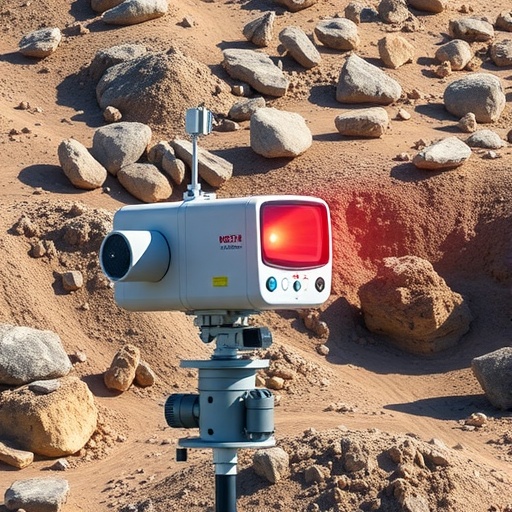
In the ever-evolving field of geosciences, the integration of advanced computational techniques with traditional geological exploration has opened up new frontiers of understanding our planet’s resources. A recent study led by a team of researchers, including Lv, P., Chen, W., and Zou, Y., proposes a groundbreaking approach to geological target recognition by utilizing a multi-mode adaptive prediction system. This innovative method not only enhances the accuracy of geological assessments but also significantly reduces the time and effort traditionally required for such analyses.
The primary focus of this research is to create a framework that leverages various data modes to offer a nuanced interpretation of geological phenomena. The researchers suggest that traditional methods, while effective, often fall short when it comes to recognizing complex geological targets. Their new system combines different data types, including geophysical surveys, satellite imagery, and geological maps, allowing for a more comprehensive understanding of subsurface structures. By harnessing the power of machine learning algorithms, they aim to provide a versatile and adaptable tool for geologists and resource managers.
At the core of their methodology lies a robust multi-mode signaling approach. By integrating data from multiple sources, the researchers create enriched datasets that reflect the multifaceted nature of geological targets. This multi-dimensional perspective is crucial, as geological formations are influenced by a variety of factors including tectonic settings, sedimentation patterns, and historical geological events. The research team emphasizes that their adaptive prediction system can dynamically adjust to new data inputs, thereby improving its predictive capabilities over time.
One of the standout features of this research is its application of machine learning techniques. The team has trained their algorithms on extensive datasets, enabling the system to recognize patterns and anomalies that may elude human analysts. This is particularly important in identifying mineral deposits or hydrocarbon reserves that are often located in intricate geological formations. The algorithm’s ability to learn from previous outcomes enhances its performance, resulting in increasingly precise target recognition as it processes more information.
Moreover, this adaptive system has significant implications for environmental monitoring and natural resource management. By accurately identifying geological targets, stakeholders can make more informed decisions about resource extraction, conservation efforts, and land use planning. The potential for reducing the environmental impact of geological studies is significant, as more precise assessments lead to less invasive exploration methods. This aligns with the growing global emphasis on sustainable resource management and environmental stewardship.
In practical terms, the researchers conducted extensive field trials to validate their prediction system. These real-world applications provided invaluable insights into the system’s performance and reliability. During these trials, the multi-mode adaptive prediction system demonstrated a remarkable ability to accurately predict geological formations that were later confirmed through traditional geological methods. This correlation between prediction and verification highlights the potential of the system to enhance the reliability of geological assessments across various contexts.
The study also underscores the necessity for interdisciplinary collaboration in modern geological research. By bringing together experts in geology, data science, and machine learning, the team was able to tackle complex challenges that would have been insurmountable in isolation. This collaborative approach not only enriches the research outcomes but also facilitates the sharing of knowledge and best practices across disciplines.
As the demand for natural resources continues to rise, coupled with the challenges posed by climate change and environmental degradation, innovative tools like the multi-mode adaptive prediction system become essential. They provide a means to balance the need for resource exploration with environmental considerations. The researchers advocate for broader adoption of such technologies in the field, emphasizing their potential to revolutionize how we approach geological exploration.
Looking to the future, the researchers believe that the ongoing evolution of artificial intelligence and machine learning will further enhance the capabilities of their prediction system. They envision a scenario where real-time data processing and analysis become commonplace, allowing geologists to make immediate, informed decisions on-site. This would mark a significant shift in geological exploration, as the ability to adapt and respond to new information is critical in a rapidly changing environment.
In conclusion, the study conducted by Lv, P., Chen, W., and Zou, Y. presents a significant advancement in geological target recognition methodologies. Their multi-mode adaptive prediction system not only increases the accuracy of geological assessments but also demonstrates a potential shift toward a more sustainable and responsible approach to resource management. As this research highlights, the integration of technology in geosciences is not merely an enhancement but is becoming a cornerstone of modern geological practices.
With continued innovations in data science and computational techniques, it is clear that the future of geological exploration is bright, promising to unveil the Earth’s hidden treasures while respecting and preserving our planet.
Lv, P., Chen, W. & Zou, Y. Geological Target Recognition Method Based on Multi-mode Adaptive Prediction System: Algorithms and Applications.
Nat Resour Res (2025). https://doi.org/10.1007/s11053-025-10521-x
Cite Scienmag News
Violet Maxwell. (October 2, 2025). Revolutionary Multi-Mode System Enhances Geological Target Detection. Scienmag. https://scienmag.com/revolutionary-multi-mode-system-enhances-geological-target-detection/
Violet Maxwell. "Revolutionary Multi-Mode System Enhances Geological Target Detection." Scienmag, 2 October 2025, https://scienmag.com/revolutionary-multi-mode-system-enhances-geological-target-detection/. Accessed 3 September 2026.
Violet Maxwell. "Revolutionary Multi-Mode System Enhances Geological Target Detection." Scienmag. October 2, 2025. https://scienmag.com/revolutionary-multi-mode-system-enhances-geological-target-detection/


