


Two patients living with both HIV and type 2 diabetes, described in a case series published in AIDS Research and Therapy, showed sharply divergent microvascular outcomes despite both being treatment-naive at the time of assessment. The report argues that the total accumulated burden of multi-organ dysfunction, rather than immunological status alone, determines vascular outcomes in people carrying both conditions.
The authors, led by Li Huang, present a comparative series in which both patients underwent systemic physiological profiling and multimodal bilateral retinal imaging. The retina served as a non-invasive window into global vascular health, allowing the team to observe how systemic stress translated into microvascular damage. The work appears as an open-access, peer-reviewed accepted article published on 26 October 2026.
The first case involved a male patient who maintained stable immune reconstitution with a CD4 count of 502 cells per microliter. Despite this apparently reassuring immunological profile, he experienced an acute, localized macrovascular occlusion occurring within what the authors describe as a compensated systemic baseline. In other words, a robust CD4 count did not prevent an acute vascular event, though the damage remained localized.
The second case, a 48-year-old male, presented a very different picture. He had suboptimal immune recovery and severe multi-organ dysfunction, including advanced renal insufficiency and anemia following a major surgical amputation. In contrast to the first patient’s localized event, this patient experienced rapid, irreversible bilateral retinal fibrovascular collapse, which the authors attribute to the massive systemic physiological stress he was under.
The contrast between the two cases forms the core of the report’s argument. Modern antiretroviral therapy has significantly extended the life expectancy of people living with HIV, and this has been accompanied by a rising prevalence of metabolic comorbidities such as type 2 diabetes. The authors note that clinicians frequently rely on robust CD4 T-cell counts as indicators of systemic stability, while the synergistic microvascular toxicity of coexisting HIV and diabetes is often overlooked.
According to the authors’ conclusions, successful virological control and immune reconstitution do not guarantee microvascular safety in patients with coexisting HIV and diabetes. They argue that the total accumulated burden of multi-organ dysfunction determines the final vascular outcome, a framing that shifts attention from isolated immunological markers toward a broader assessment of systemic organ health.
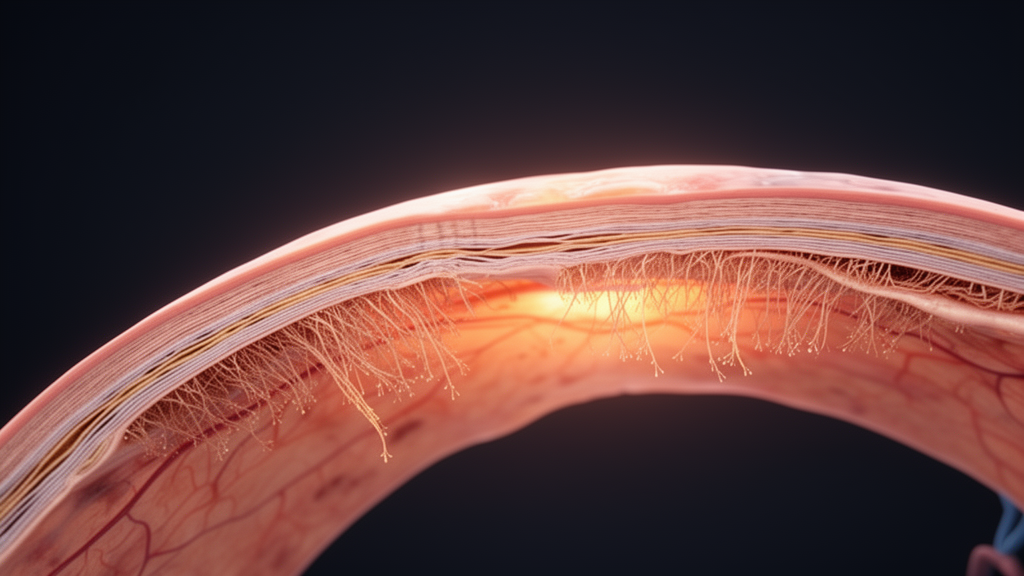
The report also positions the retina as a sensitive biomarker for systemic stress. Because retinal imaging is non-invasive and can be performed bilaterally with multimodal techniques, the authors suggest it offers a practical means of tracking microvascular consequences of combined HIV and metabolic disease. In their series, the retina captured the difference between a compensated baseline with a localized occlusion and a stressed system undergoing irreversible fibrovascular collapse.
The authors call for a shift in modern HIV care toward comprehensive metabolic screening and systemic organ preservation. As a case series of two patients, the report does not establish population-level risks or causal mechanisms, and the authors’ conclusions rest on the observed contrast between the two cases rather than on controlled comparison. Nevertheless, the findings underscore that immune recovery, as conventionally measured, may coexist with serious and unevenly distributed microvascular risk when HIV is combined with diabetes and accumulating organ dysfunction.
Subject of Research: Microvascular outcomes in patients coexisting HIV infection and type 2 diabetes, assessed through retinal imaging
Article Title: Beyond immune reconstitution: systemic organ burden and microvascular collapse in coexisting HIV and diabetes—a case series
Article References: Huang, L., He, Y., Chen, J., Zhou, W., Zheng, H., & Gao, P. (2026). Beyond immune reconstitution: systemic organ burden and microvascular collapse in coexisting HIV and diabetes—a case series. AIDS Research and Therapy. https://doi.org/10.1186/s12981-026-00966-2
Image Credits: AI Generated
DOI: 10.1186/s12981-026-00966-2
Keywords: HIV, type 2 diabetes, microvascular disease, retinal imaging, immune reconstitution, CD4 count, organ dysfunction, case series, renal insufficiency, metabolic comorbidity, AIDS Research and Therapy, Beyond
Cite Scienmag News
Ophelia Keating. (October 27, 2026). Retinal Collapse in HIV and Diabetes Points to Organ Burden, Not CD4 Counts. Scienmag. https://scienmag.com/retinal-collapse-in-hiv-and-diabetes-points-to-organ-burden-not-cd4-counts/
Ophelia Keating. "Retinal Collapse in HIV and Diabetes Points to Organ Burden, Not CD4 Counts." Scienmag, 27 October 2026, https://scienmag.com/retinal-collapse-in-hiv-and-diabetes-points-to-organ-burden-not-cd4-counts/. Accessed 27 October 2026.
Ophelia Keating. "Retinal Collapse in HIV and Diabetes Points to Organ Burden, Not CD4 Counts." Scienmag. October 27, 2026. https://scienmag.com/retinal-collapse-in-hiv-and-diabetes-points-to-organ-burden-not-cd4-counts/


