Thursday, October 29, 2026
Science
No Result
View All Result
  • Login
  • HOME
  • SCIENCE NEWS
  • CONTACT US
  • HOME
  • SCIENCE NEWS
  • CONTACT US
No Result
View All Result
Scienmag
No Result
View All Result
Home Science News Medicine

Restless Sleep and Poor Sleep Patterns Linked to Higher Stroke Risk in Two Large Cohorts

October 28, 2026
in Medicine
Cassandra Pierce
By Cassandra Pierce Scienmag Editorial Profile - Systems Neuroscience
Reading Time: 3 mins read
0
Restless Sleep and Poor Sleep Patterns Linked to Higher Stroke Risk in Two Large Cohorts

Restless Sleep and Poor Sleep Patterns Linked to Higher Stroke Risk in Two Large Cohorts

65
SHARES
587
VIEWS
Share on FacebookShare on Twitter
ADVERTISEMENT

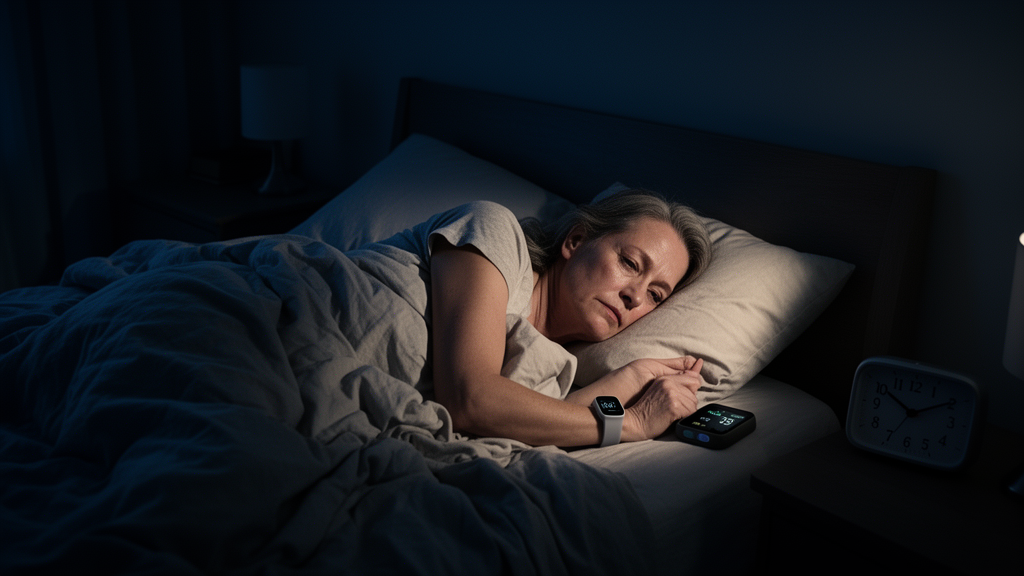
People who reported restless sleep most or all of the time faced a higher risk of stroke in a large Chinese cohort, while adults in the United Kingdom with poor overall sleep patterns showed elevated ischemic stroke risk, according to a new analysis published in BMC Public Health. The study, which combined data from the China Health and Retirement Longitudinal Study (CHARLS) and the UK Biobank, also found that genetic susceptibility to stroke amplified the danger associated with unhealthy sleep.

The research drew on 11,574 CHARLS participants followed through the 2013, 2015 and 2018 survey waves, providing up to roughly seven years of follow-up, during which 707 incident strokes occurred. In the UK Biobank, 485,014 participants were analyzed, with 8,929 incident ischemic strokes recorded in the Cox analysis. The investigators examined nighttime sleep duration, daytime napping and restless sleep in the Chinese cohort, and constructed a five-component sleep score in the UK cohort based on sleep duration, chronotype, insomnia, snoring and daytime sleepiness.

After multivariable adjustment, neither nighttime sleep duration nor daytime napping was significantly associated with incident stroke in CHARLS. Restless sleep, however, told a different story: participants who experienced it most or all of the time had a 22 percent higher stroke risk compared with those who rarely or never reported restless sleep, with a hazard ratio of 1.22 (95 percent confidence interval 1.00 to 1.48). Mediation analyses suggested that hypertension and heart disease might account for part of this association, with an estimated 19.5 percent of the effect mediated through hypertension (95 percent CI 4.0 to 49.0 percent) and 17.0 percent through heart disease (95 percent CI 6.0 to 42.0 percent).

In the UK Biobank, sleep patterns were classified as healthy (scores 0 to 1), moderate (2 to 3) or poor (4 to 5). Each one-point increase in the sleep score, indicating worse sleep, was associated with a 7 percent higher ischemic stroke risk (HR 1.07, 95 percent CI 1.05 to 1.09). Compared with a healthy sleep pattern, moderate sleep was linked to a hazard ratio of 1.10 (95 percent CI 1.05 to 1.14) and poor sleep to 1.29 (95 percent CI 1.16 to 1.44).

The analysis also incorporated a polygenic risk score for stroke, categorized into low, intermediate and high genetic risk by tertiles. In a joint analysis, compared with individuals who had both low genetic risk and healthy sleep, those with high genetic risk combined with moderate or poor sleep patterns faced substantially elevated risk, with hazard ratios of 2.11 (95 percent CI 1.83 to 2.43) and 2.09 (95 percent CI 1.54 to 2.84), respectively.

The authors conclude that stroke risk appeared to vary according to both sleep health and genetic background across the two population-based cohorts. They suggest that multidimensional sleep assessment, particularly when considered alongside cardiometabolic conditions and inherited risk, may help refine population-level stroke prevention strategies. As an observational, prospective analysis, the study identifies associations rather than proven causal effects, and the mediation estimates carry wide confidence intervals that reflect uncertainty in the size of the indirect pathways through hypertension and heart disease.

Subject of Research: Associations between sleep health, cardiometabolic mediation and genetic susceptibility in stroke risk across Chinese and UK cohorts

Article Title: Sleep health and stroke risk: complementary analyses of CHARLS and the UK Biobank, including genetic susceptibility in the UK Biobank

Article References: Tu, Z., Jin, Z., Zhuang, C., Hu, Y., He, J., Xiong, Y., & Zheng, Y. (2026). Sleep health and stroke risk: complementary analyses of CHARLS and the UK Biobank, including genetic susceptibility in the UK Biobank. BMC Public Health. https://doi.org/10.1186/s12889-026-30082-9

Image Credits: AI Generated

DOI: 10.1186/s12889-026-30082-9

Keywords: stroke, sleep health, restless sleep, UK Biobank, CHARLS, polygenic risk score, hypertension, heart disease, ischemic stroke, prospective cohort, Sleep, health

Cite Scienmag News

Cassandra Pierce. (October 28, 2026). Restless Sleep and Poor Sleep Patterns Linked to Higher Stroke Risk in Two Large Cohorts. Scienmag. https://scienmag.com/restless-sleep-and-poor-sleep-patterns-linked-to-higher-stroke-risk-in-two-large-cohorts/

Cassandra Pierce. "Restless Sleep and Poor Sleep Patterns Linked to Higher Stroke Risk in Two Large Cohorts." Scienmag, 28 October 2026, https://scienmag.com/restless-sleep-and-poor-sleep-patterns-linked-to-higher-stroke-risk-in-two-large-cohorts/. Accessed 29 October 2026.

Cassandra Pierce. "Restless Sleep and Poor Sleep Patterns Linked to Higher Stroke Risk in Two Large Cohorts." Scienmag. October 28, 2026. https://scienmag.com/restless-sleep-and-poor-sleep-patterns-linked-to-higher-stroke-risk-in-two-large-cohorts/
Tags: CHARLSChinese and UK sleep health studiescohort studies on sleep and strokegenetic susceptibility to strokeHealthheart diseasehypertensionimpact of insomnia and snoring on strokeischemic strokelong-term sleep quality and health outcomespolygenic risk scoreprospective cohortrestless sleeprestless sleep and stroke risksleepsleep assessment in large populationssleep duration and daytime napping effectssleep duration and stroke risksleep healthsleep patterns and ischemic strokesleep-related risk factors for strokestrokestroke riskUK Biobank
Share26Tweet16
Previous Post

Slag-fly ash geopolymer outperforms cement in stabilizing Guangzhou soft clay

Next Post

Lightweight EdgeNetTF model reads hand gestures from muscle signals with 87% accuracy

Related Posts

Right-Sided Heart Pacemaker Lead With Chest Tunneling Offers Salvage When Main Vein Is Blocked
Medicine

Right-Sided Heart Pacemaker Lead With Chest Tunneling Offers Salvage When Main Vein Is Blocked

October 29, 2026
Antidepressant Prescribing in Turkish Children and Adolescents Is Often Off-Label, Study Finds
Psychology & Psychiatry

Antidepressant Prescribing in Turkish Children and Adolescents Is Often Off-Label, Study Finds

October 29, 2026
Android’s Health Connect Tightens Data Privacy but Leaves Encryption Gaps
Medicine

Android’s Health Connect Tightens Data Privacy but Leaves Encryption Gaps

October 29, 2026
Wine lees transformed into antifungal mixtures against grapevine trunk disease
Medicine

Wine lees transformed into antifungal mixtures against grapevine trunk disease

October 29, 2026
Nanoparticle radiosensitizer to be tested with whole-brain radiotherapy in new phase II trial
Cancer

Nanoparticle radiosensitizer to be tested with whole-brain radiotherapy in new phase II trial

October 29, 2026
Immune Risk Profile Flags BK Virus Reactivation After Living Donor Kidney Transplant
Medicine

Immune Risk Profile Flags BK Virus Reactivation After Living Donor Kidney Transplant

October 29, 2026
Next Post
Lightweight EdgeNetTF model reads hand gestures from muscle signals with 87% accuracy

Lightweight EdgeNetTF model reads hand gestures from muscle signals with 87% accuracy

  • Mothers who receive childcare support from maternal grandparents show more optimized

    Mothers who receive childcare support from maternal grandparents show more parental warmth, finds NTU Singapore study

    27656 shares
    Share 11059 Tweet 6912
  • University of Seville Breaks 120-Year-Old Mystery, Revises a Key Einstein Concept

    1061 shares
    Share 424 Tweet 265
  • Bee body mass, pathogens and local climate influence heat tolerance

    682 shares
    Share 273 Tweet 171
  • Researchers record first-ever images and data of a shark experiencing a boat strike

    546 shares
    Share 218 Tweet 137
  • Groundbreaking Clinical Trial Reveals Lubiprostone Enhances Kidney Function

    531 shares
    Share 212 Tweet 133
Science

Embark on a thrilling journey of discovery with Scienmag.com—your ultimate source for cutting-edge breakthroughs. Immerse yourself in a world where curiosity knows no limits and tomorrow’s possibilities become today’s reality!

RECENT NEWS

  • Mathematical Model Maps How a Breast Cancer Proliferation Switch Flips Between Quiescence and Growth
  • Right-Sided Heart Pacemaker Lead With Chest Tunneling Offers Salvage When Main Vein Is Blocked
  • Gamma Irradiation Reshapes the Volatile Chemistry and Antibacterial Power of Mugwort Leaf Oil
  • Antidepressant Prescribing in Turkish Children and Adolescents Is Often Off-Label, Study Finds

Categories

  • Agriculture
  • Anthropology
  • Archaeology
  • Athmospheric
  • Biology
  • Biotechnology
  • Blog
  • Bussines
  • Cancer
  • Chemistry
  • Climate
  • Earth Science
  • Editorial Policy
  • Marine
  • Mathematics
  • Medicine
  • Pediatry
  • Policy
  • Psychology & Psychiatry
  • Science Education
  • Science News
  • Social Science
  • Space
  • Technology and Engineering

Subscribe to Blog via Email

Enter your email address to subscribe to this blog and receive notifications of new posts by email.

Join 5,151 other subscribers

© 2025 Scienmag - Science Magazine

Welcome Back!

Login to your account below

Forgotten Password?

Retrieve your password

Please enter your username or email address to reset your password.

Log In
No Result
View All Result
  • HOME
  • SCIENCE NEWS
  • CONTACT US

© 2025 Scienmag - Science Magazine

Discover more from Science

Subscribe now to keep reading and get access to the full archive.

Continue reading