


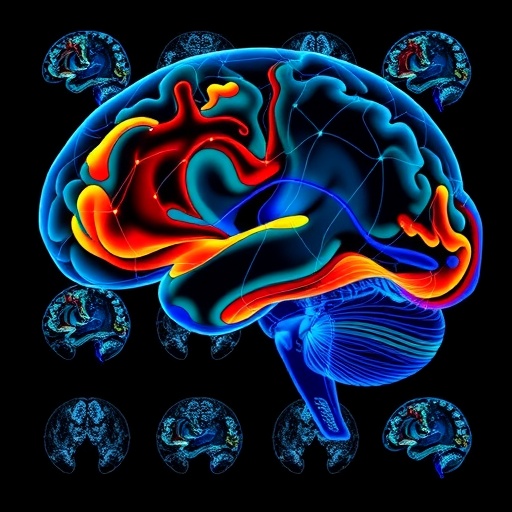
Adolescence and young adulthood are periods when emotional symptoms can emerge or intensify—and a new population-based study suggests the brain’s “resting” communication lines may shift alongside affective distress. Published in Translational Psychiatry, the research reports that patterns of resting-state functional connectivity (rsFC)—how brain regions co-activate when people are not performing a task—change in relation to affective symptoms.
The team focused on resting-state networks rather than momentary responses to stimuli. Using functional MRI, they analyzed how connectivity within and across large-scale brain systems varied across participants and then compared these patterns with measures of affective symptoms. This approach leverages the fact that the brain maintains structured activity even in the absence of explicit tasks.
A key idea is that rsFC provides a window into system-level organization. Instead of isolating single “mood centers,” the study treats affective symptoms as emerging from altered coordination among networks that support emotion regulation, self-referential processing, and cognitive control. In this framework, symptoms may reflect changes in the brain’s baseline wiring dynamics.
Importantly, the study draws on a population-based sample of adolescents and young adults, strengthening the relevance of the findings beyond clinical cohorts. Such samples can capture variation in symptom severity and comorbid tendencies that are often missed when researchers recruit only from psychiatric services.
Across analyses, connectivity differences were linked to affective symptom burden. While the paper details specific brain connections and statistical associations, the overarching message is consistent: as affective symptoms change, so does the architecture of coordinated resting activity.
The authors also emphasize that rsFC alterations may serve as biomarkers—signals that can potentially support early identification or track symptom-related brain changes over time. Because resting-state data can be collected without complex task performance, this strategy may be especially feasible in developmental groups.
A viral takeaway for science news readers is that mood-related biology might be detectable even when the mind is “at rest.” If further validated, rsFC measures could complement symptom assessments, helping researchers understand why some individuals experience rising emotional difficulties during critical developmental windows.
Still, the study is observational, meaning connectivity patterns are associated with symptoms rather than proving direct causality. Future work will need longitudinal designs to determine whether connectivity shifts precede symptom changes, and whether interventions can normalize these networks.
Cite Scienmag News
Cassandra Pierce. (July 15, 2026). Resting-State Brain Connectivity Changes Linked to Affective Symptoms in Youth. Scienmag. https://scienmag.com/resting-state-brain-connectivity-changes-linked-to-affective-symptoms-in-youth/
Cassandra Pierce. "Resting-State Brain Connectivity Changes Linked to Affective Symptoms in Youth." Scienmag, 15 July 2026, https://scienmag.com/resting-state-brain-connectivity-changes-linked-to-affective-symptoms-in-youth/. Accessed 5 September 2026.
Cassandra Pierce. "Resting-State Brain Connectivity Changes Linked to Affective Symptoms in Youth." Scienmag. July 15, 2026. https://scienmag.com/resting-state-brain-connectivity-changes-linked-to-affective-symptoms-in-youth/


