


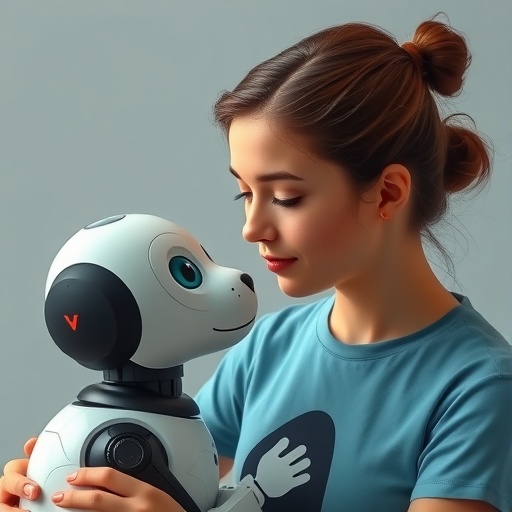
As AI chatbots become more emotionally expressive, users are increasingly turning to them not only for information or entertainment, but also for companionship. A new study examining people who use Character.AI suggests that these relationships may be linked to psychological well-being in complex ways. The findings indicate that AI companionship is not uniformly beneficial or harmful: its relationship with well-being appears to depend heavily on users’ offline social networks and on how intensively and personally they interact with their digital companions.
Published in Nature Human Behaviour, the study analyzed self-reported data from 1,131 adults in the United States who used Character.AI, a platform that allows users to communicate with customizable artificial-intelligence characters. The researchers combined survey responses with behavioral evidence from real conversations. A subset of 237 participants contributed 4,664 chat sessions containing 464,687 messages, allowing the team to compare what users said about their relationships with AI companions with how those relationships appeared in actual interactions.
The researchers focused on several dimensions of chatbot use, including whether companionship was a user’s primary reason for interacting with an AI, the size of the user’s offline social network, the intensity of chatbot engagement and the degree of personal disclosure in conversations. Psychological well-being was assessed through self-reported measures. By combining these variables, the study sought to move beyond simple questions about screen time and examine the social and emotional context in which AI companionship takes place.
One of the clearest patterns involved participants’ existing human relationships. People with smaller social networks were more likely to report companionship as their primary use of a chatbot. Statistically, the association between social-network size and identifying companionship as the main chatbot purpose was represented by a beta coefficient of −0.03, with a 95 percent confidence interval ranging from −0.05 to −0.01. In practical terms, the result suggests that people with fewer offline social connections may be especially likely to use AI systems to fill a companionship role.
The study also found that reporting companionship as the primary purpose of chatbot use was associated with lower psychological well-being. This relationship had a beta coefficient of −0.48, with a 95 percent confidence interval between −0.70 and −0.25. The result does not establish that AI companions cause poorer mental health. It could mean that people experiencing loneliness or reduced well-being are more likely to seek out AI companionship, that intensive reliance on a chatbot may affect well-being over time, or that both processes occur simultaneously.
The way users interacted with their AI companions appeared to matter as well. Among people who described companionship as their main use, the association with lower well-being was stronger when conversations were intensive. For this interaction, the reported beta coefficient was −0.31, with a 95 percent confidence interval from −0.56 to −0.06. Intensive use can refer to a greater amount or frequency of engagement, although the significance of such behavior depends on the user’s circumstances. Frequent interaction may be a harmless routine for one person but a substitute for human contact for another.
Highly disclosive conversations showed a similar pattern. Users who shared more personal information with their AI companions displayed a stronger association between companionship use and lower well-being, with a beta coefficient of −0.38 and a 95 percent confidence interval ranging from −0.63 to −0.14. Personal disclosure is a central feature of many human relationships, and conversational AI systems are designed to respond in ways that can feel attentive, validating and emotionally responsive. That apparent intimacy may make disclosure easier, while also potentially encouraging users to rely on systems that cannot provide human reciprocity, accountability or genuine emotional experience.
The findings arrive as AI companions are becoming more sophisticated at maintaining conversational context, mirroring emotion and adapting their tone to individual users. Unlike traditional search engines or automated customer-service tools, these systems can simulate friendship, romance, mentorship or emotional support. Their accessibility may be particularly attractive to people who feel isolated, anxious or reluctant to seek social contact. At the same time, the study suggests that the most vulnerable users may be the ones most likely to engage deeply with these systems, making it difficult to determine whether companionship technology is acting as a support, a symptom or both.
Because the research is based primarily on observational and self-reported data, the authors’ results should be interpreted as associations rather than proof of cause and effect. Participants were Character.AI users in the United States, so the findings may not apply to people using other platforms or living in different cultural environments. The chat-history sample was also smaller than the survey sample, and the decision to share conversations may have introduced selection effects. Nevertheless, the combination of survey data, relationship descriptions and real chat histories provides an unusually detailed view of how people use AI companions. As conversational systems move further into the social sphere, the study highlights the need to evaluate not only what chatbots can say, but also which users depend on them, what they replace and how that dependence relates to human well-being.
Cite Scienmag News
Glenn Wilkins. (August 4, 2026). How AI Companions Affect Psychological Well-Being. Scienmag. https://scienmag.com/how-ai-companions-affect-psychological-well-being/
Glenn Wilkins. "How AI Companions Affect Psychological Well-Being." Scienmag, 4 August 2026, https://scienmag.com/how-ai-companions-affect-psychological-well-being/. Accessed 3 September 2026.
Glenn Wilkins. "How AI Companions Affect Psychological Well-Being." Scienmag. August 4, 2026. https://scienmag.com/how-ai-companions-affect-psychological-well-being/


