


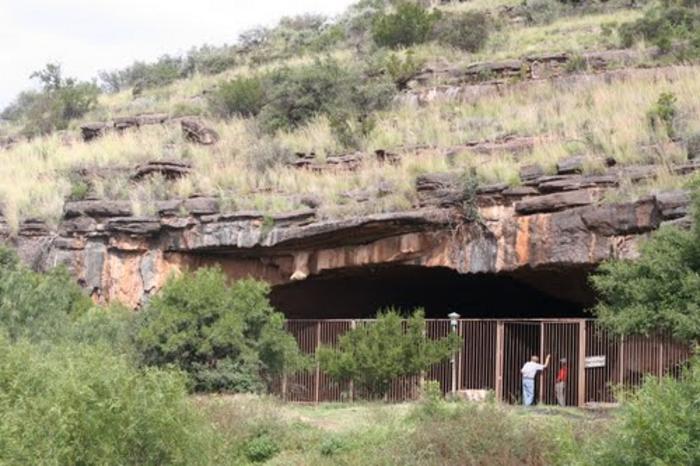
For decades, understanding when our ancient ancestors first harnessed fire has fascinated scientists and captivated the public imagination. Now, groundbreaking research from Wonderwerk Cave in South Africa reveals that early hominins were not mere spectators to the natural phenomenon of fire but active users of it as far back as 1.79 million years ago. This revelation dramatically extends the known timeline for one of humanity’s most transformative technologies, offering new perspectives on early human cognitive and behavioral evolution.
The Wonderwerk Cave, located deep within the Kalahari Desert, has long been regarded as a key site for understanding human prehistory. Previous studies, notably one published in 2012, identified evidence of fire use dating back roughly one million years, marking it as the oldest known intentional fire use globally. However, the latest research pushes this boundary much further, uncovering traces of fire usage between 1.07 and 1.79 million years ago through meticulous interdisciplinary investigations.
This leap forward was made possible by the application of innovative analytical techniques designed to detect subtle signs of burning in fossilized bones. The study, led by Dr. Liora Kolska Horwitz from the Hebrew University of Jerusalem, integrates expertise spanning archaeology, paleontology, geology, and cutting-edge luminescence technology. By leveraging the luminescent properties of burned bone under specific light wavelengths, the research team attained a non-destructive, highly sensitive method to distinguish bones subjected to heat from those that were not.
Luminescence analysis revealed that tiny fossil bones, once part of owl pellets naturally accumulated on the cave floor, exhibited distinct glowing signatures indicative of intense burning. This evidence was found in sediment layers associated with early Acheulean artifacts—technological hallmarks of Homo erectus. Importantly, these burnt bone remains were discovered approximately 30 meters inside the cave, significantly beyond where natural wildfires could have reached, thus negating the possibility of incidental fire exposure.
The implications of finding these fire traces deep within the cave are profound. They suggest early humans intentionally transported and maintained naturally occurring fires that were likely sparked by lightning or savanna wildfires. This deliberate management of fire resources signifies a remarkable behavioral adaptation, highlighting an early mastery over an elemental force that would become pivotal for survival, social cohesion, and technological innovation.
Although the evidence does not yet demonstrate that early hominins had mastered fire creation, their ability to sustain fire over time inside a cave environment reflects considerable cognitive and cultural complexity. The hypothesis that they possibly used accumulated owl pellets as fuel to support these fires illustrates an early form of resource utilization and environmental manipulation.
The research further underscores the challenges archaeologists face when identifying ancient fire use. Fire evidence from prehistoric contexts tends to be ephemeral and can be easily obscured or destroyed over millennia. The newly introduced luminescence method provides a versatile and portable tool capable of scanning extensive fossil collections without causing harm, which promises to revolutionize the identification of burnt remains globally.
Understanding early fire use carries immense significance for reconstructing hominin evolutionary trajectories. Fire not only offers warmth and protection from predators but also extends daily activity into the night and facilitates cooking. Cooking enhances food digestibility and nutrition, which may have fueled brain expansion and social changes that define modern humans.
Moreover, the successful transport and maintenance of fire could have transformed social dynamics among early human communities, enabling longer stays in shelters and promoting complex social interactions around controlled flames. This behavioral innovation may have laid the groundwork for later technological and cultural advancements, positioning fire as one of the earliest catalysts of human ingenuity.
The Wonderwerk Cave findings challenge traditional models that relied solely on charcoal and ash deposits to signal fire usage, contrasting them with the nuanced detection of heated bones. By circumventing the limitations of conventional methods, this study opens new pathways to reassess other prehistoric sites where signs of fire may have gone undetected due to preservation biases or analytical constraints.
As this novel approach gains traction, it may illuminate the geographic spread and temporal development of fire use among various hominin species. Insights from multiple archaeological sites worldwide could refine our understanding of who, when, and how our ancestors harnessed fire as a defining technology.
In summary, the new evidence from Wonderwerk Cave spotlights early humans’ active engagement with fire at a stage of human evolution far earlier than previously documented. This discovery not only pushes back the chronological framework for controlled fire use but also enriches the narrative of early human adaptation, ingenuity, and survival strategies. As researchers extend this luminescence technique to other contexts, we may soon rewrite key chapters in the story of humanity’s mastery over one of nature’s most powerful forces.
News Publication Date: 1-Jun-2026
Web References: http://dx.doi.org/10.1371/journal.pone.0347480
References:
Horwitz, L.K., et al. “New evidence for Early Pleistocene use of fire at Wonderwerk Cave (South Africa).” PLOS One (2026).
Cite Scienmag News
Courtney Benton. (June 15, 2026). Researchers Uncover Evidence of Human Fire Use Dating Back Over a Million Years. Scienmag. https://scienmag.com/researchers-uncover-evidence-of-human-fire-use-dating-back-over-a-million-years/
Courtney Benton. "Researchers Uncover Evidence of Human Fire Use Dating Back Over a Million Years." Scienmag, 15 June 2026, https://scienmag.com/researchers-uncover-evidence-of-human-fire-use-dating-back-over-a-million-years/. Accessed 4 September 2026.
Courtney Benton. "Researchers Uncover Evidence of Human Fire Use Dating Back Over a Million Years." Scienmag. June 15, 2026. https://scienmag.com/researchers-uncover-evidence-of-human-fire-use-dating-back-over-a-million-years/


