


New research from the University of Oklahoma reveals a previously unknown chain of events sparking the development of cancer cachexia, a debilitating muscle-wasting condition that almost always occurs in people diagnosed with pancreatic cancer.

Credit: University of Oklahoma
New research from the University of Oklahoma reveals a previously unknown chain of events sparking the development of cancer cachexia, a debilitating muscle-wasting condition that almost always occurs in people diagnosed with pancreatic cancer.
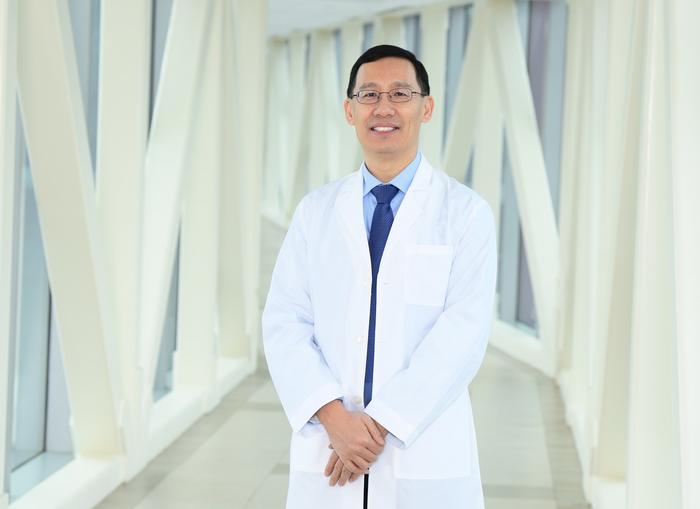
The research, led by Min Li, Ph.D., a professor in the OU College of Medicine, is published in the journal Cancer Cell. The study is a collaboration with researchers from Johns Hopkins School of Medicine, the University of Texas Health Science Center and Yale School of Medicine.
In the study, researchers discovered that “crosstalk” between pancreatic cancer cells and macrophages (a type of immune cell) is the first step toward the onset of cachexia. Macrophages usually protect the body from infection, but in this case, the pancreatic cancer cells recruit them to do harm. Their conversation in turn prompts increased secretion of TWEAK (TNF-like weak inducer of apoptosis), a protein known to play a role in cachexia by binding to receptors on the surface of muscle cells and causing inflammation. That sequence triggers the development of cachexia.
“Cancer cachexia is an understudied disease, and there are no good treatments, nor does nutritional support help with the symptoms,” Li said. “People lose their appetite and lose weight quickly, and because of that, they are weak and much less able to tolerate aggressive treatment for pancreatic cancer. The significance of this study is that it provides evidence of an underlying mechanism of cachexia. It is not the cancer cells alone or macrophages alone that start the process of cachexia, but the fact that they are talking to each other.”
Cancer cachexia isn’t a given with every cancer — it rarely occurs with breast cancer or brain cancer, for example — but it is most prevalent in pancreatic cancer, Li said. The study’s findings are important because by better understanding how cachexia begins, researchers can potentially develop a way to stop the cascade of events.
“It gives us a therapeutic window to intervene and potentially stop or reduce cachexia, thereby giving patients a better chance of fighting pancreatic cancer,” Li said. “Our next step is to try to develop a drug, possibly one that blocks the crosstalk between the cancer cells and the macrophages.
“This is a paradigm-shifting research publication because it represents a new way of understanding how cancer cachexia begins,” he added. “The combination of pancreatic cancer and cancer cachexia significantly diminishes a person’s quality of life. If we can determine a way to reduce the burden of cachexia, people may have a better prognosis in their fight against pancreatic cancer, which now has a five-year survival rate of only 13% and is the third-leading cause of cancer-associated deaths in the United States.”
Pancreatic cancer is notoriously difficult to find in its early stages; over 80% of patients with the disease are diagnosed when the cancer is advanced and treatment options are limited. In addition to providing a potential target for treatment, Li’s research may contribute to the ongoing search for a means of diagnosing pancreatic cancer earlier. Previous clinical studies have suggested that six to nine months before a diagnosis of pancreatic cancer, people begin losing fat then muscle.
“If a person loses more than 5% of their body weight in a six-month period for no reason, it could be a cause for concern,” he said. “Perhaps at some point, changes in a person’s body composition could help clinicians to diagnose cancer at an earlier stage before it has metastasized.”
Journal
Cancer Cell
Method of Research
Experimental study
Subject of Research
Cells
Article Title
The crosstalk between macrophages and cancer cells potentiates pancreatic cancer cachexia
Article Publication Date
11-Apr-2024
Cite Scienmag News
Nathaniel Bowman. (April 12, 2024). Researchers discover cell ‘crosstalk’ that triggers cancer cachexia. Scienmag. https://scienmag.com/researchers-discover-cell-crosstalk-that-triggers-cancer-cachexia/
Nathaniel Bowman. "Researchers discover cell ‘crosstalk’ that triggers cancer cachexia." Scienmag, 12 April 2024, https://scienmag.com/researchers-discover-cell-crosstalk-that-triggers-cancer-cachexia/. Accessed 4 September 2026.
Nathaniel Bowman. "Researchers discover cell ‘crosstalk’ that triggers cancer cachexia." Scienmag. April 12, 2024. https://scienmag.com/researchers-discover-cell-crosstalk-that-triggers-cancer-cachexia/

