


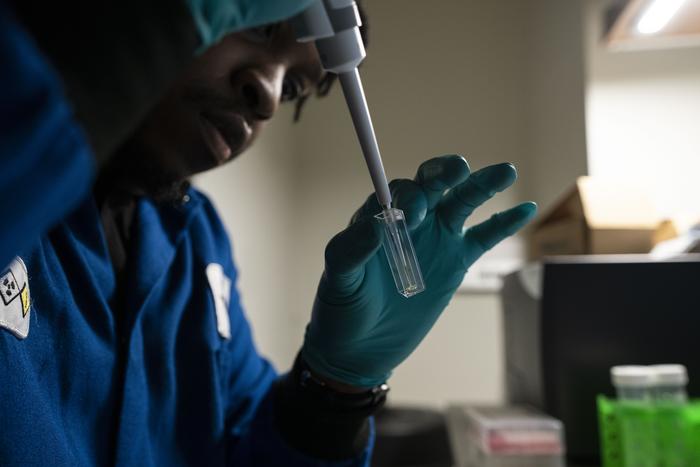
Researchers at the University of Texas at Dallas, in partnership with scientists from UT Southwestern Medical Center, are pioneering a transformative approach to treating advanced stomach cancer using an innovative light-activated immunotherapy. This cutting-edge strategy leverages the unique properties of lab-engineered molecules, combined with far-red or near-infrared light, to selectively activate the immune system’s attack on cancer cells that have metastasized throughout the abdominal cavity. Such a novel therapeutic method holds the potential to significantly improve clinical outcomes for patients suffering from peritoneal carcinomatosis, a particularly aggressive form of gastric cancer.
Central to this research are specially engineered proteins, termed “betabodies,” designed to selectively bind to tumor cells while sparing healthy tissues. This precision targeting is crucial, as it minimizes the collateral damage often associated with conventional chemotherapy and radiation therapies. Once the betabodies are localized within the tumor microenvironment, they can be activated through exposure to far-red or near-infrared light. This activation prompts the proteins to capture molecular oxygen and convert it into reactive oxygen species, cytotoxic agents capable of inducing cancer cell death and simultaneously stimulating the body’s immune response.
The mechanics behind this approach merge principles from bioengineering and immunology. When the near-infrared light is delivered via a minimally invasive fiber-optic system into the abdominal cavity, it triggers the engineered proteins to produce reactive oxygen intermediates at the tumor site. These reactive species exert both direct cytotoxic effects on cancer cells and enhance the immunogenicity of the tumor microenvironment. By generating an inflammatory milieu, these light-activated proteins bolster immune cell recruitment and activation, encouraging the body’s own defenses to recognize and eradicate residual cancer cells, thus offering a two-pronged attack strategy.
Dr. Girgis Obaid, assistant professor of bioengineering at the University of Texas at Dallas, leads this groundbreaking project. His lab is at the forefront of developing these protein constructs and optimizing their activation parameters to maximize therapeutic efficacy. The collaborative endeavor with Dr. Rolf Brekken, a leading researcher at UT Southwestern Medical Center specializing in angiogenesis and tumor microenvironment, further enhances the translational impact of this work, bringing together expertise in protein engineering and tumor biology.
Funding for this promising research comes from a $250,000 High Impact/High Risk Research Award from the Cancer Prevention & Research Institute of Texas (CPRIT), underscoring the potential of this technology to address the unmet clinical needs in gastric cancer therapy. The research team aims to refine this light-triggered immunotherapy platform, advancing it toward preclinical validation and eventual human clinical trials. This step is critical given that stomach cancer is often diagnosed at late stages, with peritoneal metastases making it notoriously difficult to treat using current modalities.
Stomach cancer remains a significant global health challenge, with the National Cancer Institute estimating approximately 26,890 new cases and 10,880 deaths in the United States alone in 2024. One of the major hurdles in treating this disease is the frequent dissemination of cancer cells within the peritoneal cavity by the time of diagnosis, a stage associated with poor prognosis. Despite advances in chemotherapy and immunotherapy, the average survival span for patients with metastatic stomach cancer remains limited to 10 to 17 months post-diagnosis, highlighting the critical need for novel therapeutic approaches.
The innovation behind this therapy lies not only in its molecular design but also in its spatial and temporal control of activation. By harnessing near-infrared light, which penetrates biological tissues more effectively than visible light, the treatment achieves localized activation of the therapeutic proteins directly at the tumor site while sparing distant healthy cells from exposure. This targeted activation mechanism reduces systemic toxicity and side effects, often a limiting factor in current immunotherapies.
Moreover, the dual functionality of the betabodies represents a significant advancement in cancer therapy. These molecules do not merely kill tumor cells; they also serve as immune modulators, orchestrating an immune cascade that empowers cytotoxic T cells and other effector cells to mount a sustained response against cancer. This integrated design could potentially overcome tumor resistance mechanisms that frequently limit the long-term efficacy of existing immunotherapies.
The envisioned clinical application involves the surgical or minimally invasive injection of betabodies into the peritoneal cavity, followed by illumination through fiber-optic probes emitting near-infrared light, allowing precise control of treatment zones. This approach could be adapted for various tumor types within the abdomen, offering a versatile platform for targeting complex metastatic lesions that are otherwise refractory to standard therapies.
While promising, this therapy remains in the experimental stage, with comprehensive human trials pending. The research team acknowledges the challenges ahead, including optimizing protein stability, light delivery mechanisms, and immunogenic potential to ensure safety and maximized therapeutic index. However, early preclinical results suggest substantial potential to shift the paradigm in treating stubborn abdominal cancers.
This breakthrough aligns with a broader trend towards personalized and precision medicine, where treatments are designed based on tumor biology and the patient’s immune landscape. The convergence of bioengineering, molecular biology, and clinical oncology embodied in this work exemplifies the future direction of cancer therapeutics—multifaceted, controllable, and minimally invasive.
Dr. Obaid emphasizes the ultimate goal of this research: to extend survival and improve quality of life for patients battling advanced stomach cancer. By capitalizing on the specificity and controllability of light-activated proteins, this therapy aspires to mitigate tumor growth and prevent relapse, offering hope where few effective options currently exist.
In conclusion, the innovative light-activated immunotherapy devised by researchers at UT Dallas and UT Southwestern represents a compelling advance in the fight against metastatic stomach cancer. Through the strategic engineering of betabodies activated by near-infrared light, this approach promises targeted destruction of cancer cells alongside powerful immune activation, potentially enhancing patient outcomes in one of the most challenging oncological arenas.
—
News Publication Date: 2024
Web References:
– https://be.utdallas.edu/people/faculty/girgis-obaid/
– https://cprit.texas.gov/grants-funded/grants/rp240498
– https://engineering.utdallas.edu/
– https://be.utdallas.edu/
Cite Scienmag News
Nathaniel Bowman. (May 19, 2025). Researchers Develop Light-Activated Therapy to Combat Resistant Cancers. Scienmag. https://scienmag.com/researchers-develop-light-activated-therapy-to-combat-resistant-cancers/
Nathaniel Bowman. "Researchers Develop Light-Activated Therapy to Combat Resistant Cancers." Scienmag, 19 May 2025, https://scienmag.com/researchers-develop-light-activated-therapy-to-combat-resistant-cancers/. Accessed 4 September 2026.
Nathaniel Bowman. "Researchers Develop Light-Activated Therapy to Combat Resistant Cancers." Scienmag. May 19, 2025. https://scienmag.com/researchers-develop-light-activated-therapy-to-combat-resistant-cancers/


