


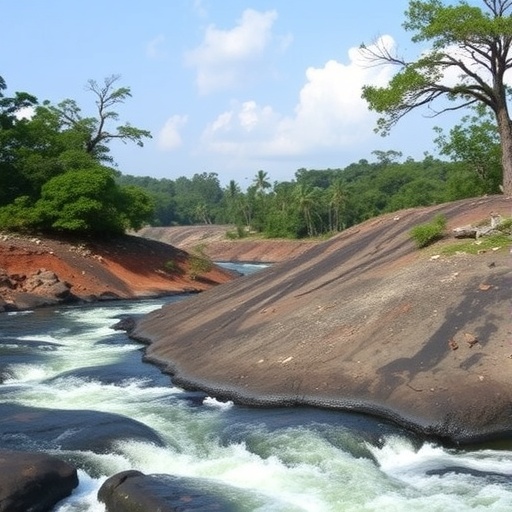
A groundbreaking study has unveiled the complex interplay between environmental recovery and socioeconomic repercussions following intense gravel mining in the Lubha River, located in Northeast Bangladesh. Utilizing decades of satellite imagery combined with in-depth, face-to-face interviews with local residents, researchers have meticulously chronicled the rapid regeneration of the river’s physical form juxtaposed with the slow and painful erosion of the local economy. This comprehensive investigation illuminates the multifaceted impacts of resource extraction on both the natural landscape and the human communities dependent upon it.
The Lubha River served as a critical natural resource, providing sand and gravel vital for burgeoning construction demands driven by rapid regional development. However, the extraction practices applied were highly unsustainable, characterized by excessive sediment removal that precipitated drastic geomorphological changes. Decades of intensive mining significantly altered river channels, accelerated downstream erosion, and led to a cascade of environmental degradation, including farmland loss and habitat disruption. The study reveals that while nature’s resilience facilitated a near-complete river recovery within four years post-mining, the social fabric underpinning local livelihoods suffered prolonged distress.
This research emerges from the collaborative efforts of the University of Illinois Urbana-Champaign’s Professor Jim Best, graduate researcher Sadiul Chyon, and Shah Atiqul Haq of Shahjalal University, Bangladesh. Their interdisciplinary approach leveraged high-resolution historical and contemporary satellite data to examine not only the spatial progression of sediment extraction but also the intricate network of sediment fluxes within individual river channels. By transcending previous methods which treated the river as a monolithic entity, the team could discern the differential rates of sediment withdrawal and natural replenishment per channel, offering unprecedented insight into the geomorphological impacts of exploitation.
A salient feature of the study was the integration of remote sensing with qualitative data gathered through interviews with affected communities and local environmental advocates. This dual methodology enabled the researchers to quantify the scale of migrant labor involved in mining activities and unpack the subsequent socioeconomic consequences. Particularly striking is the aftermath of the government-imposed 2021 gravel mining ban — an intervention designed to protect the river ecosystem but which inadvertently wreaked havoc on local economies heavily reliant on mining revenues for basic sustenance.
Following the ban, an overwhelming 95% of respondents reported unemployment, with 88% highlighting steep economic decline. The disruption of income streams propelled many toward illicit activities such as smuggling, while alarming numbers of youths abandoned educational pursuits to enter the labor market prematurely. These findings emphasize the profound human cost embedded within natural resource management policies that lack sufficiently inclusive communication and transitional support mechanisms for affected populations.
The study also uncovered a paradoxical pre-ban surge in extraction activity, as operators attempted to maximize profits ahead of the impending moratorium. This behavior underscored a critical challenge for policymakers: regulatory measures can produce unintended negative externalities if not thoughtfully designed and implemented with stakeholder collaboration. It calls for innovative governance frameworks that balance environmental conservation with the socioeconomic realities of dependent communities.
Among the most pioneering contributions of this research is its set of evidence-based recommendations aimed at fostering sustainable gravel mining practices within the Lubha River basin and analogous river systems worldwide experiencing rapid infrastructural expansion. These guidelines advocate for spatially informed extraction—prioritizing specific channels with adequate natural sediment inflow, quantity caps aligned with ecological regeneration rates, and comprehensive monitoring harnessing the power of ongoing satellite surveillance. Crucially, empowering local communities through participatory governance emerges as a foundational pillar to ensure monitoring effectiveness and equitable resource stewardship.
The research articulates the necessity for a carefully orchestrated transition away from extractive dependence, promoting diversified livelihood options for mining communities to mitigate economic shocks tied to local environmental restoration efforts. This holistic framework combines physical science with social science perspectives to model a pathway toward regenerative coexistence between riverine environments and human societies.
Underpinning this multifaceted inquiry was a fusion of remote sensing technology, geomorphological analysis, and ethnographic fieldwork. Professor Best’s longstanding expertise in the reciprocal dynamics between rivers and human activity was instrumental in deploying satellite imagery to disentangle complex natural processes from anthropogenic disturbances. Meanwhile, Sadiul Chyon’s firsthand engineering experience in Bangladesh enriched interpretations related to erosion control infrastructures and their socio-environmental implications.
This research is poised to resonate deeply within scientific and policy circles, particularly those dedicated to sustainable natural resource management in developing economies. The Lubha River study exemplifies how cutting-edge technological tools can illuminate hidden dimensions of environmental change while underscoring the imperative for socially attuned policy interventions. As burgeoning nations worldwide grapple with balancing rapid development and environmental stewardship, this study offers a timely blueprint for harnessing innovation and empathy in crafting resilient futures.
In a global context where river mining remains a widespread but often underregulated activity, these findings exemplify the intricate balance required to sustain ecosystems without sacrificing human well-being. The rapid physical recovery of river channels juxtaposed with lingering social hardship reflects the broader challenges of reconciling ecological restoration with economic realities. Moving forward, innovative monitoring and community engagement will be critical to advancing riverine conservation efforts that genuinely serve both nature and people.
The depth, scope, and implications of this study signify a pivotal advancement in sustainability science. By elucidating how targeted geospatial analysis paired with detailed local narratives can inform more just and effective resource management, the research elevates our understanding of riverine systems far beyond traditional paradigms. It stands as a call to action for scientists, policymakers, and communities worldwide to collaboratively steward natural resources with keen foresight, scientific rigor, and human sensitivity.
News Publication Date:
23-Jan-2026
Web References:
https://www.sciencedirect.com/science/article/pii/S2949790625003015
References:
Best, J., Chyon, S., Haq, S. A. (2026). From extraction to recovery: Geomorphic and social transformations of gravel mining, Lubha River, Northeast Bangladesh. Cell Reports Sustainability, 100605. DOI: 10.1016/j.crsus.2025.100605
Cite Scienmag News
Margaret Porter. (March 12, 2026). Research Reveals Tensions Between Commercial Mining and Environmental Conservation in Bangladesh. Scienmag. https://scienmag.com/research-reveals-tensions-between-commercial-mining-and-environmental-conservation-in-bangladesh/
Margaret Porter. "Research Reveals Tensions Between Commercial Mining and Environmental Conservation in Bangladesh." Scienmag, 12 March 2026, https://scienmag.com/research-reveals-tensions-between-commercial-mining-and-environmental-conservation-in-bangladesh/. Accessed 4 September 2026.
Margaret Porter. "Research Reveals Tensions Between Commercial Mining and Environmental Conservation in Bangladesh." Scienmag. March 12, 2026. https://scienmag.com/research-reveals-tensions-between-commercial-mining-and-environmental-conservation-in-bangladesh/


