


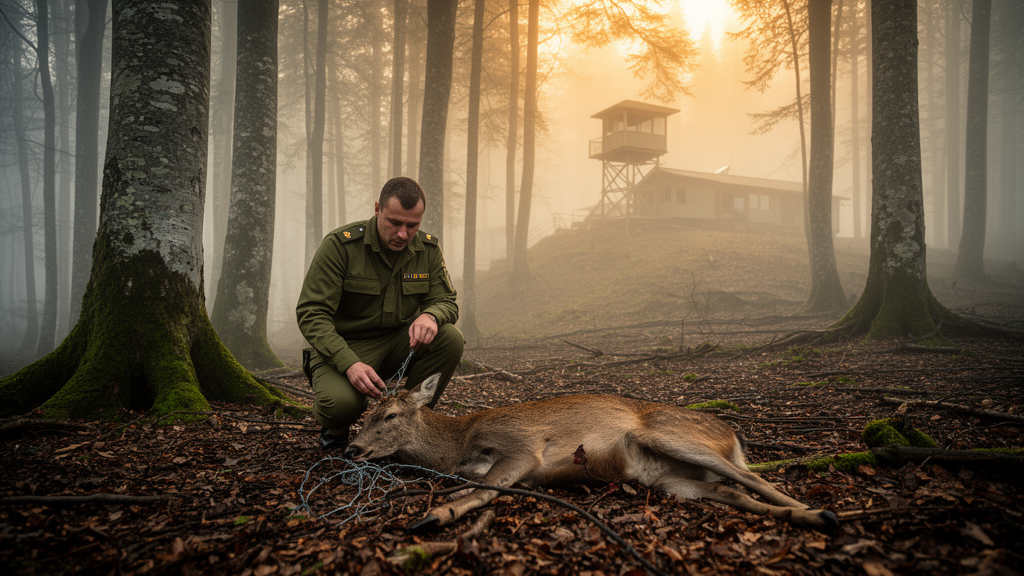
A new study published in the journal Nature Conservation has turned to an unconventional source of evidence — Romanian mass media — to reconstruct nearly two decades of wildlife crime, and the picture it reveals is stark. Their findings point to ungulates and aquatic species as the primary targets, driven overwhelmingly by economic incentives tied to the trade in meat and animal-derived products, while protected large carnivores are killed in retaliation for conflicts with livestock and crops. Poaching incidents are complex to identify and prosecute, requiring substantial resources and advanced technologies, yet few national studies have focused on the problem because of the lack of data.
This absence of credible records has created critical knowledge gaps and led to a systematic underestimation of poaching threats. When official data are deficient, mass media reports can become a useful resource for documenting poaching events, and media-based analyses have been successfully employed in studies of illegal hunting elsewhere in the world. To build their dataset, the researchers conducted a comprehensive analysis of mass media articles published between 2007 and 2024, drawing on both national and local online publications.
Their search included 58 local publications, ensuring at least one from each county in Romania, as well as eight prominent national-level outlets. Using Romanian-language keywords for poaching, illegal hunting, and illegal fishing, they identified a total of 7,558 articles reporting poaching events. After reviewing titles to exclude unrelated content, events outside Romania, and incidents outside the analyzed period, and removing duplicates to ensure no event was counted more than once, the final database encompassed 1,105 articles addressing poaching.
For each event, the researchers recorded the location and date, the species involved grouped into categories, the type of poaching event reported, the methods used by poachers, the incentives behind the actions as understood from the article text, and the final legal solution. Incentives or methods were included only when explicitly mentioned or clearly inferable from the media article, and in 650 articles the incentives could not be identified or inferred. Notably, the number of poaching events exceeded the number of articles reviewed, because some articles reported multiple distinct events involving species from different taxonomic groups or different methods and incentives.
The temporal analysis revealed a notable increase in poaching-related articles between 2010 and 2014, with a peak in 2011 that accounted for 108 articles, or 9.77 percent of the total. Spatially, the highest number of events was reported in Tulcea County, which overlaps the Danube Delta, with 103 articles representing 9.32 percent of the total, followed by Bacau County with 66 articles and Hunedoara County with 43. The lowest percentages were recorded in Bucharest, Ilfov, Giurgiu, and Covasna counties, each with fewer than 1 percent of the reviewed articles.
Bacau County reported the highest number of events involving ungulates, while Mures County led in large carnivore incidents, with Brasov and Bacau counties close behind. Illegal fishing was most prevalent in Tulcea County, which accounted for 88 media articles, or 23.59 percent of all illegal fishing-related coverage. For bird species, Galati County had the highest number of reported events, followed by Braila County, a concentration that correlates with the region's rich wetland ecosystems, numerous lakes, Natura 2000 Special Protection Areas, and Ramsar sites.
Among the species most frequently reported in poaching events, ungulates dominated, appearing in 461 articles, or 41.72 percent of the total. The roe deer was the most reported poached species, mentioned in 249 articles, followed by the wild boar in 181 articles. Fish and other aquatic species formed the second most poached group, with 373 articles, or 33.76 percent, reporting illegal fishing, often involving the Prussian carp and sturgeon species.
Mammals excluding large carnivores and ungulates were mentioned in 114 articles, with the European hare the most poached species in this category, followed by the red fox. Bird species were the subject of 100 articles, with the common pheasant the most frequently mentioned. Large carnivores accounted for 78 articles, with the brown bear the primary target in 69 articles, far surpassing the gray wolf, Eurasian lynx, and golden jackal combined.
In 66 articles, general terms such as game, animal, or trophy were used without specifying taxa. To explore patterns within the collected data, the researchers employed a series of statistical analyses, including correspondence analysis, a valuable tool commonly used in ecological studies for effectively visualizing data associations. The analysis examining the relationship between species categories and poaching event types explained 98.9 percent of the data variance across two dimensions.
Dimension 1 revealed a strong association between large carnivore species and poaching events involving the use of unauthorized or rigged traps, while events involving individuals apprehended while conducting unauthorized hunting or fishing aligned closely with fish and other aquatic species and bird species. Residential investigations at the residences of suspected poachers positioned centrally near other mammal species and ungulates. A second correspondence analysis exploring the relationship between species categories and underlying incentives revealed that the commercialization of meat and animal-derived products was closely aligned with fish and other aquatic species, while incentives such as protection of property, livestock, and crops, self-defense, accidents or species misidentification, and low tolerance toward the species were tightly grouped around large carnivores.
The individual use of meat and trophy hunting were more common for birds, ungulates, and other mammal categories. The primary incentives identified across the 455 articles where at least one motive could be discerned included the commercialization of meat and animal-derived products, noted in 212 media articles, the individual use of meat and animal-derived products in 137 articles, and trophy hunting in 131 articles. Among the methods employed by poachers, shooting was the most common, reported in 497 articles, or 44.98 percent, followed by illegal fishing in 373 articles and the use of unauthorized or rigged traps in 104 articles.
Hunting with dogs was reported in 78 articles, while capturing and keeping animals in captivity appeared in 36. More unusual methods included hunting with edged or blunt weapons, hunting with a crossbow, intentional collision involving a motor vehicle, poisoning, and intentional destruction of nests or eggs. Several articles described multiple methods, such as the use of rigged traps alongside shooting.
The most common type of poaching event involved individuals apprehended while conducting illegal hunting or fishing, reported in 787 articles, followed by residential investigations in 215 articles. Sturgeon poaching was documented in 43 media articles, a particularly concerning trend given that all sturgeon species are strictly protected under international agreements including the Bern Convention and CITES. The Danube River hosts the last remaining functional populations of beluga, Russian sturgeon, and stellate sturgeon, and nearly half of the reported sturgeon poaching events occurred in Tulcea County, which encompasses the UNESCO-designated Danube Delta Biosphere Reserve.
Economic incentives dominated these events, driven by high market demand for sturgeon meat and caviar, an illegal but lucrative occupation that may be fueled by limited local economic opportunities and resistance to conservation regulations imposed within the protected area. Similarly, 24 articles documented poaching of strictly protected bird species for which hunting is prohibited throughout the year, including the mute swan, red-breasted goose, red-footed falcon, and hawk species. While most gamebird and waterfowl poaching was economically incentivized, raptor persecution stemmed primarily from human-wildlife conflict, driven by low tolerance for predators that prey on domestic poultry.
The study also exposes the limits of current enforcement. Most mass media articles offered limited information regarding the resolution of events, often lacking any follow-up. In 84.16 percent of events, it was only reported that the equipment used in poaching, as well as the game or fish involved, was confiscated and that a criminal case would be opened.
The researchers propose a range of practical and ethical strategies to mitigate poaching, including strengthening law enforcement in protected areas, increasing the number of rangers conducting periodic anti-poaching patrols, and establishing properly equipped intervention teams similar to those formed in the town of Baile Tusnad to respond when brown bears enter the city. They also recommend trap cameras for non-invasive wildlife monitoring, citizen science projects such as eBird to track population trends and pinpoint possible hotspots of decline, and artificial intelligence tools that could scan public social media platforms in Romania to identify possible poaching events, building on cases where poaching was discovered following public complaints about media posts showcasing animals being tortured or hunted illegally. Beyond enforcement, the researchers emphasize that preventive strategies must address the socioeconomic needs of individuals driven to poach, an aspect that is often overlooked.
Authorities must look beyond the legal aspects of poaching and tackle the underlying socioeconomic drivers such as poverty and lack of economic alternatives, which can be addressed by creating viable livelihood opportunities linked to local wildlife management or ecotourism, including birdwatching, guided tours, and aquaculture, or by providing financial support and community benefits. This is especially important in areas with limited economic diversity, such as fishing communities, where people resort to poaching to sell meat and derived products. Community tolerance of poaching can mask the severity of the issue, leading to reduced reporting and even a tendency to protect poachers who are often members of the community, a phenomenon particularly pronounced in the case of strictly protected species.
The researchers argue that collaboration among stakeholders is essential for preventing conflicts that could lead to increased poaching, and that local communities' involvement in the decision-making process, though uncommon in Romania, may assist in reducing the acceptance of poaching and fostering new economic opportunities. Their findings can serve as a foundation for the development of a national anti-poaching strategy, providing policy-relevant recommendations for decision-makers seeking to reduce poaching incidents across the country.
Subject of Research: Wildlife poaching patterns and conservation strategies in Romania
Article Title: Wildlife at risk: A media-based analysis of wildlife poaching in Romania
Article References: Neagu, A. C., Manolache, S., & Rozylowicz, L. (2026). Wildlife at risk: A media-based analysis of wildlife poaching in Romania. Nature Conservation, 63, 275-298. https://doi.org/10.3897/natureconservation.63.185993
Image Credits: AI Generated
DOI: 10.3897/natureconservation.63.185993
Keywords: poaching, Romania, wildlife crime, conservation, brown bear, Danube Delta, illegal fishing, correspondence analysis, Wildlife, risk, media-based, analysis
Cite Scienmag News
Margaret Porter. (October 20, 2026). Research report: Wildlife at risk: A media-based analysis of wildlife poaching in Romania. Scienmag. https://scienmag.com/research-report-wildlife-at-risk-a-media-based-analysis-of-wildlife-poaching-in-romania/
Margaret Porter. "Research report: Wildlife at risk: A media-based analysis of wildlife poaching in Romania." Scienmag, 20 October 2026, https://scienmag.com/research-report-wildlife-at-risk-a-media-based-analysis-of-wildlife-poaching-in-romania/. Accessed 20 October 2026.
Margaret Porter. "Research report: Wildlife at risk: A media-based analysis of wildlife poaching in Romania." Scienmag. October 20, 2026. https://scienmag.com/research-report-wildlife-at-risk-a-media-based-analysis-of-wildlife-poaching-in-romania/


