


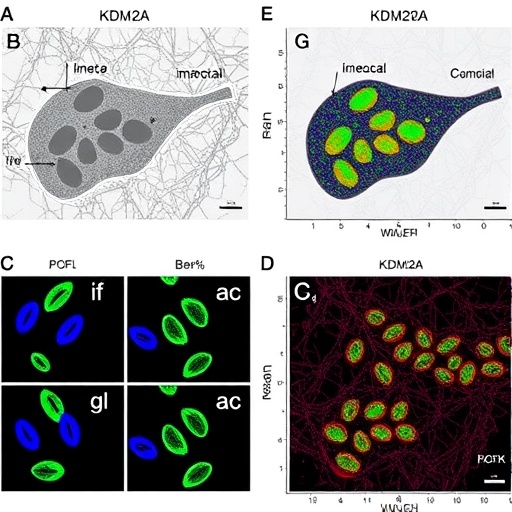
A study published in the British Journal of Cancer reports that removing the gene encoding KDM2A, a histone demethylase, can restore anti-tumor immunogenicity in liver cancer. The finding places an epigenetic regulator at the center of the long-running effort to understand why some liver tumors remain invisible or resistant to immune attack. Rather than changing the DNA sequence itself, KDM2A ablation appears to alter the way genetic information is packaged and used inside cancer cells, potentially making malignant tissue more recognizable to the immune system. The work, led by Luca Gragnani, Martina Lulli, Paola Caini and colleagues, highlights a possible connection between chromatin biology and the effectiveness of anti-cancer immunity. Its implications are especially relevant for hepatocellular carcinoma, the most common primary form of liver cancer and a disease in which immune-based treatments benefit only a proportion of patients.
KDM2A belongs to a family of enzymes that modify histones, the proteins around which DNA is wrapped. This packaging system, known as chromatin, determines whether particular stretches of DNA are accessible to the molecular machinery that transcribes genes into RNA. Histone demethylases remove methyl groups from histone proteins, and by doing so they can influence whether genes are activated or silenced. Cancer cells frequently exploit these epigenetic mechanisms to preserve abnormal growth, suppress stress responses and avoid recognition by immune cells. Because epigenetic changes are potentially reversible, enzymes such as KDM2A have attracted attention as therapeutic targets. The new report suggests that KDM2A is not merely involved in tumor-cell behavior, but may also help shape the immune identity of liver cancer.
The phrase “anti-tumor immunogenicity” describes the capacity of a cancer cell to provoke an immune response. For a tumor to be detected, its cells must display molecular signals that distinguish them from healthy tissue. These signals can include tumor-associated proteins, abnormal peptides presented on major histocompatibility complex molecules, and stress-related molecules released or exposed when cells are damaged. If such signals are weak, concealed or actively suppressed, immune cells may fail to recognize the tumor as dangerous. The study’s central message is that KDM2A ablation restores this immunogenic character. In practical terms, disabling the demethylase may push liver cancer cells toward a state in which their abnormality becomes more visible to immune surveillance.
This concept is important because liver tumors develop within an organ with an unusually complex immune environment. The liver must constantly tolerate harmless substances arriving from the digestive system while still responding to pathogens and tissue injury. That balance can create conditions in which malignant cells avoid destruction. Tumors may further reinforce local immune tolerance by altering cytokine signals, exhausting T cells, recruiting suppressive immune populations and reducing the presentation of tumor-derived antigens. Epigenetic regulators can influence many of these processes indirectly by controlling the transcription of genes involved in antigen processing, interferon signaling and cellular stress. By targeting KDM2A, researchers are examining whether the tumor’s immune camouflage can be weakened at its regulatory source rather than addressed only through downstream immune stimulation.
The finding also fits into a broader transformation in cancer research, in which the tumor is viewed not as an isolated mass of genetically altered cells but as an ecosystem of cancer cells, immune cells, blood vessels and connective tissue. A change within the chromatin of tumor cells can alter the messages they send to neighboring cells and can affect how immune cells interpret the tumor environment. If KDM2A ablation increases the expression of immune-relevant signals, it could make liver cancer more responsive to immune effector cells, including cytotoxic T lymphocytes that recognize and kill abnormal cells. It may also improve the potential activity of immunotherapies designed to release inhibitory checkpoints. However, the biological consequences of KDM2A loss are likely to depend on the cellular context, the genetic background of the tumor and the existing immune state of the liver.
The most significant therapeutic possibility is therefore combination treatment. Immune checkpoint inhibitors can restore the activity of T cells that have become functionally restrained by tumors, but these medicines work best when the immune system can first detect meaningful cancer-associated targets. An epigenetic intervention aimed at KDM2A could, in principle, increase that detectability and create a more favorable starting point for checkpoint blockade. Such a strategy would not be expected to act like a conventional chemotherapy drug that directly kills rapidly dividing cells. Instead, it would reprogram the molecular presentation of the tumor and potentially convert an immunologically “cold” tumor into a more inflamed or “hot” one. Whether that conversion improves survival, reduces relapse or broadens the number of patients who respond will require additional experimental and clinical testing.
The study’s use of the term “ablation” is also scientifically important. Ablation generally refers to the elimination or disabling of a gene or its function, rather than a temporary reduction caused by a drug. Genetic ablation can reveal what a protein does with considerable clarity, but it does not automatically establish that the same effect can be achieved safely in patients. A future medicine would need to inhibit KDM2A selectively enough to affect tumor cells without causing unacceptable disruption in healthy tissues. Histone-modifying enzymes can regulate networks of genes in many organs, so their inhibition may produce benefits as well as unintended effects. Researchers will need to determine the most effective dose, timing and delivery method, and identify biomarkers that reveal which tumors are dependent on KDM2A-mediated immune suppression.
The report arrives at a moment when liver cancer treatment is increasingly shaped by immunology and molecular classification. Even when two tumors arise in the same organ, they can differ substantially in mutations, epigenetic state, antigen production and immune-cell infiltration. Those differences help explain why a therapy can generate a dramatic response in one patient while producing little benefit in another. KDM2A activity could eventually become part of a biomarker strategy, helping researchers identify tumors in which epigenetic immune reprogramming is most likely to work. Yet the results should be interpreted as a step toward that possibility, not as evidence that a ready-to-use treatment has already been developed. The path from mechanistic discovery to clinical care will require validation across models, careful toxicology studies and trials in people with liver cancer.
What makes the finding notable is the way it links two traditionally distinct areas of oncology: the regulation of gene expression and the immune system’s ability to recognize malignant cells. By showing that loss of a histone demethylase can restore anti-tumor immunogenicity, Gragnani, Lulli, Caini and their colleagues reinforce the idea that cancer immunity is controlled not only by immune cells themselves, but also by the epigenetic state of the tumor they are trying to attack. The work offers a rationale for exploring KDM2A as a therapeutic vulnerability and for combining epigenetic approaches with immunotherapy. For patients, the promise is still provisional, but the underlying principle is powerful: sometimes the key to making a tumor vulnerable may be to change the molecular language it uses to hide.
Cite Scienmag News
Nathaniel Bowman. (August 20, 2026). Removing KDM2A Demethylase Restores Antitumor Immunity in Liver Cancer. Scienmag. https://scienmag.com/removing-kdm2a-demethylase-restores-antitumor-immunity-in-liver-cancer/
Nathaniel Bowman. "Removing KDM2A Demethylase Restores Antitumor Immunity in Liver Cancer." Scienmag, 20 August 2026, https://scienmag.com/removing-kdm2a-demethylase-restores-antitumor-immunity-in-liver-cancer/. Accessed 4 September 2026.
Nathaniel Bowman. "Removing KDM2A Demethylase Restores Antitumor Immunity in Liver Cancer." Scienmag. August 20, 2026. https://scienmag.com/removing-kdm2a-demethylase-restores-antitumor-immunity-in-liver-cancer/


