


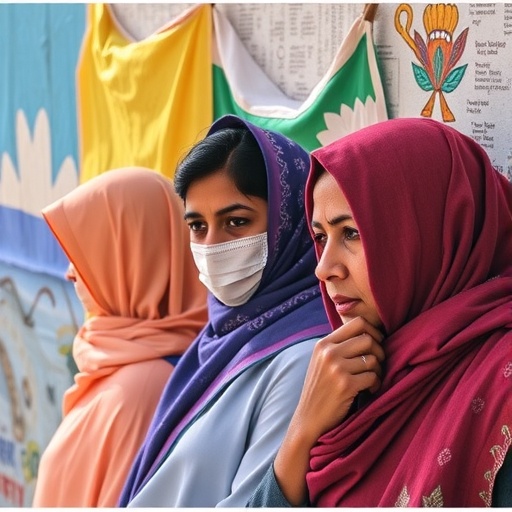
In the heart of Uganda’s Nakivale Refugee Settlement, a silent epidemic persists—mental health disorders quietly eroding the well-being of thousands. This sprawling refuge, home to refugees fleeing conflict and hardship, encounters a paradox: while mental health and psychosocial support (MHPSS) services are present, their utilization remains alarmingly low. A recent qualitative study published in BMC Psychiatry by Mohamed et al. sheds critical light on the complexities surrounding access to mental health care in this unique and challenging humanitarian context.
Mental health disorders such as depression, anxiety, and post-traumatic stress disorder (PTSD) disproportionately affect refugees worldwide. In Nakivale, where the population grapples daily with the repercussions of forced displacement and trauma, these disorders manifest intensely. The study draws attention to the staggering fact that nearly one in three refugees may be battling these debilitating conditions. Yet, despite the clear need and presence of services, barriers prevent many from seeking help.
The researchers adopted a nuanced, exploratory qualitative methodology to unravel the layers of complexity in mental health service utilization. They organized four focus group discussions (FGDs) stratified by nationality, representing the settlement’s dominant groups: Congolese, Burundian, Rwandan, and Somali refugees. Complementing this, ten key informant interviews (KIIs) were conducted with mental health providers and community leaders intimately familiar with the refugee community’s day-to-day realities.
This dual approach revealed a multi-dimensional picture of the challenges refugees face. On the individual level, an array of deeply entrenched issues emerged. Stigma surrounding mental illness was pervasive, with many refugees associating psychological distress with personal or familial failure. Cultural beliefs further complicated matters, as mental health symptoms were sometimes interpreted through supernatural or non-biomedical lenses. Low perceived need for treatment was compounded by a deficit in health literacy, leaving many unable to recognize their own suffering as a medical condition warranting professional care.
Beyond the individual, systemic barriers loom large. The health infrastructure of Nakivale is beleaguered by insufficient human resources, with too few trained mental health professionals to meet demand. Medication shortages are a recurring issue, undermining continuity of care and diminishing trust in the health system’s effectiveness. Logistical challenges such as poor transportation networks hinder timely referrals and access to distant health posts, especially for vulnerable groups like the elderly or disabled.
Community awareness of mental health remains limited, a gap that exacerbates both stigma and service underutilization. Often, the only recourse available involves community traditional healers or faith-based support, which, while culturally congruent, may not address clinical needs. These interlocking barriers create a cycle where mental health conditions fester untreated, compounding the suffering of individuals and heightening community vulnerability.
However, this comprehensive inquiry also uncovers rays of hope: factors that facilitate engagement with mental health care in Nakivale. Culturally adapted therapy models emerge as a crucial enabler, blending psychological support with the unique socio-cultural fabric of refugee groups. Refugees’ strong sense of community identity and entitlement to services foster resilience and willingness to seek help when appropriately encouraged.
A cornerstone of successful intervention identified by the study is community-based service delivery. By embedding mental health support within trusted local structures and leveraging respected community leaders as mental health champions, barriers of mistrust and stigma can be diminished. Structured psychoeducation initiatives further empower refugees by improving mental health literacy and normalizing help-seeking behavior.
Interagency coordination, too, plays an instrumental role. The study highlights the benefits of collaborative frameworks among governmental, non-governmental, and international organizations operating within Nakivale. Such coherence enhances resource efficiency, ensures continuity of care, and fosters innovation in service delivery models suited to humanitarian contexts.
Ongoing capacity building for staff is critical. Regular training and professional development opportunities equipped service providers to refine skills, reinforce culturally sensitive approaches, and manage the complex mental health needs prevalent in diverse refugee populations. Additionally, integrating trained lay mental health agents expands the workforce and enables community-level outreach unattainable by specialists alone.
To bridge the critical gap between need and service utilization, the study emphasizes strategic decentralization of mental health services. Bringing care closer to where refugees live mitigates transport difficulties and reduces the burden on centralized facilities. Ensuring consistent availability of essential psychotropic medications strengthens treatment adherence and patient trust.
Crucially, the authors argue for a multi-faceted intervention strategy that simultaneously targets stigma reduction, psychoeducation, community mobilization, and workforce development. Policy-level support must align with grassroots efforts to secure sustainable improvements in MHPSS delivery. These findings serve as a vital roadmap for humanitarian actors and policymakers striving to optimize mental health outcomes in resource-poor, high-need contexts.
Nakivale’s experience, as illuminated by this study, underscores the urgent imperative to reconceptualize mental health service frameworks in refugee settings. It calls for integrating cultural competency, community empowerment, and systemic strengthening into holistic mental health programs. Without such holistic approaches, the mental health crisis among displaced populations—so acutely felt in places like Nakivale—risks deepening under the radar of global health priorities.
Ultimately, Mohamed et al.’s research enriches our understanding of how to navigate the fragile intersection of mental health, culture, displacement, and humanitarian service delivery. It offers tangible evidence and direction for scaling up effective, culturally attuned, and accessible mental health services in refugee settlements worldwide, ensuring that vulnerability does not preclude dignity and healing.
Cite Scienmag News
Glenn Wilkins. (October 2, 2025). Refugees’ Mental Health: Barriers and Boosters. Scienmag. https://scienmag.com/refugees-mental-health-barriers-and-boosters/
Glenn Wilkins. "Refugees’ Mental Health: Barriers and Boosters." Scienmag, 2 October 2025, https://scienmag.com/refugees-mental-health-barriers-and-boosters/. Accessed 4 September 2026.
Glenn Wilkins. "Refugees’ Mental Health: Barriers and Boosters." Scienmag. October 2, 2025. https://scienmag.com/refugees-mental-health-barriers-and-boosters/


