


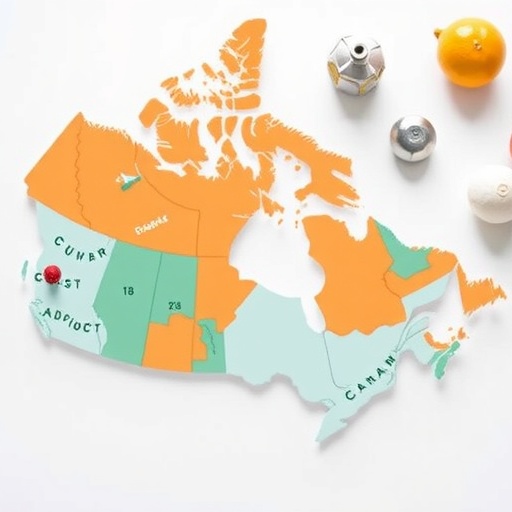
In a groundbreaking meta-analysis published recently in the Journal of Exposure Science & Environmental Epidemiology, researchers have taken significant strides toward refining the accuracy of mercury exposure assessments linked to traditional Canadian foods. This pioneering study addresses a persistent challenge in environmental health sciences: the variability and uncertainty in estimating human exposure to methylmercury, a potent neurotoxin, through dietary sources that are culturally significant and frequently consumed by Indigenous populations and other Canadians.
Mercury exposure, particularly from methylmercury, has long been a concern due to its well-documented neurological and developmental impacts, especially in fetuses and young children. Traditional foods, such as fish, marine mammals, and other wildlife harvested from Canadian ecosystems, often contain mercury in various chemical forms. Accurately gauging exposure necessitates a detailed understanding of the ratio between methylmercury and total mercury present in these food sources, a complex task given the chemical diversity of mercury species across different environments and biota.
The study led by Eccles, Yee, and Chan employs a meta-analytic approach, meticulously aggregating data from numerous previously published studies that measured methylmercury-to-total mercury ratios in a broad range of traditional foods consumed across Canada. By synthesizing these datasets, the researchers aimed to generate more reliable estimates that can be applied in exposure risk models and public health advisories. Their approach stands out by addressing the significant heterogeneity found in prior individual studies, effectively bridging gaps in data consistency.
One of the key findings elucidated in the study is the variable nature of methylmercury proportions relative to total mercury across different species and ecological contexts. For example, the ratios differ markedly between freshwater and marine fish species, and even within the same species depending on geographical location and size. The authors highlight that understanding these distinctions is critical since simplistic assumptions about fixed ratios can lead to under- or over-estimation of exposure, impacting risk assessments and public health recommendations.
The researchers also discuss the methodological challenges inherent in measuring mercury speciation. Techniques vary in sensitivity and selectivity, with some analytic methods potentially misrepresenting the actual methylmercury fraction due to sample processing or analytical interference. By consolidating data from diverse analytical protocols, the meta-analysis attempts to account for such methodological variability and proposes a framework to standardize exposure estimates across studies.
Further, the paper delves into the implications of these refined exposure estimates for Indigenous communities, where traditional foods are central to cultural identity, nutrition, and food security. Overly conservative or inaccurate exposure risk assessments may inadvertently discourage traditional harvesting and consumption practices, leading to nutritional deficits and cultural loss. The improved exposure metrics introduced by this study enable a more balanced approach that weighs the benefits of traditional diets against the potential health risks of methylmercury.
The authors underscore the importance of integrating these findings into environmental monitoring programs, dietary surveys, and regulatory frameworks. By enhancing the precision of exposure models, policymakers and health professionals can develop tailored advisories that acknowledge regional and species-specific differences, ultimately contributing to better protection of vulnerable populations while respecting cultural practices.
Importantly, this meta-analysis lays a foundation for future research directions. It identifies critical knowledge gaps, such as limited data on certain food types or geographic regions, and calls for coordinated efforts to fill these voids through targeted sampling and advanced analytical techniques. This forward-looking perspective is essential in an era where climate change and environmental perturbations may alter mercury cycling and bioaccumulation patterns in ecosystems.
Eccles, Yee, and Chan’s work exemplifies an interdisciplinary effort, bridging toxicology, environmental chemistry, epidemiology, and Indigenous health. The rigor and comprehensiveness of their analysis not only improve exposure estimation but also strengthen the scientific basis for risk communication and policy formulation in mercury-contaminated regions.
Furthermore, the study sparks broader conversations about the need for culturally sensitive environmental health research. It highlights how scientific innovation can coexist with respect for traditional knowledge systems and community engagement, offering holistic solutions to complex public health challenges.
In technological terms, the study encourages adoption of improved speciation analytics and proposes statistical methodologies that can be adapted to other contaminants and exposure pathways. This level of methodological advancement is crucial to evolving exposure science and epidemiology, enabling more nuanced assessments of human health risks from environmental pollutants.
Another compelling aspect of the research is the potential impact on global mercury risk assessments. Although focused on Canadian traditional foods, the findings have relevance for other regions and indigenous populations worldwide who rely on similar dietary sources. The meta-analytic framework can be adapted internationally, fostering global comparisons and harmonization in mercury exposure assessment.
The comprehensive nature of this analysis also has implications for future environmental monitoring. By pointing to which foods pose higher or lower methylmercury risk, it informs sampling priorities and resource allocation within environmental health agencies, optimizing efforts to safeguard public health efficiently.
From a public communication standpoint, these findings enable clearer messaging to consumers regarding the risks and benefits of traditional food consumption. Enhanced exposure estimates support evidence-based guidance that can reduce anxiety and misinformation, promoting informed dietary choices grounded in science.
As the scientific community continues to confront the enduring challenges posed by mercury pollution, such integrative studies are pivotal. They push the envelope of knowledge, improve health risk models, and ultimately aid in protecting those most vulnerable, all while honoring cultural heritage and fostering sustainable food practices.
This study represents a leap forward in the field of environmental exposure science. By transforming fragmented data into coherent, actionable knowledge, Eccles, Yee, and Chan contribute a vital piece to the global puzzle of mercury exposure and public health, setting a new standard for future research and policy development.
Cite Scienmag News
Daisy Hatcher. (April 23, 2026). Refining Mercury Exposure: Meta-Analysis of Canadian Foods. Scienmag. https://scienmag.com/refining-mercury-exposure-meta-analysis-of-canadian-foods/
Daisy Hatcher. "Refining Mercury Exposure: Meta-Analysis of Canadian Foods." Scienmag, 23 April 2026, https://scienmag.com/refining-mercury-exposure-meta-analysis-of-canadian-foods/. Accessed 4 September 2026.
Daisy Hatcher. "Refining Mercury Exposure: Meta-Analysis of Canadian Foods." Scienmag. April 23, 2026. https://scienmag.com/refining-mercury-exposure-meta-analysis-of-canadian-foods/


