


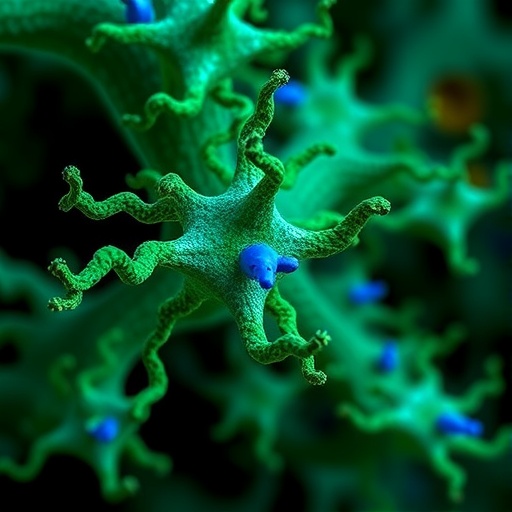
In a groundbreaking study published in Nature, researchers have uncovered a novel role for caspase 5 (CASP5), a member of the inflammatory caspase family, beyond its well-characterized functions in inflammation and cell death. This revelation significantly expands our understanding of the molecular mechanisms governing intestinal epithelial homeostasis, spotlighting CASP5 as a pivotal regulator of Wnt signaling that ensures proper intestinal regeneration and function.
Caspase 5 has historically been overshadowed by its close homolog, caspase 4 (CASP4), which is known for its crucial role in noncanonical inflammasome activation and innate immune responses. Unlike CASP4, CASP5’s functional profile has remained elusive. However, this latest research identifies CASP5 as specifically expressed in the human intestinal epithelium, where it manifests in three distinct isoforms: CASP5A, CASP5B, and CASP5C. Intriguingly, only CASP5C exerts a unique influence on Wnt signaling pathways, which are essential for epithelial development and regeneration.
The Wnt signaling pathway plays a critical role in guiding the proliferation and differentiation of intestinal stem cells and their progeny, the transit-amplifying cells, to maintain intestinal tissue renewal. The study revealed that CASP5C directly modulates this pathway by interacting with key components involved in β-catenin regulation. Central to this interaction is dishevelled, a pivotal scaffold protein bridging Wnt receptors to the β-catenin destruction complex and thus regulating downstream signaling events.
Dishevelled binds to the catalytic domain of CASP5C through its DEP domain, facilitating a functional interaction that differentiates CASP5C from its other isoforms. Notably, CASP5C lacks the CARD inhibitory domain present in CASP5A and CASP5B, which enables it to cleave the adenomatous polyposis coli protein (APC) specifically at aspartate 556 within its Armadillo repeat domain. This cleavage destabilizes the β-catenin destruction complex, tipping the balance towards increased Wnt signaling activity.
The implications of APC cleavage are profound: by weakening the complex responsible for β-catenin degradation, CASP5C effectively sustains proliferative Wnt signaling in transit-amplifying cells despite a naturally declining Wnt gradient along the crypt-villus axis. This mechanism safeguards the continuous renewal and homeostasis of the intestinal epithelium, a critical feature for maintaining the integrity and function of the gut barrier.
Through detailed cellular experiments and organoid models derived from colonic and small intestinal tissues, the authors demonstrated that CASP5C expression peaks precisely in transit-amplifying cells—the rapidly dividing progenitor population that forms the bulk of the epithelium. In contrast, the other CASP5 isoforms are more prominent in differentiated mature enterocytes, indicating a finely tuned expression pattern correlating with epithelial cell maturation and function.
Interestingly, CASP5C is also selectively induced during intestinal epithelial injury and inflammation, suggesting a responsive mechanism that boosts epithelial regeneration when tissue integrity is compromised. Correspondingly, its expression is markedly elevated in samples from patients with inflammatory bowel disease (IBD), a condition characterized by chronic intestinal inflammation and epithelial disruption, hinting at a potential therapeutic target to enhance mucosal healing.
This study further bridges inflammatory caspase biology with tissue homeostasis, revealing an unexpected enzymatic amplifying role of CASP5C in Wnt signaling. Unlike inflammatory caspases traditionally implicated in innate immune defense and pyroptosis, CASP5C employs its proteolytic activity to fine-tune key signaling pathways essential for cell proliferation and tissue maintenance.
The elucidation of CASP5C’s domain architecture underscores the importance of isoform-specific functional specialization among caspases. CASP5C’s unique lack of the CARD domain, which typically modulates caspase activation and interaction, enables it to engage substrates such as APC directly, differentiating its role from the proinflammatory functions of its isoforms sister proteins.
Moreover, the identification of dishevelled as a CASP5C binding partner enriches our comprehension of the molecular crosstalk between inflammatory caspases and Wnt signaling regulators. This interaction underscores how proteolytic modulation of scaffold proteins in crucial signaling cascades can recalibrate cellular responses to environmental cues.
The broader scientific implications are significant. By illuminating a new pathway through which inflammatory caspases contribute to epithelial biology, this work paves the way for innovative therapeutic approaches aimed at enhancing tissue regeneration and repair, especially in diseases marked by epithelial injury and chronic inflammation like IBD.
Future investigations will likely explore how CASP5C activity is regulated within the intestinal microenvironment and its potential cross-talk with other signaling pathways governing barrier function and immune responses. Understanding these dynamics may reveal novel intervention points to modulate epithelial renewal in pathological states.
In sum, CASP5C emerges as an enzymatic amplifier of Wnt signaling via targeted cleavage of APC, reinforcing proliferative capacity in transit-amplifying cells amid fluctuating Wnt gradients. This discovery spotlights a previously unrecognized link between inflammatory caspases and the maintenance of intestinal epithelial homeostasis—a finding with profound ramifications for our grasp of gut biology and disease.
Cite Scienmag News
Denise Maddox. (April 23, 2026). Caspase 5c Boosts Wnt to Maintain Intestines. Scienmag. https://scienmag.com/caspase-5c-boosts-wnt-to-maintain-intestines/
Denise Maddox. "Caspase 5c Boosts Wnt to Maintain Intestines." Scienmag, 23 April 2026, https://scienmag.com/caspase-5c-boosts-wnt-to-maintain-intestines/. Accessed 6 September 2026.
Denise Maddox. "Caspase 5c Boosts Wnt to Maintain Intestines." Scienmag. April 23, 2026. https://scienmag.com/caspase-5c-boosts-wnt-to-maintain-intestines/


