


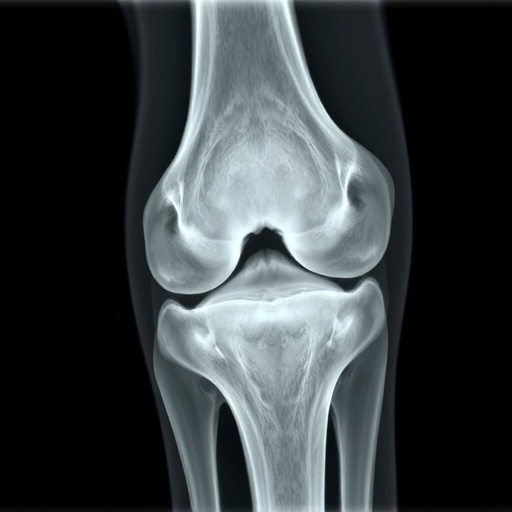
In a groundbreaking study published in Pediatric Radiology, researchers are shedding light on a previously underestimated anatomical feature known as the bipartite patella, which may play a larger role in musculoskeletal health than previously thought. Traditionally dismissed as an uncommon anatomical variant associated with minimal clinical significance, recent insights presented by Ramirez and colleagues reveal that this accessory ossicle could be linked to a variety of musculoskeletal issues, particularly in pediatric populations. This shift in perspective encourages clinicians to revisit their understanding of accessory ossicles and their impact on patient care and diagnosis.
The bipartite patella consists of a patella that is divided into two primary sections rather than forming the singular bone typically seen in healthy individuals. This anatomical variant occurs due to a failure of fusion during fetal development, leading to a distinct delineation of the patella. As a result, this condition can mimic other pathologies, potentially complicating diagnostic imaging processes. The research emphasizes the importance of recognizing bipartite patella as a legitimate variant, which necessitates careful consideration during radiographic assessments.
Radiologists, particularly those working with pediatric patients, often come across incidental findings during imaging studies. The bipartite patella might be one such incidental discovery; however, the implications of this finding are profound. While many patients exhibit no symptoms, the presence of a bipartite patella might actually predispose them to specific injuries or conditions that could previously be overlooked. As the researchers suggest, recognizing these ossicles can illuminate pathways for intervention and management that may involve less conventional treatment routes.
Emerging evidence indicates that a bipartite patella may contribute to chronic knee pain experienced by some individuals. The study provides impressive data revealing correlations between the presence of the bipartite patella and a range of clinical symptoms. These findings advocate for a more nuanced approach to musculoskeletal assessments, one that takes into account the potential for these accessory ossicles to contribute to negative health outcomes. Moving forward, it is imperative for healthcare professionals to integrate this growing body of evidence into their clinical practice.
Interestingly, the bipartite patella may not only pose a risk as a secondary source of discomfort but could also interact with other knee structures. The relationship with surrounding tendons and ligaments could portend additional risks, particularly with repetitive movements or high-stress activities like sports. It is vital to understand how nibbling injuries could emerge from small but significant mechanical alterations attributed to the bipartite patella. As a comprehensive review of imaging techniques highlights, this complex interplay necessitates a revision of standard interpretative paradigms in radiological practices.
To address the gap in clinical knowledge, this research was meticulously conducted, invoking advanced imaging modalities coupled with insightful analytical techniques. Utilizing MRI and high-definition ultrasound, the study not only provided visual confirmation of the bipartite form but also correlated it with pertinent clinical outcomes. Such rigorous methodologies enhance the reliability of the findings and offer a robust platform for recommending best practices in clinical settings.
As healthcare practices continuously evolve, it is essential to revisit traditional doctrines that may no longer hold true. The findings concerning the bipartite patella serve as a poignant reminder that medicine is an ever-changing field requiring constant reflection and adaptation. This study encourages specialists in pediatrics and sports medicine to question long-accepted notions regarding the insignificance of accessory ossicles and consider their potential clinical ramifications.
Moreover, educating families and patients about the implications associated with a diagnosis of a bipartite patella is crucial. Close communication between physicians, patients, and parents will foster a collaborative environment for managing care. Patients need to understand that while they may not experience significant symptoms now, potentially, their condition could predispose them to vulnerabilities in the future. Clinical education tailored to individual cases will empower patients and enhance adherence to follow-up care.
In essence, this comprehensive investigation into the bipartite patella underscores the need for a paradigm shift in how we approach accessory ossicles in pediatric orthopedics and radiology. Encouraging interdisciplinary dialogue is vital for fostering new insights into patient management, which may lead to the development of innovative treatment modalities.
As the study provides an extensive review encompassing demographics, imaging characteristics, and clinical associations, it marks a significant advancement in pediatric radiology. No longer should the bipartite patella be regarded as mere anatomical curiosity; instead, its implications on musculoskeletal health warrant further discussion and exploration. By embracing this knowledge, healthcare providers will be better positioned to optimize patient outcomes and prevent exacerbation of issues stemming from overlooked anatomical variants.
In conclusion, the research by Ramirez et al. represents a critical re-evaluation of the bipartite patella, broadening the scope of understanding surrounding accessory ossicles. Envisioned collaboratively, the dialogue spurred by these findings can transform clinical practices and encourage professionals to adopt updated diagnostic frameworks. This landmark study serves as a clarion call to prioritize education and discussion surrounding the bipartite patella, ultimately creating a more informed approach to pediatric radiology and comprehensive patient care.
Cite Scienmag News
Ophelia Keating. (August 7, 2025). Reevaluating Bipartite Patella: An Overlooked Ossicle. Scienmag. https://scienmag.com/reevaluating-bipartite-patella-an-overlooked-ossicle/
Ophelia Keating. "Reevaluating Bipartite Patella: An Overlooked Ossicle." Scienmag, 7 August 2025, https://scienmag.com/reevaluating-bipartite-patella-an-overlooked-ossicle/. Accessed 4 September 2026.
Ophelia Keating. "Reevaluating Bipartite Patella: An Overlooked Ossicle." Scienmag. August 7, 2025. https://scienmag.com/reevaluating-bipartite-patella-an-overlooked-ossicle/


