


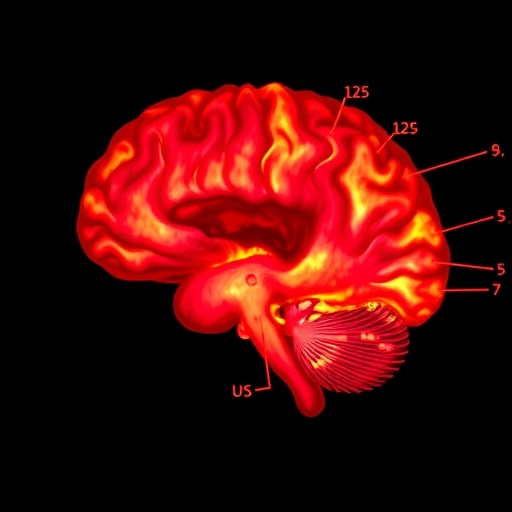
In a groundbreaking study poised to illuminate the shadowy neural mechanisms that underpin schizophrenia, researchers have seized upon a novel genetic mouse model to unravel how belief updating—the process through which expectations are revised in light of new evidence—is disrupted in this devastating mental illness. For decades, the enigmatic origins of delusions, a hallmark symptom of schizophrenia characterized by fixed, false beliefs, have eluded clear explanation. Now, leveraging the power of cutting-edge genetics, sophisticated behavioral paradigms, and precise circuit-level manipulations, scientists are forging a new path that may transform our understanding of the cognitive dysfunctions at the heart of this disorder.
Central to the study is the strategic introduction of a point mutation in the Grin2a gene of mice—a mutation intricately linked with schizophrenia in humans—to create a compelling animal model exhibiting striking parallels with the disorder’s cognitive deficits. The Grin2a gene encodes the NR2A subunit of the NMDA receptor, a critical glutamate receptor involved in synaptic plasticity and transmission. The Y700X mutation, heterozygously expressed in Grin2aY700X+/− mice, induces subtle but profound disruptions in neural communication, serving as an experimental window into the molecular underpinnings of schizophrenia.
Behaviorally, these genetically engineered mice engage in an exquisitely designed foraging task that tracks decision-making patterns exhibiting belief-driven strategies. Unlike conventional paradigms, this task is computationally tractable, enabling researchers to quantify how dynamic beliefs about reward contingencies are formed and updated over time. Intriguingly, Grin2aY700X+/− mice manifest less optimal performance compared to their wild-type counterparts, revealing a destabilization of cognitive states during task engagement. This instability arises from noisy internal representations of task value, reflecting a core deficiency in the ability to integrate evolving evidence to guide behavior flexibly.
The implications of this behavioral impairment prompted an intense investigation into the neural circuitry underlying the observed deficits. Focusing on the mediodorsal (MD) thalamus—an epicenter of cognitive control and prefrontal cortex communication—researchers employed in vivo recordings and optogenetic interventions to probe its role more deeply. The data compellingly demonstrate that MD thalamic neurons encode dynamic task values and cognitive states integrally involved in belief updating within wild-type mice, signifying that this thalamic nucleus functions as a hub for adaptive cognition.
Disconcertingly, in Grin2aY700X+/− mice, the MD thalamus is markedly hypofunctional, with reduced neuronal activity correlating with their impaired belief updating abilities. This discovery not only spotlights the MD thalamus as a vulnerable locus in schizophrenia pathophysiology but also suggests that disruptions in this thalamocortical circuit cascade into cognitive instability manifesting as aberrant beliefs and delusions.
To establish causality, optogenetic inhibition of MD neurons was performed in wild-type animals. Astonishingly, transient silencing of this region reproduced the cognitive deficits seen in mutant mice, including degraded task performance and unstable belief representations. Conversely, enhancing MD activity in Grin2aY700X+/− mice partially rescued these deficits, restoring more stable cognitive states and improving belief updating. These reversible, bidirectional manipulations illuminate the MD thalamus as a critical nodal point whose functional integrity determines the fidelity of cognitive state representation.
Moreover, the study’s computational modeling approach revealed that the source of cognitive instability in mutant mice stems from elevated internal noise corrupting the representations of dynamic task values. This noisy representation undermines the ability to predict and plan based on prior outcomes, a phenomenon highly reminiscent of the aberrant salience attribution implicated in schizophrenia. Such a mechanistic insight bridges molecular genetics, circuit physiology, and cognitive symptomatology in an unprecedented integrative framework.
The translational relevance of these findings is profound. By pinning specific deficits on the MD thalamus and linking them to a schizophrenia-associated mutation, the research opens the possibility of novel therapeutic strategies targeting thalamic circuits. Modulating MD activity through pharmacological agents, electrical stimulation, or neuromodulation approaches could potentially ameliorate cognitive impairments and mitigate delusional resistance to belief updating in patients.
Equally exciting is the contribution the study makes to animal modeling in psychiatric research. The Grin2aY700X+/− mouse model, coupled with a computationally trackable behavioral task, provides an unprecedented platform to dissect the neural algorithms governing belief updating. This model surmounts previous limitations by offering both face validity—mimicking cognitive phenotypes seen in humans—and mechanistic accessibility through genetic and optogenetic tools.
On a broader scale, this discovery challenges prevailing views of schizophrenia as merely a disorder of dopamine dysregulation, illuminating the thalamo-prefrontal cortex axis as a core substrate for cognitive disruption. By elucidating how thalamic hypofunction shapes belief dynamics at a neuronal population level, the study compels a reevaluation of intervention strategies to incorporate thalamic targeting as a central focus.
Methodologically, the research exemplifies the power of combining in vivo electrophysiological recordings with optogenetic precision and computational behavioral modeling. This synergistic integration allowed for the parsing of complex belief updating processes across multiple scales—from single cells encoding task values to emergent cognitive states driving decision making—thereby setting a new standard for future investigations into cognitive dysfunction.
Importantly, the controlled foraging task itself, designed to track belief-driven decisions computationally, represents a major innovation in behavioral neuroscience. Its ability to quantify and manipulate the stability of internal belief states in real time paves the way for dissecting other psychiatric or neurological conditions where belief formation is disrupted, such as obsessive-compulsive disorder or addiction.
While remarkable progress has been made, the study also raises critical questions: How do upstream sensory and cortical inputs to the MD thalamus contribute to the observed hypofunction? Could developmental perturbations in NMDA receptor function differentially affect thalamic circuits and cortical processing? Future research will undoubtedly aim to unravel these layers of complexity to build a unified model of schizophrenia pathogenesis.
In conclusion, this landmark investigation identifies the mediodorsal thalamus as a pivotal neural substrate governing the fidelity of belief updating, a process compromised in schizophrenia. By bridging genetics, behavior, circuit physiology, and computational modeling, the research not only elucidates core disease mechanisms but also charts a promising course for innovative therapeutic avenues aimed at restoring adaptive cognition and combating delusions. The convergence of precise molecular tools and advanced behavioral analytics heralds a new era in psychiatric neuroscience, where the brain’s dynamic belief states can finally be decrypted and rescued.
Cite Scienmag News
Juliet Wilcox. (March 18, 2026). Reduced Thalamus Activity Drives Abnormal Beliefs in Schizophrenia. Scienmag. https://scienmag.com/reduced-thalamus-activity-drives-abnormal-beliefs-in-schizophrenia/
Juliet Wilcox. "Reduced Thalamus Activity Drives Abnormal Beliefs in Schizophrenia." Scienmag, 18 March 2026, https://scienmag.com/reduced-thalamus-activity-drives-abnormal-beliefs-in-schizophrenia/. Accessed 3 September 2026.
Juliet Wilcox. "Reduced Thalamus Activity Drives Abnormal Beliefs in Schizophrenia." Scienmag. March 18, 2026. https://scienmag.com/reduced-thalamus-activity-drives-abnormal-beliefs-in-schizophrenia/


