


In a case that underscores how a little-known bone condition can turn lethal, physicians in Sudan have reported what they believe is the first documented instance of diffuse idiopathic skeletal hyperostosis, or DISH, complicated by cervical myelopathy in that country. The report, published in Clinical Case Reports, describes a 73-year-old man whose spinal ligaments had gradually transformed into bone, squeezing his spinal cord until his arms and legs failed him. By the time the diagnosis was made, war had closed off his access to surgery, and three months later he died suddenly before the planned operation could take place. The case is a stark reminder that a disease long dismissed as a benign curiosity of aging can, in the wrong circumstances, become catastrophic.
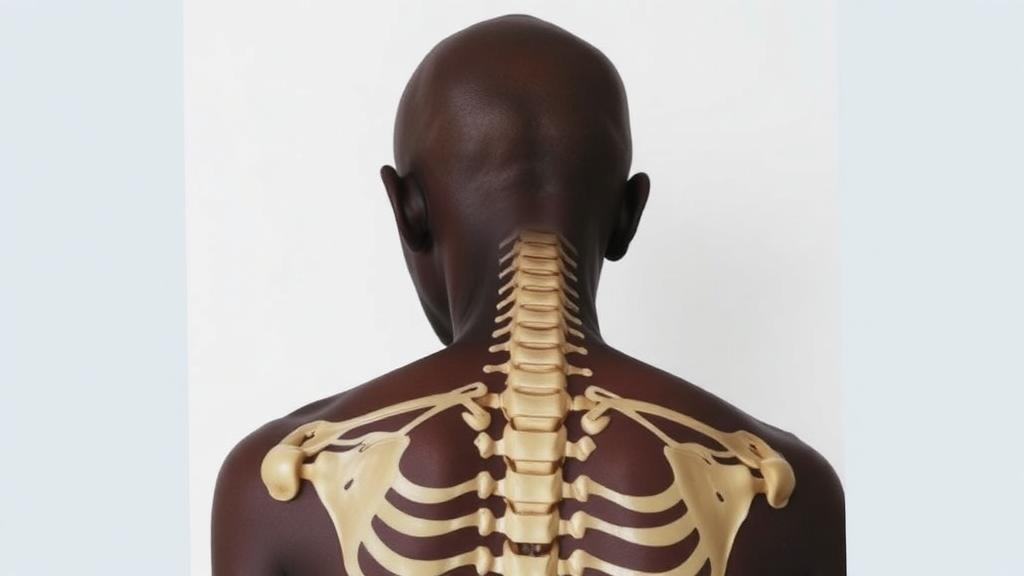
DISH is not a new discovery. The condition was first described in 1950 by the French rheumatologists Jacques Forestier and Jaume Rotes-Querol, who catalogued a striking pattern of bony overgrowth along the spines of older patients. Also known as Forestier’s disease or spondylitis ossificans ligamentosa, the disorder is characterized by the ossification of ligaments and entheses, the tough attachment points where soft tissue anchors to bone. The anterior and posterior longitudinal ligaments, which run along the front and back of the vertebral column, are among the most commonly affected structures, along with the ligaments of the vertebral arch. In essence, the flexible straps that hold the spine together slowly calcify into rigid bridges of bone.
Epidemiologically, DISH is far from rare. It affects primarily the elderly, with reported prevalence figures reaching 32.1 percent of men and 16.9 percent of women aged 80 and above in some populations. The condition has been studied extensively in Asia, particularly in Japan, where prevalence rates between 1.9 and 4.3 percent have been recorded. Yet its true global burden remains murky, because reported prevalence varies enormously depending on the population examined and the imaging methods used. Many people carry the diagnosis unknowingly: DISH can be completely asymptomatic, discovered only as an incidental finding on radiographs obtained for unrelated complaints.
When symptoms do appear, they range from painful stiffness and limited mobility to spinal deformity. More ominously, some patients develop myelopathy, a dysfunction of the spinal cord itself, typically when the posterior longitudinal ligament ossifies and narrows the spinal canal. The literature also documents stranger consequences: difficulty swallowing, shortness of breath, and noisy breathing caused by bony overgrowth compressing the pharynx, esophagus, or trachea. The exact cause of DISH remains unknown, but strong associations have been established with advancing age, obesity, and type 2 diabetes. Researchers believe these metabolic conditions promote the production of growth factors such as insulin-like growth factor 1, along with inflammatory mediators including interleukin-1 and interleukin-6, which stimulate osteoblast proliferation and drive bone deposition through the receptor activator of nuclear factor kappa-B ligand pathway. Genetic susceptibility has also been implicated, with evidence pointing to a locus on chromosome 6p related to posterior longitudinal ligament ossification, and additional contributions reported from protein-rich diets and sedentary work.
The Sudanese patient’s story began with two months of progressive weakness in both his arms and legs, accompanied by neck and back pain. He had lived with type 2 diabetes for 14 years, managed with oral medications, and reported no history of trauma. By the time he reached the clinic, he was wheelchair-bound. Neurological examination revealed spastic quadriparesis, weakness in all four limbs accompanied by increased muscle tone, with brisk reflexes at the supinator, knee, and ankle. His plantar responses were extensor, a classic upper motor neuron sign, and he exhibited a positive myelopathy hand sign as well as pseudoathetosis, the involuntary writhing of the fingers that occurs when the brain loses proprioceptive feedback from the hands when the eyes are closed. Sensation to vibration and joint position was diminished. Notably, his bowel and bladder function remained intact.
Imaging told the rest of the story. Computed tomography of the cervical spine showed straightening of the normal neck curvature, with extensive ossification of the anterior longitudinal ligament running the entire length of the cervical region. Critically, the posterior longitudinal ligament had also ossified inside the spinal canal, producing severe stenosis at the C5, C6, and C7 levels. Magnetic resonance imaging, though of suboptimal quality, confirmed multilevel flowing anterior ossification with relatively preserved intervertebral disc heights, a signature feature of DISH. At the mid-cervical levels, the spinal cord was visibly compressed, the surrounding cerebrospinal fluid space nearly obliterated, and subtle T2 signal changes within the cord itself suggested underlying compressive myelopathy. An additional MRI of the lumbosacral spine revealed a diffuse disc bulge at L3/L4 with hypertrophy of the ligamentum flavum, indenting the thecal sac and compressing nerve roots on both sides, plus milder degenerative changes at L5/S1. Laboratory and serological tests were all normal, excluding alternative rheumatologic diagnoses such as ankylosing spondylitis or rheumatoid arthritis.
Distinguishing DISH from its imitators is a diagnostic exercise with real consequences. In the 1970s, Donald Resnick and colleagues proposed criteria that remain the standard: flowing ossification extending across at least four adjacent vertebrae, relative preservation of disc height appropriate for the patient’s age, and an absence of apophyseal joint ankylosis or sacroiliac inflammatory change. The Sudanese patient met all of them. Degenerative spondylosis, by contrast, is driven by disc degeneration, osteophyte formation, and disc space narrowing, and typically produces pain and radiculopathy from disc herniation rather than ligamentous ossification. Ankylosing spondylitis, an inflammatory disease of younger patients, features sacroiliitis, syndesmophytes, the fused bamboo spine, and systemic inflammation, none of which characterize the non-inflammatory DISH of older adults. Myelopathy from posterior longitudinal ligament ossification is a hallmark of DISH but rare in spondylosis, and recognizing these distinctions matters because timely intervention can prevent irreversible neurological deterioration.
Treatment for the patient began conservatively with analgesics and physical therapy, and he was referred to the surgery department for cervical decompression and fixation. That operation never happened. The ongoing conflict in Sudan made access to healthcare services nearly impossible, and follow-up could be conducted only by telephone. After three months, the patient died suddenly, before the planned surgical intervention could be performed. The case authors are candid about this limitation: without surgery or detailed post-mortem evaluation, the precise cause of death remains unknown. What the case does establish is the trajectory of a treatable condition allowed to run its course by circumstances beyond medicine’s control, and the authors emphasize the importance of educating patients about their disease and the need to report new symptoms promptly when definitive care is delayed.
The significance of the report extends beyond a single patient. DISH has traditionally been considered more prevalent among Asian populations, and the authors argue this case demonstrates it can no longer be viewed as a disease exclusive to that region. Sudan has, to their knowledge, never before documented a case of DISH with cervical myelopathy, a gap that likely reflects limited diagnostic awareness and imaging access rather than true absence of disease. Because so many cases remain asymptomatic, the condition is easily overlooked until it produces devastating spinal cord injury, as this case demonstrates with a high risk of mortality. The authors call for epidemiological and clinical studies in Sudan to assess the prevalence, risk factors, and management outcomes of this underrecognized rheumatologic disorder.
For clinicians worldwide, the message is twofold. First, DISH deserves a place on the differential diagnosis of cervical myelopathy in elderly patients, particularly those with diabetes and obesity, even in regions where the disease has rarely been reported. Second, the case is a sobering illustration of how conflict and healthcare disruption convert manageable neurological disease into fatal outcome. A diagnosis that could have been treated with decompressive surgery became, through circumstance as much as biology, a death sentence. As the authors conclude, early recognition of DISH in settings where it is rarely reported is essential to improving clinical outcomes, and the first step is simply knowing to look for it.
Subject of Research: Diffuse idiopathic skeletal hyperostosis with cervical myelopathy
Article Title: Diffuse Idiopathic Skeletal Hyperostosis (DISH) With Cervical Myelopathy: A Case Report From Sudan
Article References: Abdalla, E., Alfatih, M., MohammedAhmed, M. A., Siddig, A., & Zeyada, H. (2026). Diffuse Idiopathic Skeletal Hyperostosis ( DISH ) With Cervical Myelopathy: A Case Report From Sudan. Clinical Case Reports, 14(10), Article e73643. https://doi.org/10.1002/ccr3.73643
Image Credits: AI Generated
DOI: 10.1002/ccr3.73643
Keywords: DISH, cervical myelopathy, spinal ligament ossification, Forestier's disease, spinal canal stenosis, case report, Sudan, type 2 diabetes, spinal cord compression, rheumatology, ossification of posterior longitudinal ligament, elderly patients
Cite Scienmag News
Ophelia Keating. (September 30, 2026). Rare Bone Disease That Silently Hardens Spinal Ligaments Claims a Sudanese Patient Before Surgery Could Save Him. Scienmag. https://scienmag.com/rare-bone-disease-that-silently-hardens-spinal-ligaments-claims-a-sudanese-patient-before-surgery-could-save-him/
Ophelia Keating. "Rare Bone Disease That Silently Hardens Spinal Ligaments Claims a Sudanese Patient Before Surgery Could Save Him." Scienmag, 30 September 2026, https://scienmag.com/rare-bone-disease-that-silently-hardens-spinal-ligaments-claims-a-sudanese-patient-before-surgery-could-save-him/. Accessed 4 October 2026.
Ophelia Keating. "Rare Bone Disease That Silently Hardens Spinal Ligaments Claims a Sudanese Patient Before Surgery Could Save Him." Scienmag. September 30, 2026. https://scienmag.com/rare-bone-disease-that-silently-hardens-spinal-ligaments-claims-a-sudanese-patient-before-surgery-could-save-him/


