


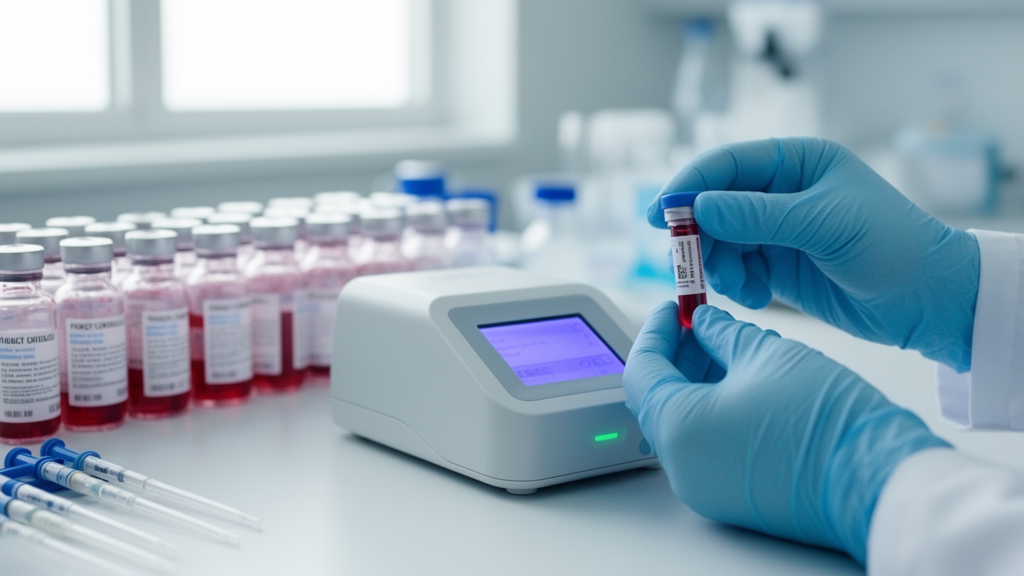
A retrospective analysis of 51 hospitalized children suggests that a magnetic resonance–based diagnostic panel can flag bacterial bloodstream infections in roughly four hours, several times faster than conventional blood culture, which took a median of 22.5 hours to identify a pathogen in the samples where timing data were available. The study, conducted at the University Children’s Hospital in Kraków between November 2023 and February 2025, compared the T2Bacteria panel—a test that detects bacterial pathogens directly from whole blood without waiting for cultures to grow—against blood culture in 62 paired samples from patients aged six days to 17 years. The findings, published in BMC Pediatrics, offer a measured picture of both the promise and the practical limits of culture-independent diagnostics in pediatric sepsis workups.
Bloodstream infections and sepsis remain a leading cause of illness and death in children, and conventional blood culture, despite its status as the diagnostic gold standard, can take up to 72 hours to yield results. The T2 Magnetic Resonance (T2MR) technology behind the T2Bacteria panel works differently: it enables rapid, culture-independent detection of bacterial pathogens directly from whole blood, producing a result within three to five hours. In the Kraków cohort, bacteria were identified in 11 of 62 blood cultures (17.7 percent) and in 16 of 62 T2Bacteria tests (25.8 percent), meaning the molecular panel flagged more samples overall than culture did.
Agreement between the two methods, assessed with Cohen’s kappa, was 82.3 percent (51 of 62 samples), corresponding to a kappa of 0.48 with a 95 percent confidence interval of 0.21 to 0.76—a moderate level of concordance. Both methods were positive in eight samples, with identical bacterial species detected in five of them and different species in three. Eight samples were positive by T2Bacteria alone, while three were positive by blood culture alone. Using blood culture as the reference standard, the T2Bacteria panel achieved a sensitivity of 72.7 percent (8 of 11 culture-positive samples) and a specificity of 84.3 percent (43 of 51 culture-negative samples).
The speed advantage was striking. Median time to pathogen identification was 4.1 hours with T2Bacteria, compared with 22.5 hours by blood culture, although the timing figure for culture was based on only three samples for which data were available. The panel also identified organisms in a subset of culture-negative samples, a finding the authors note could not be confirmed in other clinical specimens, leaving the clinical meaning of those discordant positives uncertain. The researchers compared clinical parameters—including C-reactive protein, procalcitonin, and white blood cell count—across mutually exclusive result groups using nonparametric tests with correction for multiple comparisons, anchoring the molecular results in the children’s broader inflammatory picture.
The study’s conclusions are deliberately cautious. The panel’s usefulness was constrained by a narrow pathogen range, an inability to detect coagulase-negative staphylococci—a common group of skin-associated organisms—and blood volume requirements that are difficult to meet in neonates, a population in which sepsis moves fastest and sample volumes are smallest. Because the T2Dx platform that runs the assay is no longer commercially available, the authors frame their results primarily as evidence on the concept of rapid, culture-independent pathogen detection directly from whole blood, rather than as a recommendation for immediate clinical deployment.
That framing matters for how the findings should be read. The authors position such molecular testing as a complement to, not a replacement for, blood culture in pediatric diagnostic algorithms. The discordant results in this cohort—samples positive by only one method—illustrate why the two approaches are best viewed as capturing overlapping but distinct slices of the diagnostic picture rather than interchangeable answers.
As a single-center retrospective analysis of 62 paired samples, the study has inherent limitations: its size is modest, its population reflects one hospital’s admissions over a 15-month window, and the reference standard itself—blood culture—is imperfect, which complicates the interpretation of discordant results in either direction. The moderate kappa value reflects that ambiguity. Still, the core observation stands on its own terms: a whole-blood molecular assay delivered pathogen identification in about four hours and detected organisms in culture-negative samples, while missing roughly a quarter of culture-positive cases under the culture-referenced analysis.
For clinicians and researchers following rapid diagnostics in pediatric sepsis, the Kraków data add a pediatric-specific data point to the evidence base on culture-independent molecular detection. The results support continued interest in shortening the time to organism-level information in children with suspected bloodstream infection, while underscoring that panel breadth, organism coverage, and sample volume requirements remain the practical hurdles such platforms must clear before they can meaningfully augment—rather than merely accompany—the blood culture that still anchors the diagnostic standard.
Subject of Research: Diagnostic performance of the T2Bacteria molecular panel for rapid detection of bacteremia in hospitalized children compared with blood culture
Article Title: Rapid molecular detection of bacteremia in children: clinical utility and limitations of the t2bacteria panel a single-center retrospective analysis
Article References: Zakrzewska, Z., Paryła, A., Klepacka, J., & Skoczeń, S. (2026). Rapid molecular detection of bacteremia in children: clinical utility and limitations of the t2bacteria panel a single-center retrospective analysis. BMC Pediatrics. https://doi.org/10.1186/s12887-026-07888-y
Image Credits: AI Generated
DOI: 10.1186/s12887-026-07888-y
Keywords: T2Bacteria panel, bacteremia, pediatric sepsis, blood culture, T2 magnetic resonance, rapid diagnostics, bloodstream infection, molecular detection, diagnostic sensitivity, Cohen's kappa, BMC Pediatrics, children's hospital
Cite Scienmag News
Ophelia Keating. (October 26, 2026). Rapid molecular test spots bacterial bloodstream infections in children hours before cultures. Scienmag. https://scienmag.com/rapid-molecular-test-spots-bacterial-bloodstream-infections-in-children-hours-before-cultures/
Ophelia Keating. "Rapid molecular test spots bacterial bloodstream infections in children hours before cultures." Scienmag, 26 October 2026, https://scienmag.com/rapid-molecular-test-spots-bacterial-bloodstream-infections-in-children-hours-before-cultures/. Accessed 26 October 2026.
Ophelia Keating. "Rapid molecular test spots bacterial bloodstream infections in children hours before cultures." Scienmag. October 26, 2026. https://scienmag.com/rapid-molecular-test-spots-bacterial-bloodstream-infections-in-children-hours-before-cultures/


