


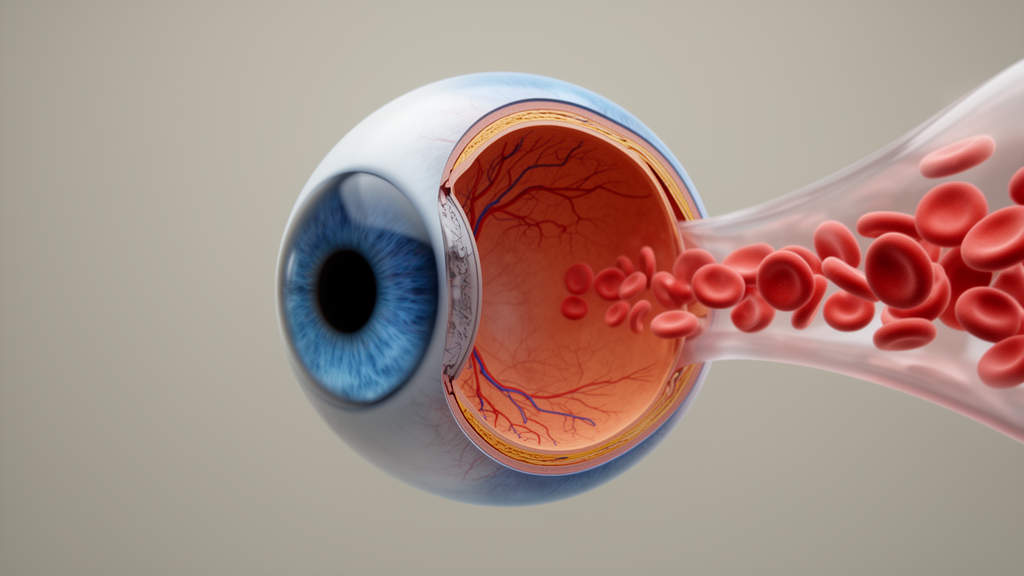
A cross-sectional study of 1,761 patients with type 2 diabetes treated at Longyan First Hospital between July 2022 and August 2025 has found that hematocrit was not significantly associated with diabetic retinopathy once key confounding factors were taken into account. The findings, published in BMC Endocrine Disorders, suggest that an association visible in simpler, unadjusted analyses was largely explained by other patient characteristics rather than by hematocrit itself.
The research team assessed fundus status using standardized methods, and diabetic retinopathy was independently evaluated by two ophthalmologists holding at least deputy chief physician titles, following the International Clinical Diabetic Retinopathy Severity Scale. Fasting venous blood samples were collected in the morning, and hematocrit was measured with an automated blood cell analyzer. Patients were grouped into low, middle, and high hematocrit categories, and the researchers examined associations with diabetic retinopathy using descriptive statistics and logistic regression analyses.
In multivariable analyses adjusted for age, sex, body mass index, and HbA1c, a marker of long-term blood glucose control, the hematocrit categories showed no significant association with diabetic retinopathy. Compared with the low hematocrit group, the middle category had an odds ratio of 0.76 (95% confidence interval: 0.54–1.05, P = 0.10), and the high category had an odds ratio of 0.95 (95% confidence interval: 0.70–1.29, P = 0.74). Because both confidence intervals crossed 1.0, the results are consistent with no independent association between hematocrit category and retinopathy status in this population.
The study also evaluated whether hematocrit could serve as a practical screening tool. Receiver operating characteristic analysis showed limited discriminative performance for diabetic retinopathy, with an area under the curve of 0.600. The authors concluded that this indicates insufficient value for clinical screening or risk stratification, meaning hematocrit alone did not distinguish reliably between patients with and without retinopathy in this cohort.
Notably, the researchers reported that a previously observed unadjusted association between hematocrit and diabetic retinopathy was attenuated and became non-significant after covariate adjustment. According to the authors, this pattern suggests that the univariate findings were largely explained by confounding factors such as age, sex, body mass index, and glycemic control, rather than reflecting an independent relationship between hematocrit and retinopathy.
The study’s design shapes how the results should be read. As a cross-sectional analysis, it captures a single point in time and cannot establish temporal or causal relationships between hematocrit and retinopathy. The population was drawn from a single hospital, and the authors themselves call for further multicenter and longitudinal studies using prespecified and statistically stable multivariable models before firmer conclusions can be drawn about the role of hematocrit in diabetic eye disease.
Within those limits, the findings carry a clear message for researchers interested in routine blood measures as markers of diabetic complications. An association that appears robust in unadjusted comparisons can disappear when age, sex, body mass index, and glycemic control are accounted for, underscoring the importance of multivariable adjustment in studies of diabetic retinopathy risk factors.
For now, the results temper expectations that hematocrit could add independent predictive value to existing diabetic retinopathy assessment in patients with type 2 diabetes. The authors’ conclusion is measured: in this cohort, hematocrit categories were not significantly associated with diabetic retinopathy after adjustment, and the measure showed insufficient discriminative value for clinical screening or risk stratification.
Subject of Research: Association between hematocrit and diabetic retinopathy in patients with type 2 diabetes mellitus
Article Title: Association between hematocrit and diabetic retinopathy in patients with type 2 diabetes mellitus: a cross-sectional study
Article References: Qiu, X., Fu, J., Chen, J., Wen, S., Cai, J., Lv, F., Ni, X., & Xiong, L. (2026). Association between hematocrit and diabetic retinopathy in patients with type 2 diabetes mellitus: a cross-sectional study. BMC Endocrine Disorders. https://doi.org/10.1186/s12902-026-02690-4
Image Credits: AI Generated
DOI: 10.1186/s12902-026-02690-4
Keywords: hematocrit, diabetic retinopathy, type 2 diabetes, cross-sectional study, HbA1c, logistic regression, confounding factors, ROC analysis, risk stratification, BMC Endocrine Disorders, Association, between
Cite Scienmag News
Ophelia Keating. (October 26, 2026). Hematocrit shows no independent link to diabetic retinopathy in cross-sectional study. Scienmag. https://scienmag.com/hematocrit-shows-no-independent-link-to-diabetic-retinopathy-in-cross-sectional-study/
Ophelia Keating. "Hematocrit shows no independent link to diabetic retinopathy in cross-sectional study." Scienmag, 26 October 2026, https://scienmag.com/hematocrit-shows-no-independent-link-to-diabetic-retinopathy-in-cross-sectional-study/. Accessed 26 October 2026.
Ophelia Keating. "Hematocrit shows no independent link to diabetic retinopathy in cross-sectional study." Scienmag. October 26, 2026. https://scienmag.com/hematocrit-shows-no-independent-link-to-diabetic-retinopathy-in-cross-sectional-study/


