

Monday, August 10, 2026
Science
No Result
View All Result
  • Login
  • HOME
  • SCIENCE NEWS
  • CONTACT US
  • HOME
  • SCIENCE NEWS
  • CONTACT US
No Result
View All Result
Scienmag
No Result
View All Result
Home Science News Technology and Engineering

Randomized Trial Finds Benefits of Exclusive Human Milk Diet in Single-Ventricle Neonates

July 28, 2026
in Technology and Engineering
Reading Time: 2 mins read
0
Randomized Trial Finds Benefits of Exclusive Human Milk Diet in Single-Ventricle Neonates

Randomized Trial Finds Benefits of Exclusive Human Milk Diet in Single-Ventricle Neonates

65
SHARES
587
VIEWS
Share on FacebookShare on Twitter
ADVERTISEMENT

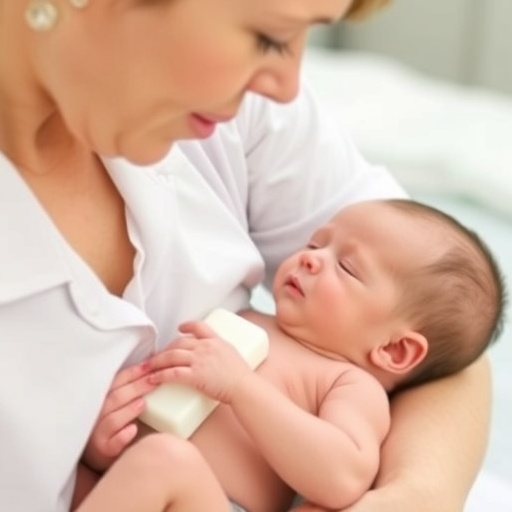
A new randomized clinical trial is drawing attention to a deceptively simple intervention for the most medically fragile newborns: feeding them only human milk. Researchers report that an exclusive human milk diet in neonates born with single-ventricle physiology—an anatomical condition that requires complex staged surgeries—was evaluated for longer-term outcomes at both 3 and 6 months after enrollment. The study, published in Pediatric Research, suggests that nutrition may be more than background care in cardiovascular disease management, potentially influencing growth trajectories during a critical window of early development.

Single-ventricle physiology is associated with chronic energy demands, frequent clinical stressors, and growth impairment. For families and clinicians, determining whether breast milk can improve biologic resilience is a pressing question, particularly when surgical milestones and hospital courses can disrupt feeding patterns. In this trial, the researchers focused on the nutritional quality of exclusively human milk rather than mixed feeding strategies that vary in composition.

According to the report, infants were randomized to receive an exclusive human milk diet, enabling a more controlled comparison of downstream clinical and developmental indicators. The 3- and 6-month follow-up schedule was designed to capture changes that might not appear immediately after nutritional initiation, including subtle effects on weight gain and feeding tolerance.

Technical considerations matter here: human milk provides a distinct profile of macronutrients and bioactive factors—components that differ from typical formula mixes. Among these are oligosaccharides and proteins that may influence gut microbiota ecology and intestinal barrier function. For neonates facing prolonged medical care, microbiome and inflammatory pathways are increasingly viewed as plausible mediators linking early nutrition to recovery and growth.

The trial’s follow-up approach also helps differentiate early stabilization from sustained progress. If exclusive human milk produces measurable benefits, it would strengthen the rationale for implementing milk-based feeding protocols within neonatal cardiac centers, especially during interstage periods when infants must grow without losing clinical momentum.

Beyond growth, the work touches broader translational questions: can diet-derived signals support physiologic adaptation in infants whose cardiovascular constraints limit oxygen delivery and energy efficiency? The study’s design aims to test whether nutritional strategy can modulate these downstream outcomes in a population where standard care is inherently complex.

The findings are framed in Pediatric Research and are available through a DOI published on July 21, 2026. While clinicians will need to integrate results with local feeding capabilities and patient-specific circumstances, the trial adds viral-news-worthy momentum to a growing body of neonatal science suggesting that human milk may be a biologically active therapy rather than a passive nutrition source.

If confirmed across larger cohorts and settings, the study could shift how neonatal teams prioritize feeding plans around single-ventricle staging—potentially turning an accessible resource, human milk, into a measurable contributor to early-life outcomes.

Subject of Research: Neonatal nutrition in single-ventricle physiology; exclusive human milk diet outcomes at 3 and 6 months.

Article Title: A randomized trial of an exclusive human milk diet in neonates with single-ventricle physiology: 3 and 6 months follow-up outcomes.

Article References: Blanco, C.L., Justice, L.B., Roddy, D. et al. Pediatr Res (2026). https://doi.org/10.1038/s41390-026-05255-2

Image Credits: AI Generated

DOI: https://doi.org/10.1038/s41390-026-05255-2

Keywords:

Tags: breast milk versus formula in congenital heart defectsclinical outcomes in neonatal feeding interventionsearly developmental milestonesexclusive human milk diet benefitsimpact of human milk on surgical recoverylong-term growth trajectories in fragile infantsneonatal growthneonatal intensive care nutrition strategiesneurodevelopmental outcomespediatric nutritionrandomized clinical trial in neonatessingle-ventricle congenital heart disease
Share26Tweet16
Previous Post

Biguanide derivative 4C boosts talazoparib by triggering ferroptosis in bladder cancer

Next Post

Methylglyoxal and acrolein disrupt arginine balance, causing hyperglycemia in male zebrafish

Related Posts

How Low Gravity and Pressure Affect Space Manufacturing of Carbon-Fiber Structures
Technology and Engineering

How Low Gravity and Pressure Affect Space Manufacturing of Carbon-Fiber Structures

August 9, 2026
Porous Reaction-Bonded Silicon Nitride: Size Effects in Pressureless Nitriding of Binder-Jetted Silicon
Technology and Engineering

Porous Reaction-Bonded Silicon Nitride: Size Effects in Pressureless Nitriding of Binder-Jetted Silicon

August 9, 2026
Stochastic Thermodynamics Reveals Social Imitation Beyond Energy Costs
Technology and Engineering

Stochastic Thermodynamics Reveals Social Imitation Beyond Energy Costs

August 8, 2026
Breastfed Infants’ Bacterial and Metabolic Profiles Shift During Transition to Solid Foods
Technology and Engineering

Breastfed Infants’ Bacterial and Metabolic Profiles Shift During Transition to Solid Foods

August 8, 2026
Which Alternative Heavy-Duty Truck Technologies Are Most Cost-Competitive in Real-World Use?
Technology and Engineering

Which Alternative Heavy-Duty Truck Technologies Are Most Cost-Competitive in Real-World Use?

August 8, 2026
Dissipation, Not Distance, Enables Entanglement Across Vast Separations
Technology and Engineering

Dissipation, Not Distance, Enables Entanglement Across Vast Separations

August 7, 2026
Next Post
Methylglyoxal and acrolein disrupt arginine balance, causing hyperglycemia in male zebrafish

Methylglyoxal and acrolein disrupt arginine balance, causing hyperglycemia in male zebrafish

  • Mothers who receive childcare support from maternal grandparents show more

    Mothers who receive childcare support from maternal grandparents show more parental warmth, finds NTU Singapore study

    27656 shares
    Share 11059 Tweet 6912
  • University of Seville Breaks 120-Year-Old Mystery, Revises a Key Einstein Concept

    1061 shares
    Share 424 Tweet 265
  • Bee body mass, pathogens and local climate influence heat tolerance

    682 shares
    Share 273 Tweet 171
  • Researchers record first-ever images and data of a shark experiencing a boat strike

    546 shares
    Share 218 Tweet 137
  • Groundbreaking Clinical Trial Reveals Lubiprostone Enhances Kidney Function

    531 shares
    Share 212 Tweet 133
Science

Embark on a thrilling journey of discovery with Scienmag.com—your ultimate source for cutting-edge breakthroughs. Immerse yourself in a world where curiosity knows no limits and tomorrow’s possibilities become today’s reality!

RECENT NEWS

  • How Dogs Evolved Worldwide to Mirror the Traits of Their Human Companions
  • Selective breeding reduces genetic diversity in traditional cattle herds, research finds
  • How Neuroblastoma Balances Replication Stress and Genome Stability Across Chromosome 17q
  • Cigar, Cigarillo, and Pipe Smoking: Lung Cancer Risk and Screening Eligibility

Categories

  • Agriculture
  • Anthropology
  • Archaeology
  • Athmospheric
  • Biology
  • Biotechnology
  • Blog
  • Bussines
  • Cancer
  • Chemistry
  • Climate
  • Earth Science
  • Editorial Policy
  • Marine
  • Mathematics
  • Medicine
  • Pediatry
  • Policy
  • Psychology & Psychiatry
  • Science Education
  • Social Science
  • Space
  • Technology and Engineering

Subscribe to Blog via Email

Success! An email was just sent to confirm your subscription. Please find the email now and click 'Confirm Follow' to start subscribing.

Join 5,149 other subscribers

© 2025 Scienmag - Science Magazine

Welcome Back!

Login to your account below

Forgotten Password?

Retrieve your password

Please enter your username or email address to reset your password.

Log In
No Result
View All Result
  • HOME
  • SCIENCE NEWS
  • CONTACT US

© 2025 Scienmag - Science Magazine
