


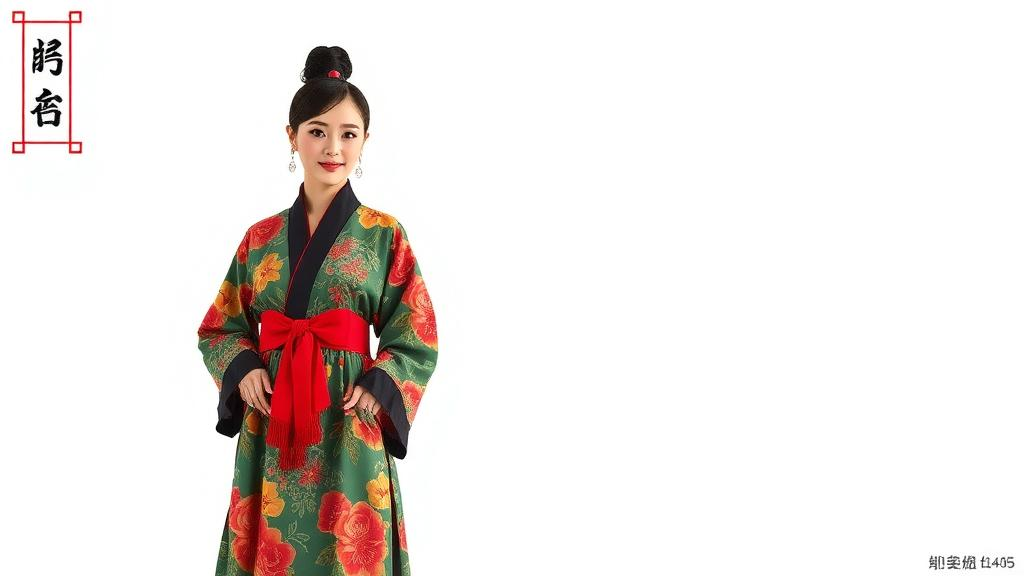
Labeling AI-generated Chinese ethnic-minority fashion as “AI-generated” lowered consumers’ ratings of its aesthetics, cultural meaning, practical value and authenticity in a randomized online experiment involving 410 Chinese consumers. Participants viewed six fashion illustrations based on Tujia costume motifs, with half randomly assigned to see an AI disclosure and half assigned to see the identical designs without source information. Perceived usefulness was the strongest direct predictor of purchase intention, while algorithm aversion did not weaken the usefulness pathway but strengthened the influence of cultural authenticity. The study, published in Frontiers in Psychology, examines intentions to buy or consider similar apparel rather than actual purchasing behavior.
The experiment combined a scenario-based disclosure manipulation with a questionnaire survey and partial least squares structural equation modeling. The researchers initially generated 120 fashion illustrations from Tujia costume, Tujia brocade and related motifs using generative AI tools. Three experts screened these for complete garment presentation, recognizable cultural features, visual variety and coverage of different motif themes, narrowing the set to 15 candidates. A second panel of seven specialists—representing fashion design, ethnic costume studies, intangible cultural heritage, art and design, and cultural and creative research—rated ethnic expression, AI-generation quality, motif appropriateness and aesthetics on a five-point scale. The six highest-scoring illustrations, featuring Yangquehua, peony and Yizihua motifs, formed the formal stimulus set.
Both experimental groups saw the same images, in the same dimensions and layout. The disclosure group additionally received the label “AI-generated,” displayed in bold gray type in a blank area beside each garment so that it did not obscure the clothing. The non-disclosure group received no information about the designs’ technological origin. Tencent Questionnaire collected the responses, with 205 valid participants in each condition. The final sample was predominantly young adults aged 18 to 24: 334 respondents, or 81.5%, fell within that range, and 357, or 87.1%, held an associate’s or bachelor’s degree. Randomization produced no statistically significant demographic differences between conditions, although the survey relied on convenience sampling and was distributed through social networking channels.
All psychological measures used seven-point agreement scales. Design aesthetics covered visual appeal, harmony and contemporary fashionability; cultural identity captured identification with Tujia symbols and meanings. Perceived usefulness concerned suitability for everyday wear, coordination with contemporary styles and potential market acceptance. Perceived authenticity reflected whether respondents regarded the designs as genuine, credible and appropriate representations of Tujia culture. Algorithm aversion measured distrust of and resistance to AI involvement, while purchase intention addressed willingness to buy or consider similar products. The model was rooted in the Stimulus–Organism–Response framework: disclosure served as an external stimulus, the four evaluations represented internal psychological states, and purchase intention was the behavioral response.
AI disclosure significantly worsened all four central evaluations. Relative to non-disclosure, the label had a negative association with design aesthetics (β = −0.391, p < 0.001), cultural identity (β = −0.426, p < 0.001), perceived usefulness (β = −0.168, p = 0.012) and perceived authenticity (β = −0.182, p = 0.004). Because the experimental variable was coded as zero without disclosure and one with disclosure, these coefficients indicate that adding the label reduced average evaluations rather than that disclosure generally predicts rejection. The effect was not modeled as a direct path to purchase intention; instead, the analysis tested how it could operate through participants’ changing perceptions of the products.
Several indirect pathways were statistically significant. The largest was disclosure → design aesthetics → perceived usefulness → purchase intention, with an indirect coefficient of −0.167 (p < 0.001). Disclosure also affected purchase intention through cultural identity and perceived usefulness (β = −0.060, p = 0.007), cultural identity and perceived authenticity (β = −0.049, p = 0.001), and design aesthetics and perceived authenticity (β = −0.010, p = 0.048). These are modeled pathways in a cross-sectional structural model, not evidence that changing one perception in real life would cause a corresponding shift in buying. The full model explained 68.6% of the observed variance in purchase intention, with an adjusted R² of 0.682, while explaining 60.6% of variance in perceived usefulness and 64.7% in perceived authenticity.
Within that model, perceived usefulness had the largest standardized direct effect on purchase intention (β = 0.710, p < 0.001), followed by perceived authenticity (β = 0.173, p < 0.001). Design aesthetics strongly predicted perceived usefulness (β = 0.602, p < 0.001) and, more weakly, perceived authenticity (β = 0.153, p = 0.001). Cultural identity was most strongly associated with perceived authenticity (β = 0.662, p < 0.001) and also predicted usefulness (β = 0.198, p < 0.001). The mediation results support two principal routes from design and cultural evaluations to purchase intention: through perceived usefulness and through perceived authenticity. Importantly, the link between visual appeal and authenticity was small and occurred in a stimulus set that experts had already screened for appropriate cultural expression.
Algorithm aversion produced a more selective result. It did not significantly moderate the relationship between usefulness and purchase intention (β = −0.019, p = 0.523). It did, however, strengthen the positive relationship between authenticity and purchase intention (β = 0.094, p = 0.007). The statistical pattern means that respondents reporting greater resistance to algorithmic design placed more weight on judgments that the designs were culturally genuine when deciding whether to buy them; it does not show that algorithm aversion alone caused greater purchase intention. The authors also note that this variable was measured only after every participant had been told the designs were AI-generated, making it a context-specific attitude toward this experiment rather than necessarily a stable trait.
Importance–performance analysis highlighted perceived usefulness as the most consequential factor for purchase intention, with a total effect of 0.710 but a performance score of 57.212. Design aesthetics ranked second in importance, with a total effect of 0.454 and performance of 60.487. Cultural identity and perceived authenticity had lower importance scores of 0.255 and 0.173 but higher performance values of 71.329 and 72.290. AI disclosure carried a negative total effect of −0.437. These results suggest that the designs’ cultural expression and authenticity were already evaluated comparatively positively, whereas their wearability, styling value and broader market utility had more room for improvement. The IPMA analysis therefore identified perceived usefulness as the primary area for improvement, followed by design aesthetics, while also showing the overall negative association between AI disclosure and purchase intention.
Several limitations restrict how far the findings can be generalized. The sample consisted exclusively of Chinese consumers, was strongly concentrated in the 18-to-24 age group and was highly educated, while participants’ prior familiarity with Tujia culture was neither measured nor controlled. The design evaluated six images as an overall set, so the analysis cannot determine which specific motifs or visual treatments produced individual responses. There was also no independent test of whether participants noticed or remembered the AI label, and the label necessarily added visual information absent from the control condition; a neutral-label condition would help distinguish semantic effects from visual salience. Because most psychological relationships came from a single survey wave and outcomes were stated intentions rather than purchases, the study supports associations and experimental disclosure effects but does not establish long-term behavior or market performance. Replication with older and more diverse consumers, other ethnic-fashion traditions, real purchasing experiments and different disclosure formats is needed before the pattern can be treated as a general law of AI-generated design.
Subject of Research: Consumer responses to AI disclosure in Tujia ethnic-minority fashion
Article Title: How AI disclosure influences consumers' purchase intention toward AI-generated Chinese ethnic-minority fashion: the roles of perceived usefulness, perceived authenticity, and algorithm aversion
Article References: Wei, K., Liu, J., Wang, S., & Sun, Y. (2026). How AI disclosure influences consumers' purchase intention toward AI-generated Chinese ethnic-minority fashion: the roles of perceived usefulness, perceived authenticity, and algorithm aversion. Frontiers in Psychology, 17, Article 1905449. https://doi.org/10.3389/fpsyg.2026.1905449
Image Credits: AI Generated
DOI: 10.3389/fpsyg.2026.1905449
Keywords: AI disclosure, Tujia fashion, consumer behavior, purchase intention, perceived usefulness, perceived authenticity, algorithm aversion, generative AI, cultural identity, fashion design, disclosure, influences
Cite Scienmag News
Glenn Wilkins. (October 21, 2026). Randomized study: AI labels lower evaluations of Tujia fashion. Scienmag. https://scienmag.com/randomized-study-ai-labels-lower-evaluations-of-tujia-fashion/
Glenn Wilkins. "Randomized study: AI labels lower evaluations of Tujia fashion." Scienmag, 21 October 2026, https://scienmag.com/randomized-study-ai-labels-lower-evaluations-of-tujia-fashion/. Accessed 21 October 2026.
Glenn Wilkins. "Randomized study: AI labels lower evaluations of Tujia fashion." Scienmag. October 21, 2026. https://scienmag.com/randomized-study-ai-labels-lower-evaluations-of-tujia-fashion/


