


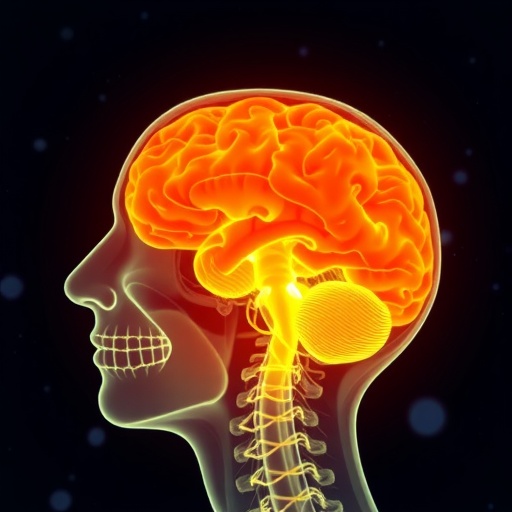
In a groundbreaking study published recently in npj Parkinson’s Disease, researchers have unveiled a transformative approach to predicting Parkinson’s disease (PD) and its progression by integrating advanced radiomic analyses of T1-weighted magnetic resonance imaging (MRI) scans with molecular biomarkers, specifically α-synuclein levels in cerebrospinal fluid (CSF). This multidisciplinary strategy offers unprecedented insights into the early detection and trajectory forecasting of one of the most complex neurodegenerative disorders, holding promise for revolutionizing patient care and personalized therapeutic strategies.
Parkinson’s disease, characterized predominantly by motor dysfunctions such as tremors, rigidity, and bradykinesia, poses significant challenges in early diagnosis and prognostication due to its heterogeneous clinical manifestations and overlapping symptoms with other neurodegenerative diseases. Traditional diagnostic methods rely on clinical evaluation and dopamine transporter imaging, which often detect the disease only after substantial neuronal loss has occurred. The novel integrative technique presented in this study addresses these limitations by harnessing the vast amounts of data concealed within routine MRI scans, combined with sensitive biochemical assays, to detect pathological changes at earlier stages more accurately.
Radiomics, the high-throughput extraction of quantitative features from medical images, lies at the core of this innovation. By applying sophisticated machine learning algorithms to T1-weighted MRI scans, the research team quantified subtle morphometric and textural alterations in brain structures implicated in PD, such as the substantia nigra and basal ganglia. These radiomic signatures, invisible to the naked eye, provide a rich, multidimensional dataset capturing the microstructural integrity and heterogeneity of neural tissues. The incorporation of such granular imaging biomarkers enhances the specificity and sensitivity of PD detection beyond conventional neuroimaging interpretations.
Complementing these imaging biomarkers, the study also delved into molecular pathology by measuring α-synuclein concentrations within cerebrospinal fluid. α-Synuclein, a presynaptic neuronal protein, plays a pivotal role in the pathogenesis of Parkinson’s disease, primarily through its misfolding and aggregation into Lewy bodies. Alterations in CSF α-synuclein levels reflect ongoing neurodegenerative processes and have long been considered a potential biomarker for PD diagnosis. However, previous attempts to utilize α-synuclein alone for reliable classification have been hampered by variability and overlap with other synucleinopathies. By integrating CSF α-synuclein data with radiomics, this study surmounts these challenges, creating a composite biomarker panel with enhanced diagnostic precision.
The researchers meticulously validated their predictive model using a robust cohort of individuals, spanning healthy controls, early-stage PD patients, and subjects with varying progression rates. They employed cross-validation techniques and independent testing sets to ensure the model’s generalizability and clinical applicability. Remarkably, their integrated algorithm demonstrated superior performance in distinguishing PD patients from controls and, more importantly, in forecasting individual disease progression trajectories, a critical advance for personalized medicine.
This predictive power stems from the synergistic effect of combining structural brain imaging data and molecular biomarkers into a unified framework. The radiomic features capture anatomical and pathological alterations, while CSF α-synuclein reflects the biochemical milieu associated with neuronal degeneration. By leveraging machine learning frameworks capable of handling high-dimensional data, the model extracts latent patterns that collectively inform disease status and trajectory, enabling clinicians to potentially intervene in a timely, targeted manner.
Moreover, the study delves into the mechanistic underpinnings connecting the radiomic alterations and α-synuclein dynamics. The spatial distribution and intensity of MRI texture changes correlate with the burden of α-synuclein pathology within affected regions, suggesting an intertwined relationship between macrostructural brain remodeling and molecular pathology. This insight not only bolsters the biological plausibility of the integrated biomarkers but also provides a scaffold for future research exploring therapeutic targets.
The implications of this research extend beyond diagnostic enhancement. By enabling a non-invasive, comprehensive assessment tool that predicts disease onset and progression, this approach could profoundly impact clinical trials for novel PD treatments. Stratifying patients according to their predicted disease course will allow for more tailored intervention strategies and more precise evaluation of therapeutic efficacy. Furthermore, longitudinal monitoring through radiomic and biochemical markers can offer ongoing insights into disease dynamics and treatment response.
The integration of radiomics with molecular biomarkers also heralds a new era in neurodegenerative disease research, exemplifying the power of combining data-rich imaging modalities with biochemical analyses. This paradigm could be adapted to other disorders where early detection remains elusive, such as Alzheimer’s disease and multiple system atrophy, potentially leading to earlier interventions and better outcomes across neurological diseases.
Despite its promise, the study acknowledges certain limitations, including the need for standardization in image acquisition protocols to ensure reproducibility across centers and the requirement for large-scale, multiethnic cohort validation to confirm the model’s universal applicability. Moreover, the invasive nature of CSF sampling restricts its routine clinical use, prompting the exploration of peripheral biomarkers or advanced imaging surrogates to substitute or complement CSF measurements in future studies.
Looking forward, advancements in MRI technology, such as ultra-high-field imaging and novel contrast agents, could further refine radiomic feature extraction, increasing the sensitivity and specificity of neurodegenerative disease biomarkers. Parallel advances in artificial intelligence and deep learning will continue to enhance the analytic capability, enabling real-time, accurate interpretation of complex multimodal data, thereby facilitating their integration into routine clinical workflows.
In conclusion, this pioneering study represents a significant leap toward precision neurology by effectively combining imaging-derived radiomic features with cerebrospinal fluid biomarkers to predict Parkinson’s disease and its progression. The methodological synergy offers a minimally invasive, highly informative approach poised to transform early diagnosis and personalized treatment paradigms for PD. As the global burden of Parkinson’s disease continues to rise, innovations such as these carry immense potential to mitigate disease impact and improve quality of life for millions worldwide.
The interdisciplinary nature of this research, blending radiology, neurology, biomolecular science, and data science, underscores the importance of collaborative approaches in tackling complex diseases. It also exemplifies how cutting-edge technology can unlock hidden data within standard diagnostic tools, paving the way for novel biomarkers that were previously unimaginable. This confluence of expertise and technology is vital as the medical community strives to stay ahead in the battle against neurodegeneration.
Moreover, the accessibility of T1-weighted MRI in clinical settings worldwide enhances the translational potential of this integrative biomarker model. Unlike specialized imaging or expensive molecular assays, T1 MRI is widely available, facilitating the rapid adoption of radiomic feature analysis. If integrated into existing diagnostic pathways, this approach could democratize early PD detection, especially in resource-limited environments.
Given the chronic and progressive nature of Parkinson’s disease, early identification coupled with accurate progression prediction equips clinicians with the tools necessary to implement neuroprotective strategies at appropriate stages. Patients may benefit not only from symptom management but also from participation in clinical trials focusing on disease-modifying therapies, potentially altering their prognosis significantly.
The technological sophistication of the study, including the use of high-dimensional feature extraction, machine learning classifiers, and biomarker integration, reflects the evolving landscape of precision medicine. It also highlights ongoing challenges such as ensuring model interpretability and clinical usability, which researchers continue to address through transparent algorithm design and rigorous clinical collaborations.
Importantly, as our understanding of Parkinson’s disease heterogeneity grows, tools capable of delineating distinct disease subtypes based on underlying pathology and progression patterns will become invaluable. The presented radiomics-CSF biomarker integration approach holds promise in fulfilling this need, potentially guiding subtype-specific therapeutic strategies and advancing personalized care.
In essence, this study not only advances our diagnostic and prognostic capabilities for Parkinson’s disease but also opens the door to a new era in neurodegenerative disease management—one defined by data-driven insights, integrated biomarker platforms, and personalized therapeutic interventions aimed at altering the course of illness well before irreversible damage ensues.
Cite Scienmag News
Diana Fleming. (September 25, 2025). Radiomics and α-Synuclein Predict Parkinson’s Progression. Scienmag. https://scienmag.com/radiomics-and-%ce%b1-synuclein-predict-parkinsons-progression/
Diana Fleming. "Radiomics and α-Synuclein Predict Parkinson’s Progression." Scienmag, 25 September 2025, https://scienmag.com/radiomics-and-%ce%b1-synuclein-predict-parkinsons-progression/. Accessed 4 September 2026.
Diana Fleming. "Radiomics and α-Synuclein Predict Parkinson’s Progression." Scienmag. September 25, 2025. https://scienmag.com/radiomics-and-%ce%b1-synuclein-predict-parkinsons-progression/


