


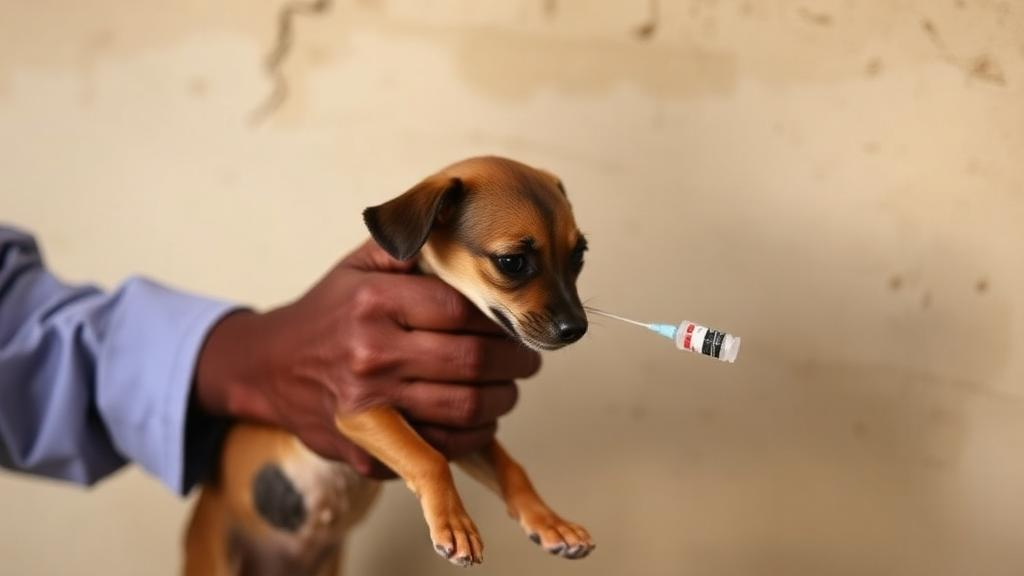
In the Gondar zones of northwestern Ethiopia, a new study has revealed a troubling paradox at the heart of rabies prevention: although nearly all dog bite victims surveyed knew that rabies is a fatal disease and that vaccination after exposure can save their lives, the overwhelming majority still waited far too long before receiving their first dose. The research, published in PLOS Neglected Tropical Diseases, found that 86.1 percent of bite victims delayed initiating post-exposure vaccination beyond the critical 48-hour window, a figure that public health experts describe as alarmingly high even by the standards of rabies-endemic regions.
The study, led by Bezawit Kassaw Hailu and colleagues, set out to quantify how long victims of dog bites wait before beginning post-exposure vaccination, known clinically as PEV, and to identify the factors that influence that timing. Between January and June 2025, the researchers conducted face-to-face interviews with 260 dog bite victims or their guardians across the Gondar zones. The team defined delayed initiation as beginning vaccination more than 48 hours after the exposure incident, a threshold grounded in the biology of the rabies virus, which travels along peripheral nerves toward the central nervous system and can reach the brain before protective immunity develops if prophylaxis is postponed.
The numbers were stark. Of the 260 participants, only 36, or 13.9 percent, commenced vaccination within 48 hours of being bitten. The remaining 224 individuals, representing 86.1 percent of the cohort, crossed the two-day threshold before receiving their first injection. Because rabies is virtually 100 percent fatal once clinical symptoms appear, and because post-exposure prophylaxis is among the most effective interventions in all of medicine when administered promptly, every hour of delay narrows the window in which the vaccine can reliably intercept the virus on its journey to the nervous system.
What makes the finding especially striking is the knowledge landscape the researchers documented. A majority of respondents, 88.5 percent, were aware that rabies exists in their area. Some 71.5 percent could identify the signs of the disease, 75.4 percent knew how it is transmitted, and an overwhelming 96.5 percent understood its fatal nature. Even more encouraging, 95.4 percent recognized the need for post-exposure vaccination after a bite. Knowledge of the disease itself, in other words, was widespread and remarkably detailed for a rural setting where health literacy resources are often scarce.
Attitudes toward the vaccine were similarly favorable. A majority of respondents believed the cost of the vaccine was fair, and 95 percent considered post-exposure prophylaxis effective. When the researchers probed the reasons for delay, cost of vaccination emerged as a barrier for only a minority of participants; 76.2 percent said the expense was not a reason they postponed treatment. This combination of high awareness, positive attitudes toward vaccination, and minimal financial barriers presents a genuine scientific puzzle: if victims know the disease is deadly, know the vaccine works, and do not cite cost as an obstacle, why do so few seek timely care?
The authors’ conclusion points toward a critical gap in understanding. Respondents, they suggest, may simply not be aware of the risk posed by delay itself. Knowing that rabies kills and knowing that a vaccine exists are not the same as knowing that the effectiveness of that vaccine is time-sensitive, and that the difference between seeking care on the day of the bite and two days later can be the difference between survival and death. Health messaging in endemic regions has traditionally emphasized the lethality of rabies and the availability of treatment, but this study indicates that the urgency of timing has not been communicated with comparable force.
Using logistic regression models, the researchers identified two factors significantly associated with the timing of vaccination initiation. The first was the severity of the bite. Victims who suffered deep bites were substantially less likely to delay, with an odds ratio of 0.22 and a 95 percent confidence interval of 0.07 to 0.66, and a P value of 0.008. In practical terms, a deep bite more than halved the odds of postponement compared with superficial wounds. This pattern is consistent with the intuitive logic of threat perception: the more dramatic and painful the injury, the more urgently the victim recognizes the danger and seeks medical attention.
The second significant factor was the ownership of the biting animal. People bitten by stray dogs were also less likely to delay initiation of vaccination, with an odds ratio of 0.51, a 95 percent confidence interval of 0.27 to 0.95, and a P value of 0.033. This finding may seem counterintuitive at first glance, since stray dogs cannot be observed for signs of illness the way a neighbor’s vaccinated pet can. But it makes sense in the context of risk assessment: a bite from an unknown, unowned animal carries unmistakable uncertainty about the animal’s rabies status, prompting swifter action, whereas a bite from a familiar dog may lull victims into a false sense of security, encouraging them to wait and watch the animal for symptoms that may never become obvious before the virus has already taken hold.
The implications of these findings extend well beyond the Gondar zones. Rabies remains one of the most lethal zoonotic diseases worldwide, claiming an estimated tens of thousands of lives annually, with the vast majority of deaths occurring in Asia and Africa and with children in rural communities bearing a disproportionate burden. The virus is a lyssavirus transmitted through the saliva of infected mammals, most commonly dogs, and it hijacks peripheral nerve fibers to reach the central nervous system. Once neurological symptoms such as hydrophobia, agitation, and paralysis begin, no treatment has ever been shown to halt the disease. Post-exposure prophylaxis, which combines wound washing, rabies vaccine doses, and in severe cases rabies immunoglobulin, works because it stimulates immunity during the days or weeks the virus spends traveling from the wound site to the brain. That window, however, is finite, and every study that documents delay in initiation helps explain why deaths persist in regions where vaccines are nominally available.
The Ethiopian study’s authors conclude that the high rate of delay, despite widespread knowledge and few reported barriers, underscores the need for interventions focused specifically on the risk of delayed PEV initiation. Such interventions might include community education campaigns that emphasize the 48-hour benchmark as explicitly as they emphasize the disease’s fatality, integration of bite management guidance into school and community health programs, and strengthening of access points so that victims can reach vaccination services quickly when the urgency is understood. The research also highlights the value of targeting messaging toward owners of domestic dogs, who may underestimate risk when the biting animal is familiar. As the authors note, respondents in their study knew many aspects of rabies control and faced fewer barriers to uptake than might have been expected, yet delay remained the norm rather than the exception. Closing that gap between knowledge and timely action may prove to be one of the most important steps toward reducing rabies deaths in Ethiopia and across the endemic world.
Subject of Research: Delay in initiation of rabies post-exposure vaccination among dog bite victims in the Gondar zones of Ethiopia
Article Title: Delay in initiation of rabies post-exposure vaccination and influencing factors in Gondar zones of Ethiopia
Article References: Hailu, B. K., Demessie, Y., Berihun, A. M., Bitew, A. B., & Mekonnen, S. A. (2026). Delay in initiation of rabies post-exposure vaccination and influencing factors in Gondar zones of Ethiopia. PLOS Neglected Tropical Diseases, 20(10), e0014729. https://doi.org/10.1371/journal.pntd.0014729
Image Credits: AI Generated
DOI: 10.1371/journal.pntd.0014729
Keywords: rabies, post-exposure prophylaxis, Ethiopia, dog bite, vaccination delay, Gondar, zoonotic disease, public health, PLOS Neglected Tropical Diseases, stray dogs, health behavior, logistic regression
Cite Scienmag News
Kristina Jarvis. (October 13, 2026). Rabies Vaccine Delays Endanger Bite Victims in Rural Ethiopia. Scienmag. https://scienmag.com/rabies-vaccine-delays-endanger-bite-victims-in-rural-ethiopia/
Kristina Jarvis. "Rabies Vaccine Delays Endanger Bite Victims in Rural Ethiopia." Scienmag, 13 October 2026, https://scienmag.com/rabies-vaccine-delays-endanger-bite-victims-in-rural-ethiopia/. Accessed 13 October 2026.
Kristina Jarvis. "Rabies Vaccine Delays Endanger Bite Victims in Rural Ethiopia." Scienmag. October 13, 2026. https://scienmag.com/rabies-vaccine-delays-endanger-bite-victims-in-rural-ethiopia/


