


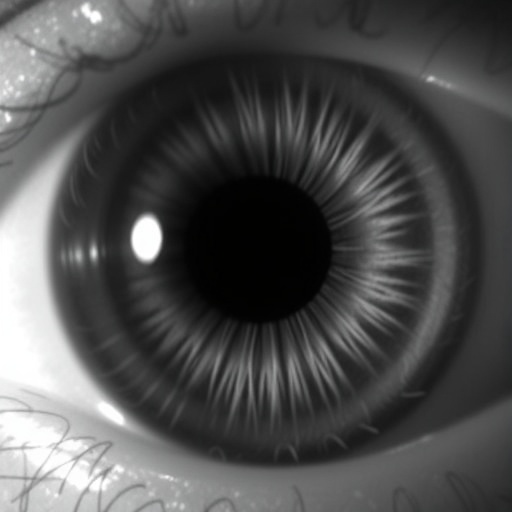
A glance at the eyes may reveal a hidden step in the brain’s process of changing its mind. New research by R. Fleischmann, D. Meijer, B. Bayram and colleagues reports that pupil dilation tracks the arousal-related processes involved in perceptual belief updating across auditory domains. The findings, published in Communications Psychology, suggest that the brain does not simply revise its interpretation of sound when new evidence arrives. Instead, the emotional and physiological state accompanying that evidence may help determine how strongly an existing perceptual belief is adjusted.
The study focuses on a fundamental problem faced by the nervous system every moment: sensory information is often incomplete, noisy or ambiguous. A sound may be masked by background noise, distorted by distance or interpreted differently depending on what a listener expects to hear. To function efficiently, the brain combines incoming signals with prior beliefs about the world. This process, often described in terms of predictive processing or Bayesian inference, allows perception to remain stable while still adapting when evidence becomes convincing. Belief updating occurs when the brain detects that its current interpretation no longer fits the available sensory information.
Auditory perception provides an especially powerful setting for studying this mechanism because sounds unfold over time and can rapidly change in meaning. A listener may initially classify an ambiguous sound as belonging to one category, then revise that judgment after hearing additional acoustic information. Such revisions are not purely mechanical. The brain evaluates the reliability of the signal, the strength of the existing expectation and the possible significance of being wrong. The research indicates that pupil dilation can provide a window into this hidden computation, linking changes in perception to arousal-related activity that is not directly visible in a person’s verbal response.
Pupil dilation is best known as a response to changes in light, but the pupils also expand when people experience heightened arousal, uncertainty, mental effort or motivational significance. These nonvisual fluctuations are controlled in part by interactions between the autonomic nervous system and brain systems involved in attention and arousal. Because the pupil reacts within a relatively short time window, researchers can use it as an indirect physiological marker of how the brain responds while a person evaluates sensory evidence. In this context, a larger pupil response does not simply mean that a participant “tried harder.” It may reflect the mobilization of neural resources when perception becomes uncertain or when an unexpected event challenges an established interpretation.
The central contribution of the work is its focus on mediation. Rather than merely asking whether pupil dilation and perceptual change occur together, the researchers examined whether arousal-related pupil responses help explain the relationship between new auditory evidence and the updating of perceptual beliefs. In statistical terms, mediation analysis tests whether one process carries part of the influence of an initial factor onto an outcome. Applied here, the question is whether incoming auditory information changes arousal, and whether that arousal-related response in turn contributes to a listener’s revised perceptual judgment.
The phrase “across auditory domains” is particularly important. It suggests that the researchers examined belief updating beyond a single narrowly defined sound category or task. If similar pupil-linked patterns emerge across different kinds of auditory judgments, the result would point toward a general mechanism rather than a phenomenon tied to one stimulus or experimental trick. The implication is that arousal may play a broad role whenever listeners must reinterpret uncertain sounds, regardless of the specific acoustic dimension involved. Such a mechanism could help explain why surprising or salient sounds can rapidly redirect attention and alter what people believe they are hearing.
This perspective adds physiological detail to longstanding theories of perception. Predictive-processing accounts propose that the brain continuously generates expectations and compares them with sensory input. The mismatch between prediction and evidence is often called prediction error. However, not every prediction error deserves equal weight. A small discrepancy in a highly unreliable signal may be ignored, while an unexpected change in a meaningful sound may trigger a substantial revision. Arousal could help regulate this weighting process, effectively signaling that incoming information deserves increased attention or that the current interpretation may need to be reconsidered.
The findings also highlight why perceptual belief updating should not be treated as a purely cognitive event detached from the body. The listener’s physiological state may influence whether evidence is incorporated quickly, slowly or not at all. Pupil dilation offers a noninvasive measure of this mind–body interaction, although it must be interpreted carefully. Pupil responses can be affected by luminance, attention, effort and other factors, meaning that rigorous experiments must control visual conditions and account for potential confounds. Even so, the reported mediation pattern provides evidence that arousal is not merely a by-product of changing perception; it may be part of the pathway through which sensory beliefs are revised.
The research could eventually inform the study of conditions in which perception, uncertainty and arousal become unusually intertwined. Difficulties in interpreting speech in noise, excessive responses to unexpected sounds or rigid perceptual expectations appear in a range of neurological and psychiatric contexts. Pupil-based measures might one day help researchers identify how individuals weight sensory evidence differently, though clinical applications would require extensive validation. For now, the broader message is striking: when the brain changes its interpretation of the auditory world, the eyes may reveal the physiological signal helping to drive that change. A tiny adjustment in the pupil could therefore mark a much larger event—the moment perception begins to abandon one explanation and make room for another.
Cite Scienmag News
Glenn Wilkins. (August 25, 2026). Pupil dilation reveals arousal-mediated perceptual belief updating across auditory domains. Scienmag. https://scienmag.com/pupil-dilation-reveals-arousal-mediated-perceptual-belief-updating-across-auditory-domains/
Glenn Wilkins. "Pupil dilation reveals arousal-mediated perceptual belief updating across auditory domains." Scienmag, 25 August 2026, https://scienmag.com/pupil-dilation-reveals-arousal-mediated-perceptual-belief-updating-across-auditory-domains/. Accessed 4 September 2026.
Glenn Wilkins. "Pupil dilation reveals arousal-mediated perceptual belief updating across auditory domains." Scienmag. August 25, 2026. https://scienmag.com/pupil-dilation-reveals-arousal-mediated-perceptual-belief-updating-across-auditory-domains/


