


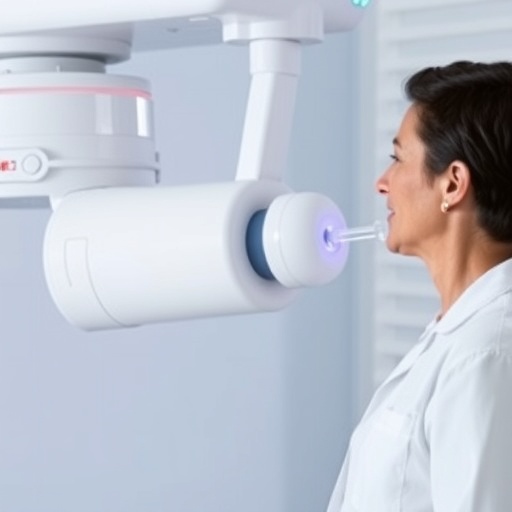
A groundbreaking advancement in the treatment of thoracic cancers has emerged from researchers at the Fox Chase Cancer Center, heralding a novel approach that significantly mitigates the debilitating side effects traditionally associated with chemoradiation therapy, particularly in patients diagnosed with esophageal and non-small cell lung cancers. This approach, termed pulsed low dose rate (PLDR) chemoradiation, not only preserves but potentially enhances the therapeutic efficacy of radiation by leveraging the nuanced radiobiological differences between cancerous and healthy cells.
Radiation therapy has long been constrained by the delicate balance between effectively eradicating malignant cells and sparing normal tissue from collateral damage. In esophageal cancer, this has posed a formidable challenge due to the high prevalence of severe radiation-induced esophagitis, a painful inflammation that frequently imposes the need for invasive supportive measures such as feeding tubes and intravenous hydration. The conventional modus operandi delivers radiation doses in a continuous burst, saturating the tissues and inevitably harming normal cells integral to swallowing and nutrition.
PLDR represents a paradigm shift. This technique fractionates the radiation dose into multiple discrete pulses, each separated by short intervals spanning several minutes. This temporal modulation exploits the intrinsic capacity of healthy cells to initiate and complete DNA repair mechanisms during these inter-pulse latencies, thereby reducing the accumulation of lethal damage that culminates in acute toxicity. Conversely, cancer cells, characterized by compromised DNA repair machinery, are unable to capitalize on these windows, rendering PLDR equally potent in tumor cytoreduction but considerably less injurious to surrounding normal tissue.
The recent phase I clinical trial conducted at Fox Chase enrolled 39 patients, predominantly with locally advanced esophageal carcinoma and a minority with non-small cell lung cancer, to rigorously evaluate the safety and preliminary efficacy of combining PLDR with standard chemotherapy protocols employing carboplatin and paclitaxel. The regimen spanned approximately six weeks, aligning with the customary course of concurrent chemoradiation.
Remarkably, the incidence of severe esophagitis plummeted from the expected 40 percent, associated with conventional treatment approaches, down to a mere 26 percent within this cohort. This groundbreaking reduction exemplifies the clinical advantage of tailoring radiation delivery kinetics to the cellular repair capabilities of different tissue types, ultimately enhancing patient tolerability and quality of life during what is typically a physically taxing intervention.
Equally notable were the survival outcomes, which demonstrated a median overall survival duration of 45 months—a testament to the fact that the modulation of radiation dose delivery did not compromise the anti-neoplastic efficacy of the therapy. These results underscore PLDR as a viable first-line adjunct prior to surgical intervention, potentially reshaping the therapeutic landscape for esophageal and select lung cancer patient populations.
Further validating the clinical utility of PLDR, patients who underwent surgery post-chemoradiation exhibited encouraging pathological responses. A significant subset achieved complete pathologic response, wherein no viable cancer cells were detected in resected tissue specimens, while others attained near-complete responses. These findings serve as powerful indicators of the profound tumoricidal potential of this refined radiation strategy.
The conceptual underpinnings of PLDR were pioneered at Fox Chase by Dr. Chang-Ming Charlie Ma, whose expertise in radiation physics has been instrumental in developing the precise delivery protocols necessary to implement this technique safely and effectively. By systematically dissecting the temporal dynamics of radiation exposure and the differential repair kinetics between malignant and healthy cellular compartments, Dr. Ma’s work has provided the critical foundation enabling clinical translation.
The implications of this research extend beyond the immediate clinical benefits. PLDR offers a blueprint for a new class of radiation therapy modalities that reconcile efficacy and toxicity through temporal fractionation. Its success in recurrent cancers set the stage for its current application as an initial treatment modality, broadening the scope of patient populations that may benefit.
Presented at the American Society for Radiation Oncology (ASTRO) 2025 Annual Meeting, these findings have generated considerable interest in the oncology community, signaling a potential new standard-of-care. The deliberate pacing of radiation delivery challenges the prevailing dogma that maximal dose intensity administered in a single continuous session is the optimal strategy.
By capitalizing on the fundamental radiobiological differences intrinsic to malignant and normal tissues, PLDR embodies a rational, biology-driven evolution in radiation oncology. Its ability to preserve therapeutic gains while substantially reducing acute toxicity paves the way for combinational strategies, integrating systemic and targeted agents without exacerbating adverse effects.
As research progresses, ongoing trials are anticipated to refine dosing schedules, expand indications, and investigate the synergistic potential of integrating PLDR with emerging immunotherapies could amplify the curative prospects for thoracic malignancies. The ramifications of these early successes echo widely, with the possibility of adapting PLDR principles to other cancer types and radiotherapeutic contexts.
Fox Chase’s commitment to innovative, patient-centric treatment development continues unabated. This work exemplifies the meticulous scientific inquiry and clinical acumen necessary to revolutionize cancer care and improve survivorship. PLDR stands as a beacon of hope, transforming the therapeutic experience and outcomes for those confronting some of the most challenging thoracic cancers.
Cite Scienmag News
Nathaniel Bowman. (September 30, 2025). Pulsed Low-Dose-Rate Chemoradiation Therapy Reduces Side Effects Without Compromising Efficacy in Esophageal and Non-Small Cell Lung Cancer Patients. Scienmag. https://scienmag.com/pulsed-low-dose-rate-chemoradiation-therapy-reduces-side-effects-without-compromising-efficacy-in-esophageal-and-non-small-cell-lung-cancer-patients/
Nathaniel Bowman. "Pulsed Low-Dose-Rate Chemoradiation Therapy Reduces Side Effects Without Compromising Efficacy in Esophageal and Non-Small Cell Lung Cancer Patients." Scienmag, 30 September 2025, https://scienmag.com/pulsed-low-dose-rate-chemoradiation-therapy-reduces-side-effects-without-compromising-efficacy-in-esophageal-and-non-small-cell-lung-cancer-patients/. Accessed 3 September 2026.
Nathaniel Bowman. "Pulsed Low-Dose-Rate Chemoradiation Therapy Reduces Side Effects Without Compromising Efficacy in Esophageal and Non-Small Cell Lung Cancer Patients." Scienmag. September 30, 2025. https://scienmag.com/pulsed-low-dose-rate-chemoradiation-therapy-reduces-side-effects-without-compromising-efficacy-in-esophageal-and-non-small-cell-lung-cancer-patients/


