


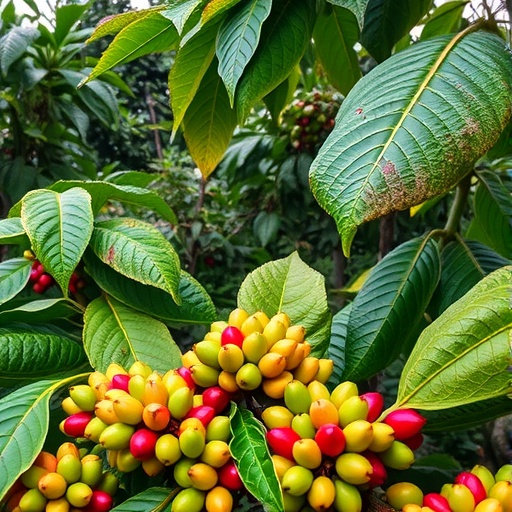
In the lush and diverse landscapes of Indonesia, coffee farming plays a pivotal role, not only in the economy but also in the social fabric of local communities. Coffee from this region has gained international acclaim, and the farmers are beginning to realize the importance of forming partnerships to enhance both production and sustainability. A recent study conducted by Laksono, Perwitasari, Malau, and their colleagues has shed light on the psycho-behavioral factors that drive partnership intentions among coffee farmers in the Semende Highlands. This vital research offers insights that extend beyond the boundaries of agriculture, emphasizing how psychological and behavioral aspects intertwine to influence economic partnerships.
The Semende Highlands, characterized by their rich biodiversity and unique climatic conditions, provide an ideal environment for coffee cultivation. However, challenges such as market access, climate change, and fluctuating coffee prices have made it imperative for farmers in this area to collaborate and form partnerships. The ongoing shifts in global coffee markets require farmers to not only focus on production but also to engage in cooperative strategies that can bolster their resilience. Within this context, the study speaks to the essential need for collective action among these farmers.
Central to Laksono and colleagues’ research is the concept of psycho-behavioral drivers, which they define as the psychological motivations and behavioral patterns that influence farmers’ willingness to form partnerships. By exploring these factors, the authors have identified key elements that contribute to partnership intentions among farmers. They argue that understanding these drivers is crucial for the development of frameworks that support collaboration in agricultural sectors, particularly in regions facing similar sustainability challenges.
The authors employed a mixed-methods approach to capture the complex realities of coffee farming in the Semende Highlands. Quantitative data gathered through surveys allowed the team to measure various psycho-behavioral factors, while qualitative interviews provided deeper contextual understanding. This combination of methods revealed that trust, social norms, and perceived benefits significantly influence farmers’ intentions to form partnerships. Trust, in particular, emerged as a cornerstone of successful collaborations; farmers who felt they could rely on their partners were more likely to engage in joint ventures, whether for resource sharing or market coordination.
In addition to trust, social norms played a critical role in shaping farmers’ attitudes toward partnerships. The study found that when collaborative behaviors were common within the community, individuals were more inclined to pursue partnerships themselves. This finding highlights the importance of fostering a culture of collaboration among farmers, suggesting that community-based initiatives could enhance partnership behaviors. By encouraging social interactions and shared experiences, local organizations can strengthen the fabric of cooperation among farmers, ultimately leading to more sustainable practices and improved economic outcomes.
Furthermore, the perceived benefits of forming partnerships cannot be overlooked. Farmers who recognized the potential advantages, such as reduced costs and improved market access, reported higher intentions to collaborate. This relationship underscores the importance of providing concrete information about the benefits of partnerships, as awareness can act as a motivator for farmers to consider joint efforts seriously. Extension services and agricultural development programs could play a crucial role in disseminating this information, thereby enhancing the overall effectiveness of partnership initiatives.
Interestingly, the study also addressed the barriers that hinder partnership formation among farmers. Factors such as competition for resources and previous negative experiences with collaboration often deter farmers from seeking partnerships. The authors suggest that interventions aimed at mitigating these barriers could focus on building positive experiences through small-scale cooperative projects. By facilitating low-risk partnerships, local organizations can help farmers to build trust and develop a more favorable attitude toward collaboration.
The findings from this study have significant implications for policymakers and agricultural developers working in the region. By understanding the psycho-behavioral drivers at play, stakeholders can design targeted interventions that foster an environment conducive to partnership development. For instance, creating incentives for cooperative behavior, such as access to training or financial support for joint ventures, could significantly enhance collaboration among farmers. Additionally, involving farmers in the decision-making process regarding such interventions could lead to more effective and widely accepted strategies.
In conclusion, the research conducted by Laksono and colleagues underscores the importance of examining the psychological and behavioral dimensions of partnership intentions in agriculture. The psycho-behavioral drivers identified in their study provide a comprehensive view of the factors that influence farmers’ willingness to collaborate. As the coffee farming industry in the Semende Highlands and similar regions navigates the complexities of modern agricultural challenges, understanding these drivers will be essential for fostering sustainable agricultural practices. The insights gained from this research not only have implications for farmers in Indonesia but could also inform partnership strategies in agricultural sectors worldwide.
With the global coffee industry continuing to evolve, the dynamics within agricultural communities must adapt accordingly. The insights from this study are timely, offering a roadmap for supporting farmers as they strive to enhance their resilience and sustainability through collaboration. The journey toward a cooperative future in coffee farming is just beginning, and with the right psycho-behavioral insights, it holds great promise for all involved.
Cite Scienmag News
Sloane Callahan. (November 6, 2025). Psychological Factors Driving Coffee Farmers’ Partnerships in Indonesia. Scienmag. https://scienmag.com/psychological-factors-driving-coffee-farmers-partnerships-in-indonesia/
Sloane Callahan. "Psychological Factors Driving Coffee Farmers’ Partnerships in Indonesia." Scienmag, 6 November 2025, https://scienmag.com/psychological-factors-driving-coffee-farmers-partnerships-in-indonesia/. Accessed 4 September 2026.
Sloane Callahan. "Psychological Factors Driving Coffee Farmers’ Partnerships in Indonesia." Scienmag. November 6, 2025. https://scienmag.com/psychological-factors-driving-coffee-farmers-partnerships-in-indonesia/


