


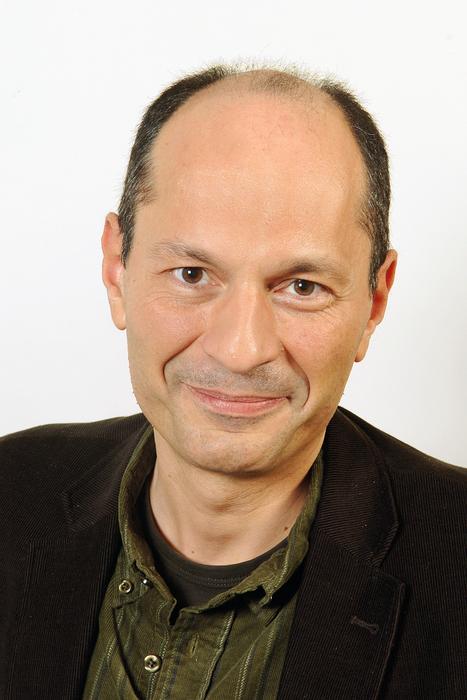
Professor Marco Durante, a leading figure in the field of biophysics and heavy-ion therapy, has been honored with the European Research Council’s prestigious Advanced Grant. This award, designated for established scientists conducting groundbreaking research, will provide Professor Durante with multi-million euro funding to propel his ambitious project aimed at revolutionizing tumor therapy. His latest endeavor explores an innovative radiotherapy technique that harnesses ultra-short pulses of heavy ion beams at ultra-high dose rates, potentially transforming cancer treatment paradigms and offering hope for patients with intractable tumors.
The ERC Advanced Grant is among the most competitive scientific funding instruments in Europe, awarded exclusively on the merit of scientific excellence and innovation. Researchers who push the boundaries of conventional knowledge and open novel avenues of investigation are eligible for this grant. Each award can provide up to 2.5 million euros over five years, allowing recipients to pursue transformative projects with significant societal and scientific impact. Professor Durante’s receipt of this grant signifies the high regard for his pioneering work and its potential to influence cancer therapy profoundly.
With an internationally acclaimed career spanning over three decades, Professor Durante is recognized as a world authority in radiation biology and medical physics. His remarkable contributions span charged particle therapy — a cancer treatment modality leveraging beams of charged ions — and the complex field of radioprotection in space. Durante’s research portfolio includes significant advancements in biodosimetry of charged particles, optimization of particle therapy techniques, and strategies to shield astronauts from cosmic radiation. His work has consistently driven improvements in treatment precision and effectiveness, with a strong translational focus on enhancing patient outcomes.
This new ERC-funded project, titled “Heavy Ion FLASH” or “HI-FLASH,” seeks to harness very heavy ions delivered in ultra-high intensity bursts to combat brain cancer. The current clinical landscape predominantly employs high-energy protons or carbon ions to treat various solid malignancies, including those in the brain. However, glioblastoma multiforme (GBM), a highly aggressive and treatment-resistant brain tumor, remains a formidable challenge with poor prognosis despite these therapies. HI-FLASH represents a bold effort to expand the therapeutic arsenal against such formidable cancers by exploring the potential of heavier ion species at unprecedented dose rates.
The underlying innovation of HI-FLASH centers on employing ions heavier than carbon, such as neon (^20Ne), to target hypoxic, fast-dividing, and highly resistant tumors like glioblastoma. While these heavier ions promise superior tumor control due to their heightened linear energy transfer (LET) properties, their clinical use is curtailed by significant toxicity to surrounding healthy tissues. Durante’s approach is to mitigate this limitation by exploiting the “FLASH effect”— a phenomenon whereby delivering radiation doses at ultra-high dose rates within sub-second timescales appears to spare normal tissues while preserving tumoricidal efficacy.
Although the precise molecular mechanisms underpinning the FLASH effect remain elusive, it represents a paradigm shift in radiotherapy. Early preclinical and clinical research has demonstrated that ultra-high dose rate irradiation can radically increase the therapeutic window, reducing side effects that typically limit dose intensification. Professor Durante’s group pioneered the first experimental demonstration of the FLASH effect utilizing high-energy carbon ions, a breakthrough that paved the way for considering even heavier ions. The HI-FLASH project aims to extend this paradigm to neon ions, hypothesizing that their increased mass and energy deposition characteristics may offer superior outcomes for tumors traditionally resistant to standard approaches.
A critical part of the research involves comparative studies investigating not only neon ions at conventional versus ultra-high dose rates but also high-energy protons under similar conditions. While protons generally exhibit limited efficacy against glioblastoma, they have shown a remarkable capacity to protect normal brain tissue under FLASH irradiation. By juxtaposing these different ion species and dose delivery regimes, Durante’s team hopes to elucidate novel treatment combinations that maximize tumor eradication while minimizing collateral damage to healthy tissue.
The unique facilities at the GSI Helmholtzzentrum für Schwerionenforschung campus in Darmstadt provide the ideal infrastructure for this pioneering investigation. The GSI synchrotron stands as the only worldwide accelerator capable of producing and accelerating ion species heavier than carbon at the energies and intensities necessary for FLASH radiotherapy studies. Moreover, the upcoming FAIR (Facility for Antiproton and Ion Research) accelerator center promises to significantly augment these capabilities, offering functionality that could propel HI-FLASH to new frontiers in particle therapy research and clinical translation.
Should HI-FLASH succeed in delineating protocols that safely and effectively employ heavy ions at ultra-high dose rates, it could revolutionize oncological treatment, especially for patients afflicted by highly resistant and lethal tumors. These advances may yield therapy regimens that circumvent the limitations of conventional radiotherapy, notably by widening the therapeutic window to allow higher doses without proportional increases in side effects. This research holds great promise not only for improving survival but also for enhancing quality of life among cancer patients facing dire prognoses.
Expressing his gratitude upon receiving this grant, Professor Durante emphasized the tremendous opportunity that the funding presents to accelerate transformative research in tumor therapy using charged particles. He anticipates fruitful collaboration with his team and experts from the GSI Biophysics and Accelerator departments over the next five years. This endeavor represents an extraordinary chance to transition sophisticated basic research insights into tangible medical innovations and clinical progress.
The recognition of Professor Durante’s work extends beyond the ERC award itself. He has garnered numerous distinguished honors spanning institutions and countries, reflecting his global standing in the field. Notably, he has received the Galileo Galilei Prize from the European Federation of Organizations for Medical Physics, the Warren Sinclair Award from the U.S. National Council on Radiation Protection, and prizes from the European Physical Society and Radiation Research Society. Furthermore, his leadership as president of the Particle Therapy Co-Operative Group (PTCOG), a prominent international consortium of particle therapy centers, underscores his role in steering the future trajectory of charged particle therapy worldwide.
The momentum built upon Durante’s prior ERC Advanced Grant-funded project “BARB” lays a solid foundation for HI-FLASH. The BARB initiative focused primarily on enhancing the precision of tumor therapy with heavy ions and recently submitted impactful findings describing improvements in treatment accuracy and outcomes. The technical insights and experimental experience garnered during BARB are directly informing the design and execution of HI-FLASH, enabling a seamless and highly informed continuation of this cutting-edge research trajectory.
In sum, Professor Marco Durante’s latest ERC-funded research stands poised to tackle one of the most pressing challenges in oncology — improving therapeutic options for glioblastoma and similarly aggressive tumors — by leveraging novel physics and radiobiological concepts rooted in ultra-high dose rate heavy-ion irradiation. The outcomes of HI-FLASH may redefine radiation oncology principles and open unprecedented clinical possibilities, illustrating the powerful intersection of fundamental science, advanced technology, and patient-centered innovation.
News Publication Date:
2024
Web References:
- https://erc.europa.eu/news-events/news/erc-2024-advanced-grants-results
- https://www.gsi.de/en/work/research/biophysics
Keywords
Health and medicine; Diseases and disorders; Cancer; Biophysics; Life sciences; Physical sciences; Physics; Accelerator physics
Cite Scienmag News
Nathaniel Bowman. (June 17, 2025). Professor Marco Durante Awarded Prestigious ERC Grant: EU Commits Millions to GSI Tumor Therapy Research Exploring the FLASH Effect. Scienmag. https://scienmag.com/professor-marco-durante-awarded-prestigious-erc-grant-eu-commits-millions-to-gsi-tumor-therapy-research-exploring-the-flash-effect/
Nathaniel Bowman. "Professor Marco Durante Awarded Prestigious ERC Grant: EU Commits Millions to GSI Tumor Therapy Research Exploring the FLASH Effect." Scienmag, 17 June 2025, https://scienmag.com/professor-marco-durante-awarded-prestigious-erc-grant-eu-commits-millions-to-gsi-tumor-therapy-research-exploring-the-flash-effect/. Accessed 4 September 2026.
Nathaniel Bowman. "Professor Marco Durante Awarded Prestigious ERC Grant: EU Commits Millions to GSI Tumor Therapy Research Exploring the FLASH Effect." Scienmag. June 17, 2025. https://scienmag.com/professor-marco-durante-awarded-prestigious-erc-grant-eu-commits-millions-to-gsi-tumor-therapy-research-exploring-the-flash-effect/


