


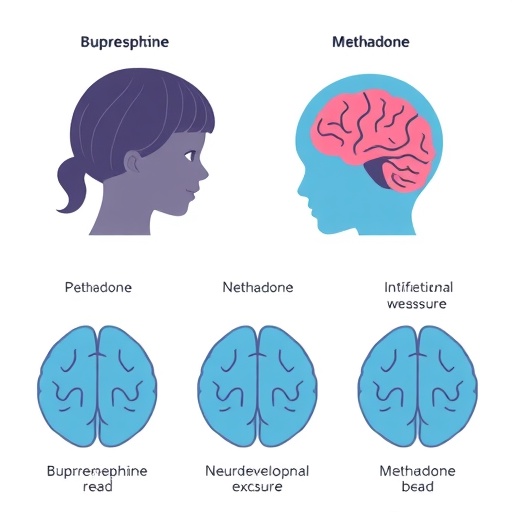
In recent years, the opioid epidemic has emerged as a critical public health challenge, with profound implications for vulnerable populations, including pregnant individuals grappling with opioid use disorder (OUD). Treatments that utilize medications for opioid use disorder (MOUD) have shown promise not only in stabilizing maternal health but also in improving neonatal outcomes. Among the pharmacologic options, methadone and buprenorphine stand as the primary MOUDs recommended during pregnancy, each characterized by distinct pharmacodynamics and administration protocols. Methadone, a long-acting full opioid agonist, is commonly dispensed through daily clinic visits under supervised administration, whereas buprenorphine, a partial opioid agonist, offers more flexible prescribing options often manageable in outpatient settings. The clinical implications of these differing delivery models are significant, particularly in balancing maternal adherence with fetal safety.
Despite widespread clinical adoption, the comparative long-term neurodevelopmental outcomes for children exposed in utero to either methadone or buprenorphine remain insufficiently characterized. Prior investigations have generally concentrated on short-term neonatal outcomes, such as neonatal abstinence syndrome (NAS) severity, birth weight, and gestational age at delivery. However, the dearth of robust longitudinal data leaves clinicians and expectant mothers with limited evidence to guide decisions about the optimal MOUD during pregnancy. Addressing this critical knowledge gap, the latest population-based cohort study spearheaded by Dr. Sabine Friedrich and colleagues meticulously analyzes nationwide registers to evaluate the potential neurodevelopmental sequelae associated with prenatal exposure to these two MOUDs.
Employing data linkage methodologies across comprehensive health registries, the researchers conducted an extensive observational study encompassing thousands of mother-child dyads affected by opioid dependence. The study’s rigorous design incorporated adjustment for multiple covariates known to influence neurodevelopment, including maternal age, socioeconomic status, comorbid mental health conditions, and prenatal care utilization. This methodological rigor strengthens the validity of their conclusions, mitigating confounding factors that have historically complicated the interpretation of outcomes in this field. The primary endpoint focused on long-term neurodevelopmental diagnoses documented in medical records, encompassing cognitive, behavioral, and motor impairments diagnosed during childhood.
The findings of this seminal investigation reveal no statistically significant difference in the risk of adverse neurodevelopmental outcomes for children prenatally exposed to buprenorphine compared with those exposed to methadone. This equivalence is a critical revelation, given the previously held clinical concerns about the safety profiles and developmental impacts of these pharmacotherapies. Of particular note is the confirmation that buprenorphine’s more convenient prescribing model does not compromise neurodevelopmental integrity in offspring, thereby offering a feasible alternative to the more restrictive methadone clinic paradigm. Such insights are vital for informing treatment protocols and patient counseling, helping to alleviate anxiety and stigma associated with prenatal MOUD use.
The neurobiological mechanisms underpinning these findings warrant detailed consideration. Both methadone and buprenorphine traverse the placental barrier and engage with the fetal central nervous system’s opioid receptors—primarily the mu-opioid receptor subtype—modulating neural development trajectories. While methadone’s full agonist activity poses a theoretical risk of more pronounced neurophysiological alterations, buprenorphine’s partial agonist properties and ceiling effect may mitigate such risks. Nevertheless, this study’s outcome suggests that, in clinical contexts, the differential receptor activity does not result in measurable disparities in neurodevelopmental pathology. This underscores the complex interplay between pharmacokinetics, dosage regimens, and compensatory neuroadaptive processes during gestation.
Moreover, the implications of these findings extend beyond pharmacology into the domain of healthcare access and policy. Methadone’s requirement for daily supervised dosing frequently imposes logistical and psychosocial burdens on pregnant persons, contributing to treatment attrition and potential relapse. Buprenorphine’s capacity for office-based management and prescription flexibility may enhance adherence, retention in treatment programs, and overall maternal wellbeing. Demonstrating equivalent safety in neurodevelopmental outcomes therefore empowers healthcare providers to advocate for patient-centered approaches that emphasize accessibility and autonomy without compromising child health.
This study also aligns with accumulating evidence challenging stigmatizing narratives around MOUD in pregnancy. Historically, concerns about prenatal opioid exposure have led to punitive policies and reduced treatment engagement among pregnant individuals with OUD. The robust data supporting the safety of both methadone and buprenorphine on long-term child neurodevelopment provide a scientific foundation for reframing policy and practice towards supportive, evidence-informed care. Healthcare systems can leverage these findings to expand harm reduction strategies and integrate MOUD seamlessly into prenatal care frameworks, thus improving outcomes for families affected by opioid dependence.
Importantly, the research team disclosed potential conflicts of interest transparently, reinforcing the integrity of the study. Funded by the National Institute on Drug Abuse and conducted without financial ties to pharmaceutical entities related to the medications studied, the investigation maintains high credibility. The authors’ adherence to the International Committee of Medical Journal Editors (ICMJE) uniform disclosure standards further assures the scientific community and public of unbiased reporting. This transparency is pivotal in an era when pharmaceutical influence can obscure objective analysis in addiction medicine research.
Despite these promising results, the authors prudently acknowledge limitations inherent to observational designs, including possible residual confounding and variability in clinical practices across regions. The absence of randomized controlled trial data leaves a window open for future prospective studies to corroborate and deepen understanding of maternal-fetal pharmacodynamics and child development trajectories. Longitudinal follow-up extending into adolescence and adulthood could elucidate subtler cognitive or behavioral sequelae that manifest later in life, informing interventional timing and resource allocation.
In summary, this groundbreaking nationwide cohort study elucidates a vital aspect of perinatal addiction medicine by demonstrating no increased risk of adverse long-term neurodevelopmental outcomes associated with prenatal exposure to buprenorphine when compared with methadone. This equivalency expands the therapeutic armamentarium for managing opioid dependence during pregnancy, balancing efficacy, safety, and practical considerations. As opioid-related morbidity persists globally, such evidence-based insights pave the way for compassionate, informed care frameworks that prioritize both maternal health and the developmental potential of future generations.
The study was published in the prestigious BMJ on April 15, 2026, providing accessible evidence for clinicians, policymakers, and affected families. By leveraging extensive population health data, the research amplifies the discourse on safer pharmacological strategies in pregnancy complicated by OUD and underscores the potential of health registries to answer pressing clinical questions. Ultimately, this work heralds a paradigm shift, encouraging the obstetric and addiction medicine communities to adopt flexible, patient-centered approaches grounded in rigorous scientific evaluation.
News Publication Date: 15-Apr-2026
Web References: https://dx.doi.org/10.1136/bmj-2025-087321
Cite Scienmag News
Harold Sullivan. (April 17, 2026). Prenatal Exposure to Buprenorphine and Methadone Shows Comparable Neurodevelopmental Outcomes in Children. Scienmag. https://scienmag.com/prenatal-exposure-to-buprenorphine-and-methadone-shows-comparable-neurodevelopmental-outcomes-in-children/
Harold Sullivan. "Prenatal Exposure to Buprenorphine and Methadone Shows Comparable Neurodevelopmental Outcomes in Children." Scienmag, 17 April 2026, https://scienmag.com/prenatal-exposure-to-buprenorphine-and-methadone-shows-comparable-neurodevelopmental-outcomes-in-children/. Accessed 4 September 2026.
Harold Sullivan. "Prenatal Exposure to Buprenorphine and Methadone Shows Comparable Neurodevelopmental Outcomes in Children." Scienmag. April 17, 2026. https://scienmag.com/prenatal-exposure-to-buprenorphine-and-methadone-shows-comparable-neurodevelopmental-outcomes-in-children/


