


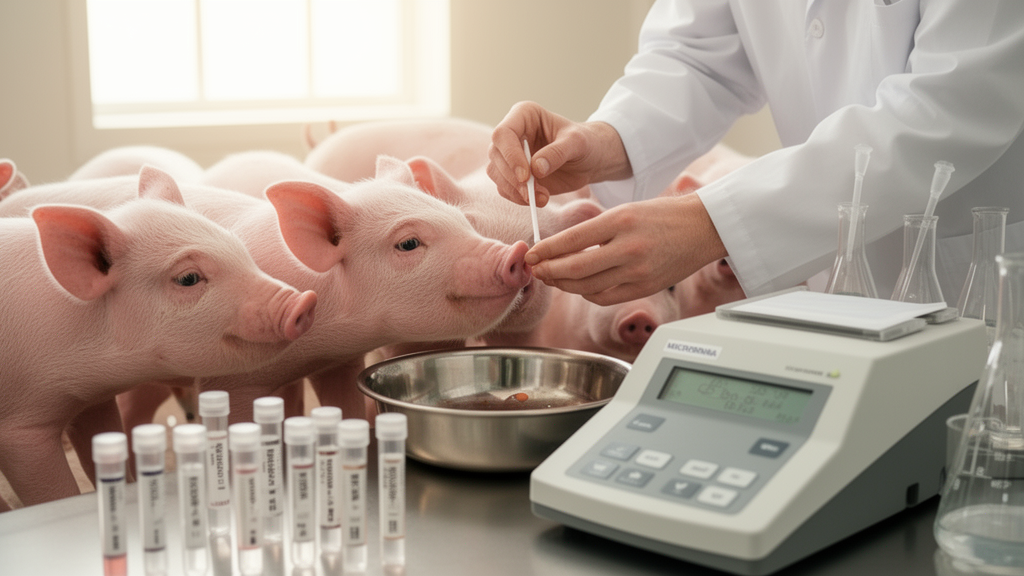
A preliminary study in piglets found 41 differentially expressed microRNAs in saliva when researchers compared suckling animals with weaning piglets. Twenty of the microRNAs were more highly expressed in the weaning group, while 21 showed lower expression. The findings identify candidate molecular indicators associated with the weaning transition, but they do not establish that any single microRNA can diagnose stress or predict health outcomes.
The researchers used small RNA sequencing to profile microRNAs in piglet saliva, a biological sample that permits repeated collection without the invasive procedures required for serum or tissue sampling. Their objective was to determine whether salivary microRNA profiles differed between suckling and weaning piglets. The observed group differences show that the transition was accompanied by measurable changes in the salivary microRNA profile.
Functional annotation of predicted target genes identified enrichment in pathways including TGF-beta, HIF-1 and AMPK signaling, as well as autophagy-related processes. These pathways are involved in stress adaptation, cellular metabolism and immune modulation. Because the analysis concerned predicted targets, the enrichment results provide biological context for the microRNA differences rather than direct measurements of pathway activity.
Several of the differentially expressed microRNAs had previously been associated with immune activity, inflammatory regulation, oxidative-stress responses and disease processes. That overlap lends biological relevance to the findings, although the study remains preliminary and does not demonstrate that individual microRNAs are specific or reliable biomarkers of weaning stress. The results support further investigation of saliva-based monitoring and targeted assays, including validation in larger cohorts and development of cost-effective assays, but no validated diagnostic test is established by the study.
Subject of Research: Exploratory analysis of salivary microRNAs associated with weaning-related physiological changes in piglets.
Article Title: Investigation of salivary microRNAs as non-invasive biomarkers for weaning stress in piglets: A preliminary study
Article References: Jeong, G.-H., Park, S.-J., & Lim, K.-S. (2026). Investigation of salivary microRNAs as non-invasive biomarkers for weaning stress in piglets: A preliminary study. PLOS One, 21(10), e0360727. https://doi.org/10.1371/journal.pone.0360727
Image Credits: AI Generated
DOI: 10.1371/journal.pone.0360727
Keywords: piglet weaning, salivary microRNAs, small RNA sequencing, physiological stress, biomarker candidates, immune regulation, oxidative stress, autophagy, animal science, Investigation, salivary, microRNAs
Cite Scienmag News
Juliet Wilcox. (October 21, 2026). Preliminary piglet study links weaning to 41 salivary microRNA changes. Scienmag. https://scienmag.com/preliminary-piglet-study-links-weaning-to-41-salivary-microrna-changes/
Juliet Wilcox. "Preliminary piglet study links weaning to 41 salivary microRNA changes." Scienmag, 21 October 2026, https://scienmag.com/preliminary-piglet-study-links-weaning-to-41-salivary-microrna-changes/. Accessed 21 October 2026.
Juliet Wilcox. "Preliminary piglet study links weaning to 41 salivary microRNA changes." Scienmag. October 21, 2026. https://scienmag.com/preliminary-piglet-study-links-weaning-to-41-salivary-microrna-changes/


