


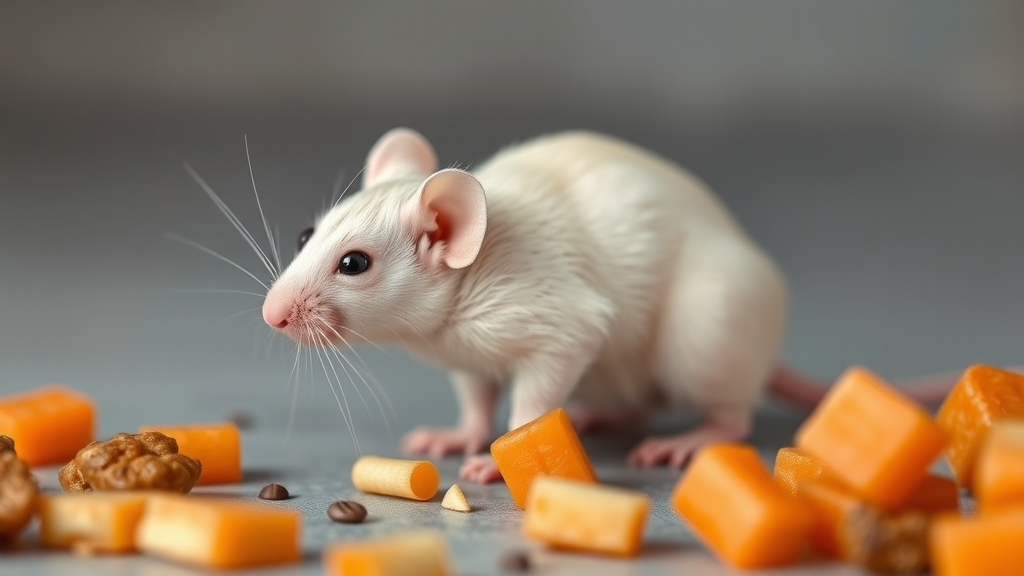
For decades, expectant mothers have described an almost irresistible pull toward pickles and ice cream, chocolate and chips—cravings that seem to emerge from nowhere and intensify as pregnancy progresses. Clinicians have long treated these urges as a curiosity of gestation, occasionally frustrating but ultimately harmless. A new study in mice, published in Nature Neuroscience, suggests that pregnancy cravings have a concrete, traceable origin in the brain: a specific population of serotonin-producing neurons in the dorsal raphe nucleus, whose electrical activity is dialed down during pregnancy by a single type of potassium ion channel, unleashing food-seeking behavior that closely mirrors what pregnant women report.
The research, led by Qianru Zhao, Bing Feng, and Vicky Dong of the Pennington Biomedical Research Center at Louisiana State University, together with colleagues at Baylor College of Medicine, the University of Illinois Chicago, Tulane University, Nanyang Technological University, and South-Central Minzu University, set out to answer a question that has puzzled neuroscientists for years. Pregnancy is known to reshape appetite—rodents eat more as gestation advances, and human studies have documented heightened craving frequency, emotional eating, and excess gestational weight gain. Yet while hypothalamic circuits governing hunger have been mapped in detail, the mechanisms behind the selective, sometimes obsessive desire for palatable foods during pregnancy remained largely unexplored at the level of individual neurons and their ion channels.
The team began by characterizing the behavior itself. Using the BioDAQ automated feeding-monitoring system, they gave female mice intermittent access to highly palatable diets—a high-fat diet, a high-protein diet, and a high-sucrose diet—and measured not just how much the animals ate but how hard they worked to seek food when it was inaccessible. On day fourteen of gestation, a stage comparable to the second trimester in humans, pregnant mice showed a striking escalation in craving-like behavior. They consumed larger meals of the palatable diets more frequently, spent more time probing the food hopper when food was withheld, and lingered longer in the hopper zone, all while their intake of ordinary chow and their body-weight gain remained comparable to those of virgin controls. The pattern, the authors note, echoes many of the behavioral signatures described in human pregnancy studies, from increased craving frequency to the dissociation between craving and caloric need.
With the behavioral phenotype established, the researchers turned to the brain. The dorsal raphe nucleus, a narrow ridge of cells along the brainstem’s midline, supplies the bulk of the brain’s serotonin, a neurotransmitter long implicated in mood, appetite, and reward. Using whole-cell patch-clamp electrophysiology, the team recorded from fluorescently identified serotonin neurons in the dorsal raphe of virgin mice and pregnant mice at gestational day fourteen. The result was unambiguous: serotonin neurons from pregnant animals fired action potentials at significantly lower frequencies than those from virgin animals, and their resting membrane potentials reflected a hyperpolarized, less excitable state. Notably, the suppression persisted into the postpartum period, hinting that the change is not a fleeting response to a single hormonal moment but a sustained rewiring of the cell’s electrical properties.
To understand why the neurons fell silent, the investigators turned to single-cell transcriptomics. Patch-seq analysis, which combines electrophysiological recording with single-cell RNA sequencing, revealed a molecular shift in the serotonin neurons of pregnant mice: increased expression of the gene encoding the small-conductance calcium-activated potassium channel type 3, or SK3. These channels open in response to calcium influx during action potentials, allowing potassium ions to flow out of the cell and clamping the membrane back toward its resting potential. More SK3 current means each spike is followed by a stronger repolarizing brake, effectively throttling the neuron’s firing rate. The team confirmed the upregulation at the protein level, showing stronger SK3 immunofluorescence in serotonin neurons of pregnant animals, and measured larger apamin-sensitive SK currents—the pharmacological fingerprint of SK3 activity—in recordings from pregnant mice.
The causal test followed. When the researchers genetically deleted SK3 channels selectively from dorsal raphe serotonin neurons, two things happened. First, the pregnancy-associated suppression of firing frequency vanished; the neurons of pregnant mice lacking SK3 fired as briskly as those of virgins. Second, and more strikingly, the food-craving-like behavior of the pregnant animals dropped. Mice without SK3 in their serotonin neurons no longer showed the exaggerated seeking, consumption, and hopper-directed persistence of their pregnant wild-type counterparts. The implication is direct: the quieting of serotonin neurons, mediated by SK3, is not a byproduct of pregnancy cravings but a driver of them.
The converse experiment sealed the argument. In virgin female mice—animals that would not normally crave—the team overexpressed SK3 in dorsal raphe serotonin neurons using viral vectors. The manipulation suppressed neuronal firing and, remarkably, reproduced the pregnancy phenotype in animals that had never been pregnant. These virgin mice began to eat more palatable food, seek it more often, and spend more time at the hopper, mimicking the behavior of gestational-day-fourteen dams. A single ion channel, in a single population of brainstem neurons, was sufficient to install a craving-like state in a non-pregnant brain.
But where do these serotonin neurons act to change behavior? The answer pointed to the mesolimbic reward system. Anatomical tracing and optogenetic experiments showed that dorsal raphe serotonin neurons send monosynaptic projections to the ventral tegmental area, the hub of the brain’s dopamine reward circuitry. When the team activated this DRN-to-VTA pathway with channelrhodopsin, food-craving-like behavior in female mice diminished; when they inhibited the projection with halorhodopsin, the behavior was modulated in the opposite direction. Chemogenetic activation of the same circuit in pregnant mice reduced their craving for palatable diets. Intriguingly, stimulating serotonin terminals in the nucleus accumbens or lateral hypothalamus—two other major serotonin projection targets—failed to alter craving behavior, sharpening the picture of a circuit specifically routed through the ventral tegmental area. The emerging model is elegant: during pregnancy, SK3 channels silence serotonin neurons, releasing their inhibitory grip on the VTA’s reward machinery and thereby amplifying the motivational pull of palatable food.
The findings arrive at a moment of growing clinical concern about gestational weight gain. Prior research has shown that food-craving frequency during pregnancy mediates the relationship between emotional eating and excess weight gain, and that accumbal dopaminergic circuits mediate craving-like episodes in pregnant mice—work from a 2022 Nature Metabolism study that the present results build upon and extend by identifying an upstream serotonergic control point. Excessive gestational weight gain is associated with maternal obesity, gestational diabetes, and long-term metabolic risk for both mother and child, yet safe and effective interventions remain scarce. By pinpointing SK3 channels in dorsal raphe serotonin neurons as a molecular switch, the study offers a concrete pharmacological target. SK channels are already the focus of drug-development efforts for other neurological conditions, and modulators of serotonergic signaling are among the most clinically mature tools in neuropsychiatry. Translating the mouse findings to humans will require caution—rodent gestation differs from human pregnancy in important hormonal and neuroanatomical respects, and optogenetics cannot be applied to patients—but the logic of the circuit suggests that restoring serotonergic tone, or dampening SK3 activity, might temper pathological cravings without suppressing the healthy appetite increase that pregnancy demands.
Beyond the clinical horizon, the study reframes a familiar human experience. The sudden, almost gravitational attraction to sweets and fats that so many pregnant women describe may not be a psychological weakness or a trivial side effect of hormonal flux, but the output of a precisely engineered neural adaptation—one that evolution may have favored to ensure developing offspring receive energy-dense nutrition. As Zhao, Feng, Dong, and their colleagues demonstrate, that adaptation can be traced to the opening probability of a potassium pore in a handful of brainstem neurons, and it can be switched on in a non-pregnant brain by forcing that pore open, or switched off in a pregnant one by deleting the gene that builds it. Few stories in modern neuroscience connect a molecule, a circuit, and a deeply human behavior so cleanly. The next chapter—determining whether the same serotonergic brake governs cravings in pregnant women, and whether it can be safely tuned—will be watched closely by neuroscientists, obstetricians, and anyone who has ever wondered why the pickle jar suddenly seems irresistible.
Subject of Research: Serotonin neuron control of pregnancy-induced food craving behavior via SK3 ion channels
Article Title: Serotonin neurons in the dorsal raphe control food-craving-like behavior during pregnancy in mice
Article References: Zhao, Q., Feng, B., Dong, V., Lau, L. H., Liu, H., Yu, M., Liang, K., Tran, C., Feng, H., Smiley, T., Gao, P., Yan, A., Ye, H., Jiang, Y., Wang, C., Xu, P., & He, Y. (2026). Serotonin neurons in the dorsal raphe control food-craving-like behavior during pregnancy in mice. Nature Neuroscience. https://doi.org/10.1038/s41593-026-02445-3
Image Credits: AI Generated
DOI: 10.1038/s41593-026-02445-3
Keywords: serotonin neurons, dorsal raphe nucleus, food cravings, pregnancy, SK3 ion channel, ventral tegmental area, mice study, Nature Neuroscience, maternal obesity, neuroscience, appetite regulation, reward circuitry
Cite Scienmag News
Cassandra Pierce. (September 20, 2026). Pregnancy Rewires a Serotonin Brain Circuit That Drives Food Cravings in Mice. Scienmag. https://scienmag.com/pregnancy-rewires-a-serotonin-brain-circuit-that-drives-food-cravings-in-mice/
Cassandra Pierce. "Pregnancy Rewires a Serotonin Brain Circuit That Drives Food Cravings in Mice." Scienmag, 20 September 2026, https://scienmag.com/pregnancy-rewires-a-serotonin-brain-circuit-that-drives-food-cravings-in-mice/. Accessed 4 October 2026.
Cassandra Pierce. "Pregnancy Rewires a Serotonin Brain Circuit That Drives Food Cravings in Mice." Scienmag. September 20, 2026. https://scienmag.com/pregnancy-rewires-a-serotonin-brain-circuit-that-drives-food-cravings-in-mice/


