


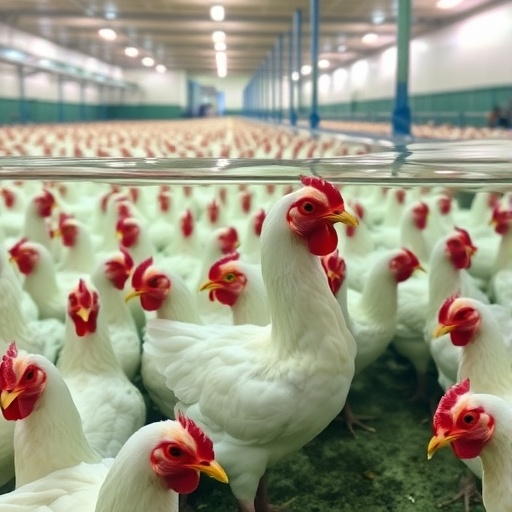
Recent studies have unveiled alarming revelations concerning the environmental implications of poultry slaughterhouse wastewater, particularly its role in reshaping bacterial communities in aquatic ecosystems and potentially amplifying the proliferation of antibiotic resistance genes. As the global demand for poultry products continues to burgeon, the resulting increase in wastewater production poses significant challenges for environmental management and public health safety.
Within the intricate web of aquatic ecosystems, bacterial communities are pivotal players, influencing nutrient cycling, organic matter degradation, and the overall health of the environment. However, the influx of pollutants, especially from industrial sources like poultry processing plants, can disturb these delicate ecological balances, standardizing conditions that favor pathogenic bacteria and antibiotic-resistant strains. The wastewater generated from poultry slaughterhouses often carries a cocktail of organic materials, nutrients, and a range of contaminants, thereby providing a unique environment for microbial exchanges and gene transfer.
A pivotal study conducted by de Farias et al. meticulously investigates the impacts of poultry slaughterhouse wastewater on aquatic bacterial communities, shedding light on the alarming ramifications for environmental biomes. The researchers employed advanced metagenomic techniques to unravel the complexities inherent in bacterial community dynamics. Their findings indicate a notable shift in the composition of bacterial communities at sites impacted by wastewater discharge compared to pristine environments. This shift is not merely a trivial alteration; it indicates broader ecological consequences with tangible effects on biodiversity.
As wastewater is discharged into nearby water bodies, the high nutrient content, particularly nitrogen and phosphorus, creates favorable conditions for certain bacteria to thrive while outcompeting native species. This nutrient overload, commonly referred to as eutrophication, can lead to algal blooms that severely deplete oxygen in the water, resulting in hypoxic conditions detrimental to aquatic life. The study illustrates that the overt dominance of select bacterial groups, particularly those associated with poultry waste, can hasten these ecological disturbances, with far-reaching impacts on the entire ecosystem’s health.
Moreover, one of the most alarming aspects associated with poultry slaughterhouse effluents is the escalation of antibiotic resistance. The continuous use of antibiotics in poultry farming has led to the emergence of resistance genes that can easily be disseminated into aquatic environments through wastewater. The metagenomic analyses conducted in the study revealed a significant presence of several antibiotic resistance genes within the affected bacterial communities, emphasizing the potential for these pathogens to enter the food chain and human populations.
These findings raise critical questions regarding public health safety and environmental management policies. The transfer of antibiotic resistance genes to pathogenic bacteria poses a significant risk, especially considering the increasing prevalence of antibiotic-resistant infections in human populations. The realization that wastewater from poultry slaughterhouses could serve as a conduit for these resistance genes dictates that immediate attention must be directed towards effective waste management practices.
The implications of de Farias et al.’s study are profound, urging policymakers and stakeholders to rethink current wastewater treatment approaches. Enhanced treatment protocols and strategies need to be implemented, particularly for industries that produce high volumes of organic waste, such as poultry processing. This might include advanced filtration systems, biological treatments, or even the incorporation of constructed wetlands designed to ameliorate the impacts of nutrient overloading and pathogen release.
In addition to improved treatment strategies, there is an urgent call for the establishment of stricter regulations concerning wastewater discharge from poultry slaughterhouses. Monitoring systems that evaluate the microbial content of wastewater prior to its release into natural water systems could substantially mitigate adverse ecological impacts. These regulations must also encompass comprehensive guidelines for antibiotic use in poultry farming to limit the development and transfer of resistance genes.
The ramifications of this research extend beyond mere ecological concerns; they resonate deeply within the frameworks of public health policy and sustainable agricultural practices. The COVID-19 pandemic has underscored the interconnectedness of human health, animal health, and environmental health—a concept often referred to as One Health. The interdependence between these domains suggests that addressing antibiotic resistance requires a holistic approach, integrating insights from various fields to formulate effective interventions.
The mounting evidence of bacterial community shifts and antibiotic resistance proliferation in aquatic ecosystems facilitated by poultry slaughterhouse wastewater calls for a concerted effort from all sectors of society. Public awareness initiatives can play a pivotal role in educating producers and consumers alike about the significant implications of wastewater management practices and antibiotic usage.
In conclusion, the study by de Farias et al. encapsulates the urgency of addressing the environmental repercussions of poultry slaughterhouse wastewater. Acknowledging the intricate relationships within ecosystems and the profound influences of human activities is essential for fostering a sustainable co-existence with our natural environments. The shift in bacterial communities and the spread of antibiotic resistance genes serve as a reminder that our actions have equally significant consequences, echoing through the chains of life in aquatic and terrestrial biomes alike.
de Farias, B.O., dos Santos Lopes, E., Pereira, B.C. et al. Poultry slaughterhouse wastewater as a driver of bacterial community shifts and the spread of antibiotic resistance genes in aquatic ecosystems.
Environ Monit Assess 197, 1268 (2025). https://doi.org/10.1007/s10661-025-14745-5
Cite Scienmag News
William Thompson. (October 30, 2025). Poultry Slaughterhouse Wastewater Fuels Bacterial Resistance in Aquatics. Scienmag. https://scienmag.com/poultry-slaughterhouse-wastewater-fuels-bacterial-resistance-in-aquatics/
William Thompson. "Poultry Slaughterhouse Wastewater Fuels Bacterial Resistance in Aquatics." Scienmag, 30 October 2025, https://scienmag.com/poultry-slaughterhouse-wastewater-fuels-bacterial-resistance-in-aquatics/. Accessed 4 September 2026.
William Thompson. "Poultry Slaughterhouse Wastewater Fuels Bacterial Resistance in Aquatics." Scienmag. October 30, 2025. https://scienmag.com/poultry-slaughterhouse-wastewater-fuels-bacterial-resistance-in-aquatics/


