


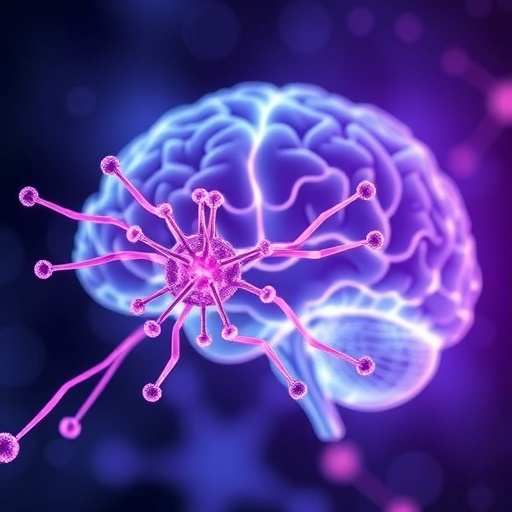
In a groundbreaking development poised to transform therapeutic approaches to cognitive disorders, researchers have unveiled a novel prodrug that targets the CI-M6P/IGF2 receptor, significantly enhancing memory functions in healthy murine models and demonstrating remarkable efficacy in reversing cognitive deficits associated with Angelman syndrome. This latest advance, published in Translational Psychiatry, signifies a crucial leap forward in both the mechanistic understanding of memory enhancement and the treatment of neurodevelopmental disorders characterized by severe intellectual impairments.
Angelman syndrome, a rare but devastating genetic disorder, presents with profound cognitive disabilities, motor dysfunction, seizures, and a characteristic lack of speech. Current treatment options remain largely symptomatic, leaving the underlying memory deficits poorly addressed. The discovery that a specifically designed prodrug—a pharmacologically inactive compound that converts into an active drug once inside the body—can engage the cation-independent mannose-6-phosphate/insulin-like growth factor 2 receptor (CI-M6P/IGF2R) to substantially improve cognitive outcomes, offers unprecedented hope for therapeutic intervention.
At the molecular core of this innovative approach is the targeting of the CI-M6P/IGF2 receptor, a multifunctional receptor involved in lysosomal enzyme trafficking and modulation of growth factor signaling. This receptor’s role extends into cognitive domains by influencing the availability and function of pivotal proteins linked to synaptic plasticity and memory consolidation. By harnessing this receptor’s properties, the prodrug achieves a dual purpose: precise delivery and sustained activation of pathways vital for memory enhancement.
In healthy male mice, administration of the prodrug resulted in improved performance across an array of memory tests, spanning both short-term and long-term memory paradigms. These outcomes were not only statistically significant but also physiologically relevant, indicating a robust facilitation of neural circuits associated with learning and memory. The findings support the hypothesis that receptor-mediated facilitation of growth factors can modulate cognitive processes far beyond baseline levels typically observed.
Beyond healthy models, the research extended into an Angelman syndrome mouse model, which recapitulates the severe cognitive and behavioral deficiencies characteristic of the human syndrome. Remarkably, treatment with the CI-M6P/IGF2R-targeted prodrug reversed key memory deficits, restoring multiple aspects of cognitive function. This reversal was accompanied by improvements in synaptic morphology and signaling fidelity, suggesting that the treatment prompts structural and functional neuroplasticity even in profoundly impaired systems.
The research team employed advanced molecular profiling and imaging techniques to elucidate the cellular mechanisms underlying these improvements. Notably, the prodrug enhanced lysosomal function and promoted receptor-mediated endocytosis, resulting in optimized intracellular trafficking of critical proteins governing synapse formation and maintenance. These insights unravel fundamental aspects of neuronal homeostasis and open avenues for designing receptor-targeted therapeutics with tailored effects on cognitive circuits.
Importantly, the pharmacokinetic and safety profiles of the prodrug were highly favorable. Unlike many interventions that risk off-target toxicities, this prodrug exhibited selective receptor affinity, minimal systemic side effects, and efficient blood-brain barrier penetration. Such characteristics bolster its translational potential, making it a promising candidate for human clinical trials targeting cognitive enhancement and neurodevelopmental disorders.
The ability to reverse cognitive deficits in a complex neurodevelopmental disorder suggests potential applications far beyond Angelman syndrome. The therapeutic strategy may be adaptable to a spectrum of intellectual disabilities and neurodegenerative diseases wherein impaired lysosomal trafficking and growth factor signaling contribute to cognitive decline. Given the prodrug’s mode of action, it holds promise for synergistic use with existing pharmacotherapies, potentially setting a new standard of care.
Intriguingly, the study also raises provocative questions about the fundamental biology of memory regulation. By demonstrating that activation of the CI-M6P/IGF2 receptor can elevate cognitive performance in otherwise healthy brains, the findings hint at untapped capacities of the central nervous system for plasticity and enhancement. This challenges long-standing paradigms in neuroscience about fixed cognitive limits and introduces the possibility of augmenting brain function through precision pharmacology.
The translational impact of these findings is significant, suggesting a pathway from molecular discovery to clinical therapy in a relatively compressed timeframe. The authors advocate for cautious optimism, emphasizing the necessity for rigorous clinical assessment to evaluate efficacy, dosage parameters, and long-term safety in humans. Nonetheless, this research invigorates the field’s drive towards targeted molecular therapies that address the core deficits of cognitive impairment rather than merely ameliorating symptoms.
This breakthrough also underscores the importance of cross-disciplinary research integrating neurobiology, pharmacology, and molecular genetics. The prodrug’s design epitomizes the precision medicine ethos, leveraging detailed receptor biology to engineer a compound with both therapeutic specificity and biological relevance. The study sets a precedent for future efforts aimed at harnessing receptor-mediated signaling pathways to treat other neurological conditions.
In conclusion, the development of this CI-M6P/IGF2R-targeted prodrug marks a paradigm shift in how we conceptualize and treat cognitive impairments. By combining molecular innovation with robust preclinical evidence, it presents a viable strategy for memory enhancement and functional repair in conditions where cognitive decline currently defies effective management. This pioneering work may well herald a new era in neurotherapeutics, offering renewed optimism for patients and families affected by Angelman syndrome and other neurodevelopmental disorders.
As the research progresses towards clinical trials, the scientific and medical communities will keenly observe the outcomes, with the hope that this novel therapeutic avenue will translate into real-world benefits. Meanwhile, the insights gleaned from the receptor’s role in cognitive function are likely to inspire further investigation, advancing our understanding of the brain’s intrinsic capacities and the molecular levers we can manipulate to improve quality of life through enhanced cognition and memory.
Cite Scienmag News
Glenn Wilkins. (October 30, 2025). Prodrug Targeting CIM6P/IGF2R Boosts Memory, Reverses Deficits. Scienmag. https://scienmag.com/prodrug-targeting-cim6p-igf2r-boosts-memory-reverses-deficits/
Glenn Wilkins. "Prodrug Targeting CIM6P/IGF2R Boosts Memory, Reverses Deficits." Scienmag, 30 October 2025, https://scienmag.com/prodrug-targeting-cim6p-igf2r-boosts-memory-reverses-deficits/. Accessed 5 September 2026.
Glenn Wilkins. "Prodrug Targeting CIM6P/IGF2R Boosts Memory, Reverses Deficits." Scienmag. October 30, 2025. https://scienmag.com/prodrug-targeting-cim6p-igf2r-boosts-memory-reverses-deficits/


