


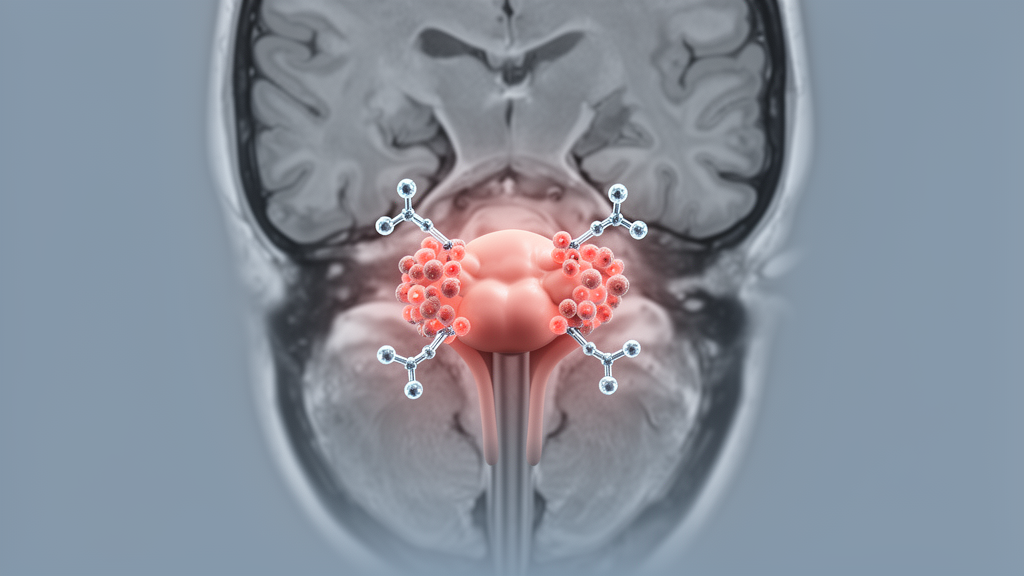
A descriptive pooled analysis of 45 patients from 43 published reports found that nivolumab-associated pituitary toxicity predominantly affected the hypothalamic-pituitary-adrenal axis, producing low cortisol with low or inappropriately normal adrenocorticotropic hormone (ACTH). Symptoms were usually nonspecific, and 30 of 41 patients with interpretable pituitary MRI had no definite structural abnormality. The study authors emphasize that the evidence consisted of heterogeneous, author-attributed cases rather than a uniform cohort of confirmed hypophysitis.
Researchers searched PubMed, Embase, the Web of Science Core Collection, CNKI and Wanfang Data from database inception through June 8, 2026. They also manually screened reference lists of eligible papers and relevant reviews. The initial search returned 2,592 records, which were deduplicated and screened before eligible full texts and individual patients were assessed. The final analysis included reports of patients who had received nivolumab monotherapy and whose original authors attributed hypophysitis, isolated ACTH deficiency, central or secondary adrenal insufficiency, or another relevant pituitary abnormality to treatment.
To distinguish central adrenal insufficiency from unsupported attribution, the investigators required compatible biochemical evidence, such as low cortisol accompanied by low or inappropriately normal ACTH, or an abnormal dynamic hypothalamic-pituitary-adrenal axis response. Combination immune checkpoint inhibitor therapy, reviews, conference abstracts, animal or mechanistic studies, reports without individual patient data, duplicate patients and cases lacking adequate diagnostic information were excluded. The researchers compared patient characteristics and exposure histories to identify potential duplicate reports, retaining the publication with the most complete clinical, diagnostic, treatment and follow-up information.
The investigators used “nivolumab-associated pituitary toxicity” as an umbrella term rather than a single diagnostic entity. Hypophysitis was defined according to the diagnosis reported by the original authors, supported by compatible clinical and endocrine findings, with or without MRI abnormalities. Isolated ACTH deficiency required deficiency of both ACTH and cortisol without documented clinically relevant dysfunction of another pituitary axis. Central or secondary adrenal insufficiency required cortisol deficiency with low or inappropriately normal ACTH. Because published reports used overlapping terminology and differed in endocrine testing, the three categories were not treated as strictly mutually exclusive.
Among the 45 patients, 33, or 73.3%, were male and 12 were female. Median age was 68 years, with a range of 39 to 85. Lung cancer and melanoma were the most common primary malignancies, each accounting for 16 cases, or 35.6%, while seven patients, or 15.6%, had renal cell carcinoma. Japan contributed 26 cases, or 57.8% of the cohort, followed by the United States with five and China with four. The researchers said this concentration could reflect reporting practices, clinical awareness, healthcare settings or publication patterns and did not provide evidence of greater susceptibility in any geographic or ethnic population. Fourteen patients had a recorded endocrine or hormone-related history, but these observations were not analyzed as risk factors.
Timing information was available for 40 patients, in whom toxicity emerged after a median of nine nivolumab cycles, with a range of one to 33 cycles. Eight patients, 17.8% of the full cohort, developed symptoms or received a diagnosis after nivolumab had been discontinued. Their median delay from the last administration was 24 weeks, ranging from four to 56 weeks. Fatigue was the most common clinical feature, reported in 41 of 44 patients with evaluable information. Anorexia occurred in 32 of 45 patients, nausea or vomiting in 23 of 44, and hypotension, syncope or relative hypotension in 21 of 44. By comparison, headache was reported in only two of 44 patients and polyuria in one.
Biochemical abnormalities provided the clearest evidence of pituitary-adrenal dysfunction. Serum sodium results were available for 33 patients, of whom 24, or 72.7%, had hyponatremia, defined in the analysis as sodium below 135 mEq/L or as explicitly reported in the source case. ACTH was low in 38 of 44 patients, or 86.4%, and was inappropriately normal despite low cortisol in the remaining six, or 13.6%. Basal cortisol was reduced in 43 of 44 patients, or 97.7%. The one remaining patient did not have low basal cortisol but demonstrated an inadequate stimulated response. All 27 patients who underwent dynamic hypothalamic-pituitary-adrenal axis testing had abnormal results, although protocols included CRH stimulation, rapid ACTH or cosyntropin testing, insulin tolerance testing and combined pituitary tests.
Imaging did not reliably identify affected patients. Of 41 patients with interpretable pituitary MRI results, 11, or 26.8%, had a reported abnormality and 30, or 73.2%, had no definite abnormality. Pituitary enlargement or fullness was present in six of 40 patients, or 15.0%; stalk thickening appeared in five of 38, or 13.2%; and a partial empty sella was documented in two of 40, or 5.0%. These imaging findings were not mutually exclusive. The overall pattern differed from the more conspicuous phenotype associated with CTLA-4 inhibitor-associated hypophysitis, in which headache, pituitary enlargement and dysfunction of several pituitary axes are more common. The authors did not claim that MRI has no diagnostic value, but their results indicated that unremarkable imaging could not exclude nivolumab-associated pituitary-adrenal dysfunction.
Glucocorticoids were the principal treatment documented in the case literature. Initial therapy was reported for 43 patients: 21, or 48.8%, began with an oral route, 16, or 37.2%, with intravenous administration, and six, or 14.0%, had an unclear or mixed route. Hydrocortisone was the most common initial glucocorticoid, used in 32 of 43 cases, or 74.4%, followed by prednisone or prednisolone in five and methylprednisolone in four. Maintenance replacement was recorded for 39 patients, with hydrocortisone used in 32, or 82.1%, prednisone in six and cortisone acetate in one. Symptoms improved after glucocorticoid treatment in 44 of 45 patients, or 97.8%, but the uncontrolled and heterogeneous case descriptions did not permit a comparative estimate of treatment efficacy.
Recovery of the ACTH-cortisol axis was uncommon in the available longitudinal records. Among 29 patients with clear hormonal follow-up, two, or 6.9%, had documented partial recovery, 27 had no documented recovery, and none had a complete recovery. Follow-up duration varied across reports, and hormonal data were unavailable for a substantial share of the cohort, so recovery may have been underestimated in patients with limited or short observation. Nivolumab was continued in 15 patients, temporarily interrupted in two, and stopped before or after toxicity in 25; the status was indeterminate in three. Six patients were rechallenged and none had a reported recurrence, but the small sample, varied definitions of rechallenge, differing follow-up and inconsistent hormone-replacement strategies made the observation insufficient to establish its safety.
The findings are constrained by the study’s reliance on case reports and small case series, which are vulnerable to publication, selection and reporting biases. The investigators did not perform a formal methodological quality or risk-of-bias assessment because the project was designed as a descriptive pooled analysis rather than a comparative or effect-estimating systematic review. Diagnostic criteria, hormone assays, reference ranges, dynamic test protocols, MRI timing, glucocorticoid doses and definitions of follow-up also varied. Previous or concurrent systemic glucocorticoid exposure was not systematically captured; such exposure can suppress ACTH and cortisol and mimic central adrenal insufficiency, leaving some misclassification possible. Among 43 patients with vital-status information, 39 were alive and four were dead at last reported follow-up. Because causes of death, tumor progression and any relationship to pituitary toxicity were incompletely documented, the authors did not attempt to attribute the reported deaths to pituitary toxicity. Overall, the analysis identifies a low-certainty pattern in which compatible symptoms, unexplained hyponatremia or hypotension may indicate pituitary-adrenal dysfunction even when MRI is unremarkable and may warrant assessment of cortisol, ACTH, electrolytes and hemodynamic status, including after treatment has ended.
Subject of Research: Descriptive pooled analysis of nivolumab-associated pituitary-adrenal dysfunction in 45 published cases
Article Title: Clinical characteristics, management, and outcomes of nivolumab-associated pituitary toxicity: a pooled analysis of published case reports and case series
Article References: Liu, Z., Huang, N., Li, R., Lei, H., & Liu, X. (2026). Clinical characteristics, management, and outcomes of nivolumab-associated pituitary toxicity: a pooled analysis of published case reports and case series. Frontiers in Endocrinology, 17, Article 1929591. https://doi.org/10.3389/fendo.2026.1929591
Image Credits: AI Generated
DOI: 10.3389/fendo.2026.1929591
Keywords: nivolumab, pituitary toxicity, hypophysitis, ACTH deficiency, adrenal insufficiency, immune checkpoint inhibitors, hyponatremia, pituitary MRI, hydrocortisone, case reports, Clinical, characteristics
Cite Scienmag News
Ophelia Keating. (October 21, 2026). Pooled case reports reveal often MRI-silent nivolumab pituitary toxicity. Scienmag. https://scienmag.com/pooled-case-reports-reveal-often-mri-silent-nivolumab-pituitary-toxicity/
Ophelia Keating. "Pooled case reports reveal often MRI-silent nivolumab pituitary toxicity." Scienmag, 21 October 2026, https://scienmag.com/pooled-case-reports-reveal-often-mri-silent-nivolumab-pituitary-toxicity/. Accessed 21 October 2026.
Ophelia Keating. "Pooled case reports reveal often MRI-silent nivolumab pituitary toxicity." Scienmag. October 21, 2026. https://scienmag.com/pooled-case-reports-reveal-often-mri-silent-nivolumab-pituitary-toxicity/


