


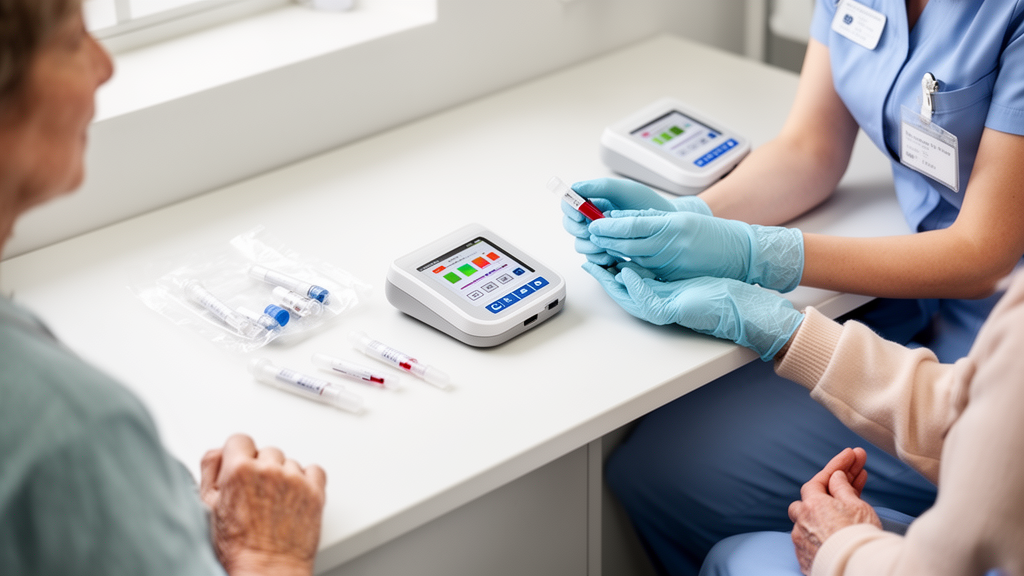
Point-of-care testing can shorten some infectious-disease diagnostic pathways from days to minutes or hours, but the clinical value of each platform depends on what it measures and how it has been validated. A 2026 narrative review in Frontiers in Microbiology assessed lateral flow immunoassays, chemiluminescence immunoassays, isothermal amplification, CRISPR/Cas diagnostics and microfluidic chips across respiratory, bloodstream, gastrointestinal, urinary and sexually transmitted infections. The authors describe these technologies as a spectrum rather than a simple progression from inferior to superior tools: inexpensive lateral flow strips offer speed and portability, whereas integrated molecular systems provide broader multiplexing and higher analytical performance at greater cost and with more demanding quality-control requirements. The review also separates pathogen detection from resistance-gene detection, phenotypic antimicrobial susceptibility testing and microbial typing, warning that grouping all four under “rapid diagnosis” obscures important differences in clinical use and supporting evidence.
Conventional laboratory workflows can provide extensive organism identification and susceptibility testing, but they may also introduce delays. Respiratory multiplex PCR platforms can require one to five hours, while culture, mass spectrometry and drug-susceptibility analysis for bloodstream infections may take two to four days. Gastrointestinal and sexually transmitted infection pathways may likewise take two to five days or two to three days, respectively. Such delays can force clinicians to select antibiotics empirically during the period when guidance would be most valuable. The review cites a study in which approximately 34% of patients with sepsis received inappropriate empirical antibiotic therapy, but it does not establish that point-of-care testing itself would have prevented those decisions. Point-of-care methods aim to narrow this window by moving testing into emergency departments, outpatient clinics, primary-care settings, intensive care units and, in some formats, patients’ homes.
Lateral flow immunoassay remains the most mature and widely deployed point-of-care format. A typical strip contains a sample pad, a conjugate pad with labelled antibodies, a nitrocellulose membrane and an absorbent pad. Capillary action moves the specimen through these components, allowing target antigens to bind antibodies and generate a visible line. Tests can be completed in about 15 minutes, require little specialized training and cost less than instrument-based systems, making them suitable for viral antigen screening, including combinations for SARS-CoV-2 and influenza. Their limitations are equally important. Most results are qualitative or semiquantitative, and sensitivity can fall sharply with low pathogen burden. A South African evaluation summarized in the review found COVID-19 antigen-test sensitivity above 77% at high viral loads, but 32% at moderate loads and 7% at low loads. False negatives are therefore most likely when viral concentrations are low, including early in infection. Performance also varies among products: a 2026 multicenter evaluation of five monkeypox strips found sensitivities ranging from 39.2% to 59.8%, although specificity exceeded 95% for every product tested.
Compact chemiluminescence immunoassays provide a different trade-off by replacing visually interpreted lines with light-based, often quantitative measurements. Enzymatic systems use horseradish peroxidase or alkaline phosphatase to generate luminescence, while direct systems commonly employ acridinium ester labels that produce a signal within seconds. Their broad dynamic ranges make them useful for inflammatory markers such as procalcitonin, interleukin-6 and C-reactive protein, which can support patient monitoring in emergency and intensive-care environments. One Wondfo Finecare study reported precision coefficients of variation of 5% at 0.5 ng/mL and 2.5% at 0.25 ng/mL for procalcitonin. Other prototype systems have measured several sepsis-related markers from 10-microlitre samples within 10 minutes, with detection limits in the low or mid picograms per millilitre. Yet these analysers remain bench-top instruments, and reagent and maintenance costs exceed those of lateral flow strips. Calibration, quality-control materials and operator proficiency also impose barriers to decentralized deployment.
Isothermal amplification offers a molecular alternative that does not require the repeated temperature changes of conventional PCR. Techniques including loop-mediated isothermal amplification, recombinase polymerase amplification, helicase-dependent amplification and nucleic acid sequence-based amplification use enzymes to generate target copies at a constant or relatively stable temperature. RPA, for example, operates at 37–42 °C. This simplified thermal control can support portable devices and has produced some striking performance figures, but it does not eliminate assay-development complexity. Primers must be carefully designed, multiple-target assays can suffer nonspecific amplification, and quantitative output varies by method. Many studies remain at the laboratory-optimization stage or involve fewer than 100 clinical samples. A tuberculosis RT-LAMP validation estimated a 350-case sample using MGIT culture and Xpert MTB/RIF as reference methods. For SARS-CoV-2, one comparison found 96.30% positive concordance for two molecular platforms, compared with 81.48% for antigen strips, illustrating the potential advantage of nucleic acid detection while also showing that results depend on the comparator and platform.
CRISPR/Cas systems add programmable target recognition to molecular diagnostics. Cas12 can target DNA and Cas13 can target RNA; after recognizing a target, these proteins can cleave reporter molecules to produce a detectable signal. Established formats include SHERLOCK, based on Cas13a for RNA targets, and DETECTR, based on Cas12a for DNA targets. Researchers have applied CRISPR-based methods to SARS-CoV-2, monkeypox, dengue, human papillomavirus and tuberculosis. Pre-amplification with RPA or LAMP is common, while direct-detection approaches could simplify portable instruments. The review highlights substantial evidence gaps: most clinical reports are proof-of-concept or retrospective studies with small cohorts, some involving fewer than 30 samples, and few provide multicenter validation. Quantitative measurement of pathogen load remains difficult, inhibitors in complex specimens can interfere with reactions, and only a small number of CRISPR products have obtained approval from major regulatory authorities. Most remain research tools rather than routine clinical assays.
Microfluidic chips seek to compress several laboratory steps into a small, self-contained workflow. A chip may automate sample lysis, nucleic acid extraction, amplification and signal detection, using capillary forces, centrifugation or acoustic waves to move fluids without extensive manual handling. This sample-to-answer architecture reduces operator involvement and cross-contamination risks, while sealed cartridges can support decentralized testing. Commercial systems illustrate the clinical potential of the approach: the BioFire FilmArray respiratory panel has been reported to detect nearly 20 pathogens and seven resistance markers in about 75 minutes, while QIAstat-Dx can test 17 gastrointestinal targets in 80 minutes. However, commercialization remains difficult. Academic prototypes often fail to bridge the gap to reproducible manufacturing, regulatory approval and reliable performance with authentic samples. A 2026 assessment found that few microfluidic paper-based analytical devices had achieved clinical validation and true sample-to-answer performance.
Clinical applications reveal why no single technology can meet every need. Respiratory testing has moved from combined antigen strips toward portable PCR and multiplex microfluidics; one prototype detected respiratory syncytial virus, influenza A and B, and SARS-CoV-2 in five minutes, while a biosensor reported 97.22% sensitivity and 100% specificity relative to RT-PCR in 108 samples. For urinary tract infections, dipsticks remain cheap and useful for initial screening but cannot identify the organism or its resistance profile. A LAMP-based system detected seven common urinary pathogens with 91.2% overall accuracy in 379 urine samples, while the Xpert UTI assay identifies organisms and resistance markers in approximately 50 minutes. Sexually transmitted infection testing has produced specificities above 96% in a 1,383-patient multicountry evaluation of GeneXpert for chlamydia, gonorrhoea and trichomoniasis. These results show diverse performance under varied populations and conditions; they are not pooled estimates or proof that every point-of-care test improves clinical outcomes.
The review identifies implementation as a major limitation alongside analytical sensitivity. Point-of-care tests are often intended for nonspecialist users, yet variation in specimen collection, reagent handling and reading time can undermine results. Different brands and batches may also produce results that are difficult to compare. These concerns are amplified where laboratories lack standardized training, external quality assessment, reliable supply chains, reimbursement and clear referral pathways. A Canadian survey of 4,035 community pharmacists found that 72.7% offered point-of-care services, but regulatory ambiguity, weak links to primary care and incomplete reimbursement still restricted scale-up. Even rapid results have limited value without a “diagnosis–treatment–referral” pathway: a reactive HIV result, for example, requires confirmation and a route to timely care. The evidence base itself is uneven, with respiratory infections and sexually transmitted infections supported by more multicenter validation than blood-based pathogen identification, and relatively few studies measuring effects on prescribing, cost-effectiveness or operator adherence.
Future systems are likely to combine molecular sensitivity, microfluidic automation, digital interpretation and remote connectivity. One handheld prototype using recombinase polymerase amplification and microfluidics reportedly tested eight respiratory pathogens in 25 minutes, with sensitivity above 97% and specificity above 99%. Artificial intelligence could standardize image interpretation, while mobile and internet-of-things connections might transmit results for remote review. The authors also argue that technical standards and quality-control systems must extend beyond central laboratories, with ISO/TS 22583:2019(E) and GB/Z 43281(2023) identified as relevant benchmarks. The central conclusion is cautious: point-of-care testing is becoming faster, more integrated and more capable of detecting pathogens and resistance markers, but the review identifies persistent gaps in multicenter comparisons, prospective field studies, affordable implementation and clear clinical pathways. Speed alone therefore cannot be equated with better infectious-disease care.
Subject of Research: Technical platforms, clinical applications and implementation limits of point-of-care testing for infectious diseases
Article Title: Point-of-care testing in the diagnosis of infectious diseases
Article References: Fang, Q., Lin, Y., Hu, G., Hu, J., Cheng, J., Dai, Y., Yan, L., & Wu, X. (2026). Point-of-care testing in the diagnosis of infectious diseases. Frontiers in Microbiology, 17, Article 1949318. https://doi.org/10.3389/fmicb.2026.1949318
Image Credits: AI Generated
DOI: 10.3389/fmicb.2026.1949318
Keywords: point-of-care testing, infectious diseases, rapid diagnostics, lateral flow immunoassay, isothermal amplification, CRISPR diagnostics, microfluidic chips, antimicrobial resistance, susceptibility testing, diagnostic evidence, Point-of-care, testing
Cite Scienmag News
Kristina Jarvis. (October 20, 2026). Point-of-care infectious disease testing advances, with evidence gaps. Scienmag. https://scienmag.com/point-of-care-infectious-disease-testing-advances-with-evidence-gaps/
Kristina Jarvis. "Point-of-care infectious disease testing advances, with evidence gaps." Scienmag, 20 October 2026, https://scienmag.com/point-of-care-infectious-disease-testing-advances-with-evidence-gaps/. Accessed 20 October 2026.
Kristina Jarvis. "Point-of-care infectious disease testing advances, with evidence gaps." Scienmag. October 20, 2026. https://scienmag.com/point-of-care-infectious-disease-testing-advances-with-evidence-gaps/


