


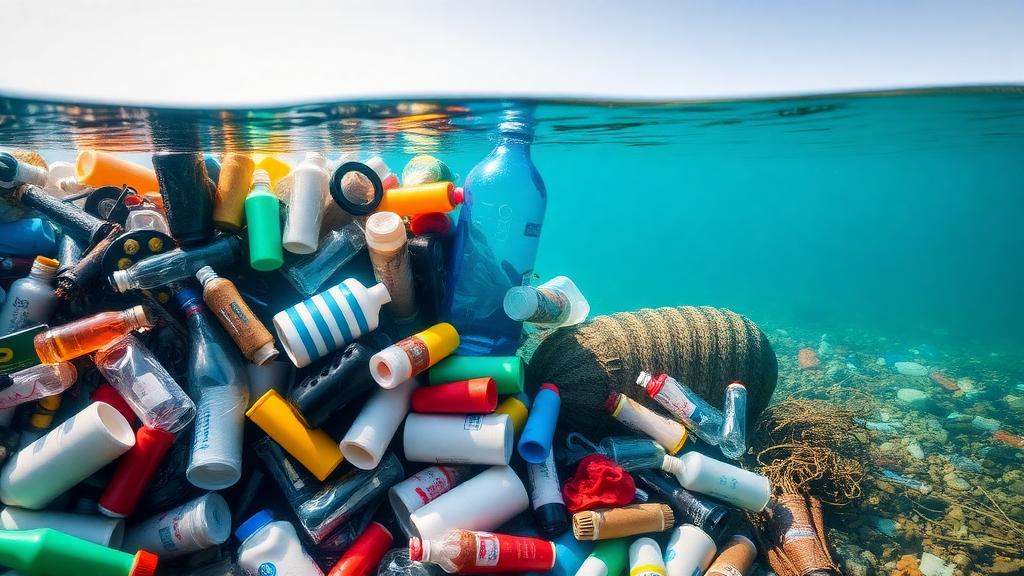
Two of the most powerful forces reshaping life on Earth have long been studied in isolation: the flood of plastic waste entering ecosystems and the accelerating spread of species beyond their native ranges. A new systematic review published in the journal NeoBiota now brings these two global stressors together for the first time, and the picture that emerges is more troubling than either problem alone. Drawing on 146 peer-reviewed studies published up to December 2024, researchers Diana Sousa, Ronaldo Sousa and Janeide Padilha provide the first global assessment of how plastic pollution and biological invasions interact, revealing a research field that is young, uneven and full of blind spots, yet already pointing to consequences that could ripple through food webs and ecosystem services worldwide.
The review’s central finding is that plastics and invasive species are not merely co-occurring problems; they actively reinforce one another through at least three recurrent pathways. The first is dispersal: floating plastic debris acts as a raft, a mobile artificial reef that can carry non-native organisms across ocean basins, estuaries and rivers. Barnacles, bryozoans, molluscs and microbial communities attached to a single discarded bottle or fragment of fishing gear can survive long voyages at sea and establish populations on distant shores. The 2011 tsunami that struck Japan provided a dramatic natural experiment, with hundreds of coastal species rafting across the Pacific on debris that washed ashore in North America years later. Plastic, being buoyant, durable and abundant, has vastly expanded the available transport network for species that would never cross ocean barriers on their own.
The second pathway involves altered biotic interactions. Plastics can change how native and non-native species compete, prey on one another or share habitat. Invasive ecosystem engineers such as certain crabs, mussels and macrophytes can trap and accumulate plastic debris, modifying the physical structure of sediments and water columns in ways that either favour or hinder other invaders. Conversely, plastic-covered surfaces may offer non-native fouling organisms a substrate advantage over native species that are less tolerant of polluted conditions. The review notes that such context-dependent interactions at the population, community and ecosystem levels remain largely unexplored, because most studies examine single species under simplified conditions rather than the messy, multi-species reality of invaded ecosystems.
The third pathway is more subtle and methodological: researchers frequently use non-native species as test organisms in plastic toxicity experiments. Because species such as the water flea Daphnia magna, various bivalves and certain amphipods are easy to culture and standardise, they dominate ecotoxicological assays. This practice generates valuable data on physiological responses to microplastics, but it also means the literature’s understanding of plastic toxicity is disproportionately built on a handful of hardy, often invasive, model organisms whose responses may not represent those of sensitive native species. The review highlights this as a hidden bias: the very species chosen for convenience may be the ones least representative of biodiversity at risk.
Taxonomically, the field is strikingly narrow. Mollusca and Arthropoda, particularly aquatic invertebrates, dominate the record, while vertebrates, plants, fungi and most microbial communities receive comparatively little attention. Geographically, research is skewed toward Europe, North America and parts of Asia, leaving Africa, South America and much of the Indo-Pacific underrepresented despite hosting some of the world’s most invaded and most plastic-polluted waterways. Methodologically, the literature is fragmented: studies use different particle sizes, polymer types, concentrations and exposure durations, making it difficult to compare results or build general predictive models.
The review also exposes a size problem. The overwhelming majority of studies focus on microplastics, particles smaller than five millimetres, while mesoplastics, macroplastics and nanoplastics receive far less attention. This is a significant gap because the different size classes behave differently in the environment. Large debris provides rafting substrate and physically alters habitats; microplastics are readily ingested and can transfer across trophic levels; nanoplastics may cross cellular membranes and interact with tissues in ways larger particles cannot. A literature concentrated on one size class cannot capture the full spectrum of risk, particularly the combined exposure that organisms in polluted, invaded ecosystems actually face.
Perhaps the most consequential gap identified is the near-absence of research on ecosystem-level consequences. The authors point out that plastic-driven disruptions to ecosystem functioning and services, such as nutrient cycling, primary production, sediment stabilisation and habitat provision, remain almost entirely unstudied in the context of invasion. Yet there are reasons to expect strong effects. Bioaccumulation dynamics may shift when non-native species, which often reach high densities, become dominant vectors for plastic uptake and transfer to predators. Contaminant transfer across trophic levels could be amplified or rerouted through invasion-altered food webs. The resilience of invaded ecosystems, already compromised by species loss and habitat degradation, may be further eroded by the chronic stress of plastic exposure, creating feedback loops that accelerate ecological decline.
The review’s authors argue that these findings demand more mechanistic, context-sensitive and cross-disciplinary approaches. They call specifically for the urgent incorporation of plastic pollution into non-native species risk assessments and management frameworks, a step that is currently missing from most biosecurity protocols worldwide. If plastic debris can transport invaders and alter their establishment success, then policies that address invasions without considering plastic pollution, and vice versa, will systematically underestimate risk. The authors also stress the need for methodological standardisation so that results from different labs and regions can be meaningfully compared, and for greater public engagement, including citizen science programmes that can expand monitoring coverage to under-sampled regions and taxonomic groups.
What makes this review especially timely is the sheer scale of both stressors. Global plastic production continues to rise, with millions of tonnes entering aquatic environments annually, while the rate of new biological invasions shows no sign of slowing. The two problems share drivers, including global trade, shipping and coastal development, which means they will increasingly co-occur in the same places at the same time. The review makes clear that the scientific community has only begun to map this intersection, and that the interactions discovered so far, dispersal via debris, altered species interactions and biased toxicity testing, likely represent only a fraction of what is happening in real ecosystems.
For ecologists, policymakers and the public, the message is that plastic pollution and biological invasions cannot be solved separately. The review, published in NeoBiota as part of volume 108, synthesises a research field at a turning point: enough evidence exists to confirm that the interaction is real and consequential, but far too little to predict where, when and how strongly it will manifest. Filling those gaps will require moving beyond standardised laboratory assays toward studies that capture population, community and ecosystem dynamics in natural settings, comparative analyses of how non-native species act as vectors for plastic transport and bioaccumulation, and attention to the taxonomic groups and regions currently missing from the record. Until then, the combined impact of these two pervasive drivers of ecological change will remain one of the least quantified, and potentially most underestimated, threats to global biodiversity.
Subject of Research: Ecology / Environmental Science
Article Title: Plastic pollution meets biological invasions: a systematic review of emerging interactions
Article References: Plastic pollution meets biological invasions: a systematic review of emerging interactions. (n.d.). Original publication
Image Credits: AI Generated
DOI: Not provided
Keywords: plastic pollution, biological invasions, microplastics, invasive species, ecosystems, NeoBiota, systematic review, biodiversity, Plastic, pollution, meets, biological
Cite Scienmag News
Reese Ellison. (October 16, 2026). Plastic pollution and invasive species are merging into a single ecological crisis. Scienmag. https://scienmag.com/plastic-pollution-and-invasive-species-are-merging-into-a-single-ecological-crisis/
Reese Ellison. "Plastic pollution and invasive species are merging into a single ecological crisis." Scienmag, 16 October 2026, https://scienmag.com/plastic-pollution-and-invasive-species-are-merging-into-a-single-ecological-crisis/. Accessed 16 October 2026.
Reese Ellison. "Plastic pollution and invasive species are merging into a single ecological crisis." Scienmag. October 16, 2026. https://scienmag.com/plastic-pollution-and-invasive-species-are-merging-into-a-single-ecological-crisis/


